
Uzhgorod Castle (Kapitulna St., No. 33) is the main attraction of the city of Uzhhorod, the main structure of which dates back to the 14th century.

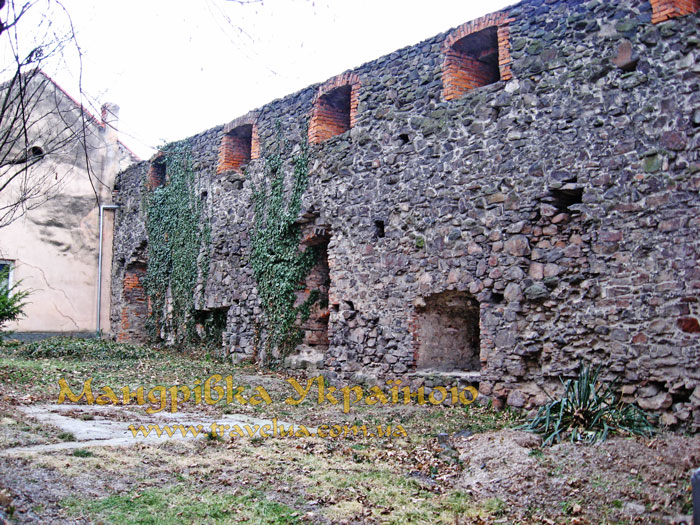
The castle has the shape of an irregular quadrangle with massive bastions at the corners and is surrounded on three sides by a dry canal, and on the north-eastern side by a cliff. The thickness of the outer fortress wall reaches 2.5-3 m.
Initially, a suspension bridge was thrown across the canal, and from the second half of the 18th century. it was replaced by an embankment.
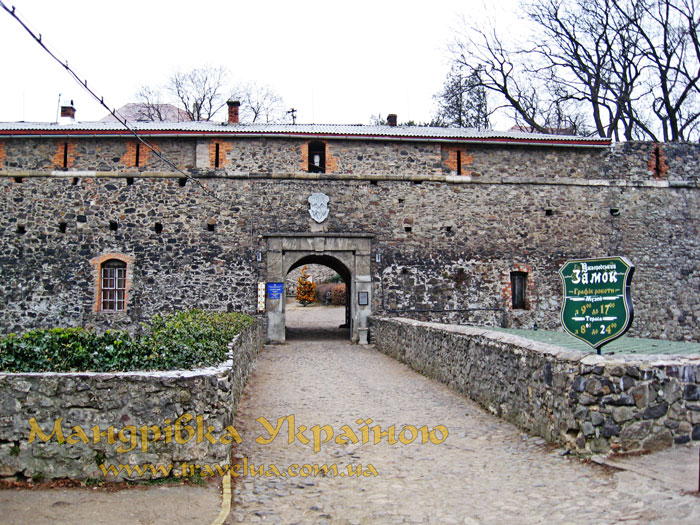


The northern wall of the palace is built over a cliff, so there is no protective wall in this part of the castle. In addition, the river flowed from below and it was impossible to attack the castle from this side. The northern wall was guarded from the bastion.
The palace has a quiet inner courtyard, where there is a well dug into the rock, the water of which was used by the defenders of the castle during long sieges.

Along the western and southern facades of the palace, from the side of the inner courtyard, there are two-story gallery arcades, an invariable detail of Renaissance buildings.

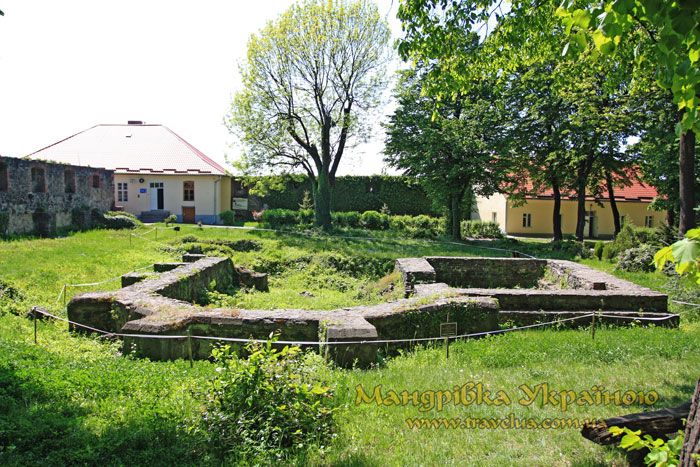
The castle dungeon has spacious casemates, which served as storerooms in peacetime, and as a hiding place during the war, in addition to this, there was a prison and a torture chamber. From the oldest stone buildings, the foundation is only partially preserved, traces of which can be seen in the dungeon and fragments of cornices with Romanesque ornament.


In the walls of the castle there is a whole network of secret passages connecting one part of the fortress with another. According to legend, there was also a secret underground passage that connected Uzhgorod Castle with Nivitsa Castle, which is 10 km away. And in the archive of the Vereshwar (Rotengurm) castle in Bugenland, there are even documents and drawings that contain detailed descriptions and schematic plans of Uzhgorod Castle, including secret passages and wells, but today all the passages are completely filled up. therefore, it is practically impossible to investigate them.
But in order to understand how such a majestic fortress appeared on the territory of modern Uzhhorod, it is necessary to dive into the depths of the ages. The construction of a powerful fortress was an important factor in the emergence of the city. Some historians suggest that the history of Uzhgorod did not begin at all on the current Castle Hill, but on the territory of modern Horians, where the remains of the ancient castle – Starograd were found, and the ancient church or so-called Goryani rotunda was probably a castle temple.

But taking into account the fact that the modern castle stands on a hill, which is strategically the best place for the construction of this kind of fortress, most researchers are still inclined to the opinion that Uzhhorod was located exactly there from the very beginning of its existence, where it is now.
The first historical mention of the city of Gung in the chronicle “Gesta Hungarorum” (“History of the Hungarians”) dates back to 872. According to Ukrainian scientists, the city was the residence of the Slavic prince Laborets, who was killed by the Hungarians in 903 during their invasion of the valley of the river Danube, and Hungarian historians report that the city was the residence of Almos Akkor, one of the cavalry commanders of Prince Arpad.

Researchers believe that most Transcarpathian fortresses of that time were earthen, and therefore could not withstand the siege of nomads. Such a fate befell the Uzhhorod fortification. In 1241, the city and the fortress were destroyed by the Mongol-Tatars led by Batia.
From 1322 to 1691, the city belonged to the Druget family, one part of which – Goryan – was owned by Philip Druget, and the other – Dravets – by Janos Druget.
Philip Druget builds a new fortress on Castle Hill. Scientist Mykola Antal suggested that the building material for the new fortification was stone from mountain castle, and in its place was laid the villa of the owners of the city.
In 1327, after the death of Philip Druget, his property was inherited by his brother Janos.
The most important stage of the construction of the fortress was completed in kin. 16th century Under the leadership of Italian and French fortification specialists, who were invited here by the Vienna War Council to carry out reconstructions and construction of castles in connection with the Turkish expansion, powerful stone walls with bastions were erected on the territory of the castle, a moat was deepened and widened on three sides , wells were dug, interior rooms were completely rebuilt.
The dates stamped above the main facade of the central building – 1598 and the year 1653 carved on the outer side of the northern fortress wall – testify to the reconstruction.

Above the main facade of the central building, the coat of arms of the Drugets – four blackbirds – has also been preserved.
In 1646, in Uzhgorod Castle with the help of Anna Druget (Yanna Yakushich) and her brother, Roman Catholic Bishop Yuriy Yakushich, 63 Orthodox priests signed the Uzhhorod Union, according to which the Greek Catholic Church was formed in Transcarpathia .

At the end of the 17th century Uzhgorod became the scene of a brutal anti-Habsburg struggle. Rebels led by Count Imre Tekeli captured the castle in 1679 and 1684 and partially destroyed it.
During the stay of the castle in the possession of the Druget family, significant changes took place in the art of fortification. New types of weapons appeared, first of all, firearms.

In 1691, the last male member of the Druget family died, and the influential Hungarian tycoon Miklós Berčeni, whose wife was the late Khrystyna Druget, became the new nadjupan of the Ung county and the owner of Uzhgorod Castle. At that time, Bercheny was only 22 years old and had 3 children in his arms.
In 1695, Miklós Berčeni married the 40-year-old, but extremely beautiful and wealthy daughter of the state judge Istvan Chaki Christina. The couple chose Uzhgorod Castle as their place of residence, which the count repaired before the bride’s arrival.
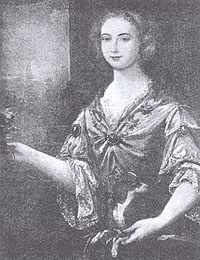
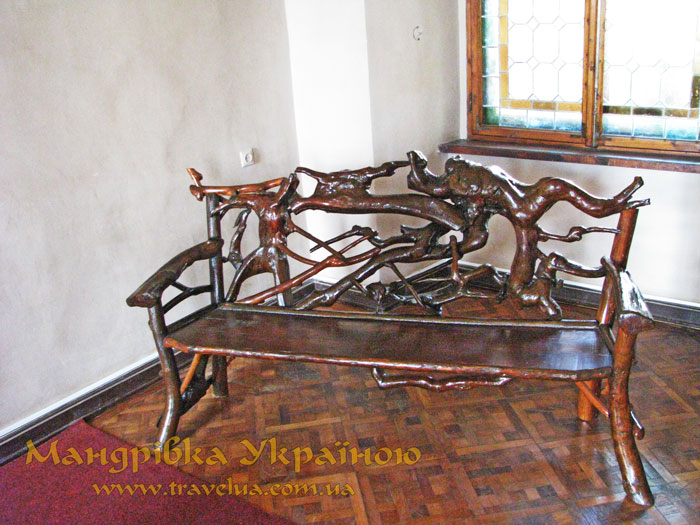
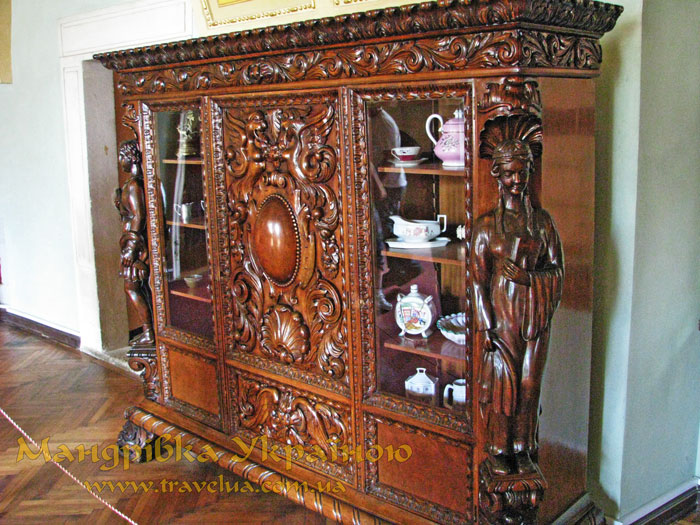
As a dowry, Khrystyna Czaky brought with her beautiful carved furniture, oil paintings, a large number of engravings, valuable tapestries, on which the entire history of Hungary was depicted. which became the decoration of the castle.
In 1707, the ambassadors of Peter I were solemnly met in the castle during negotiations with representatives of Ferenc Rakoczy.
In 1709-1710, Bercheny, with the help of French military engineers and Croatian specialist Stubic, carried out the last reconstructions of the castle, which gave it a modern look.


The castle was surrounded by five parks: “Flower”, “Meadow”, “Zhuravlyny”, “Dove” and “Zviriny”. To this day, only the last one has been partially preserved – now the Castle Park.
The fortress reached its peak during the time of Count Bercheny. The entire Hungarian nobility gathered here, and the castle became the center of social and political life in northern Hungary. But after the defeat of the liberation war in 1711, Miklós Berčeni chose the fate of an exile and settled in distant Turkey, and his wife, leaving all her wealth in her homeland, shared a difficult life in a foreign land with her husband. The Uzhgorod castle was transferred to the Austrian crown. All material values were removed from the palace: paintings, furniture, a collection of precious dishes, weapons.
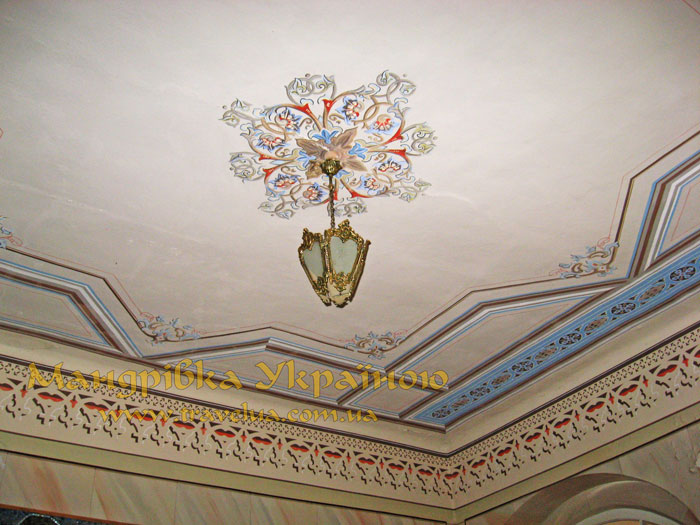
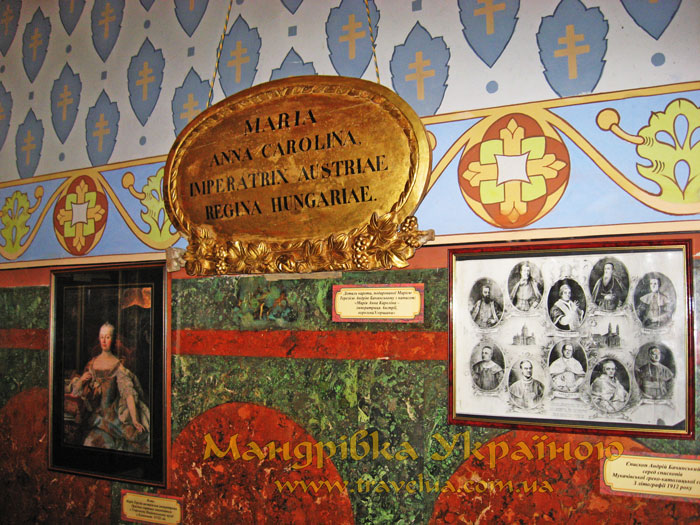


In the following years, Uzhgorod Castle served as a location for a military garrison, for another four years the castle was owned by the Hungarian baron Ferenc Duloy and eventually served as the premises of a theological seminary, and the luxurious halls and rooms were turned into classrooms, dining rooms and bedrooms.
From the first years of its existence, the seminary turned into a center of education and science of Ukrainians. Among the pupils of the institution were such outstanding figures of Transcarpathia as O. Dukhnovych, M. Luchkai, A. Voloshyn and many others.


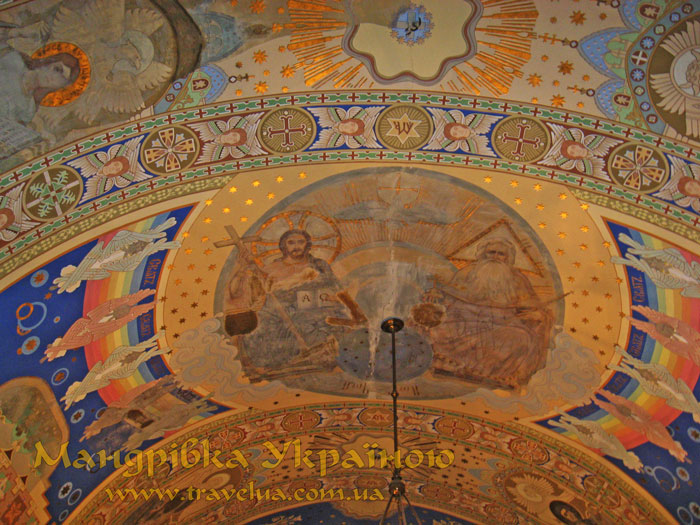
The Uzhgorod Seminary existed in the castle until 1945. The Soviet authorities first gave the premises of the fortress for temporary use by a military unit, and from 1947 – for exhibitions Transcarpathian Museum of Local Lore.
In the cellars of Uzhgorod Castle, there is also a tasting hall, where in the unique atmosphere of the Middle Ages everyone can taste the best Transcarpathian wines and learn more about the art of winemaking in Transcarpathia.

The church of St. Yuri of the 13th century, which was located in the inner courtyard of the castle, has not been preserved to this day – it was incinerated by a great fire in 1728 (then, by the way, the castle itself also suffered from the fire).
Catholic believers, hoping to find numerous treasures in the crypt of the church where several members of the Druget family were buried, opened it, but it turned out that the crypt had been ransacked long before that. The only valuable thing was a golden ring found among the remains of Balint Druget, but it had to be given to the state treasury in Bratislava.
The castle courtyard is decorated with a sculpture of a turul bird of prey with a piece of the Rakotsi saber in its beak.

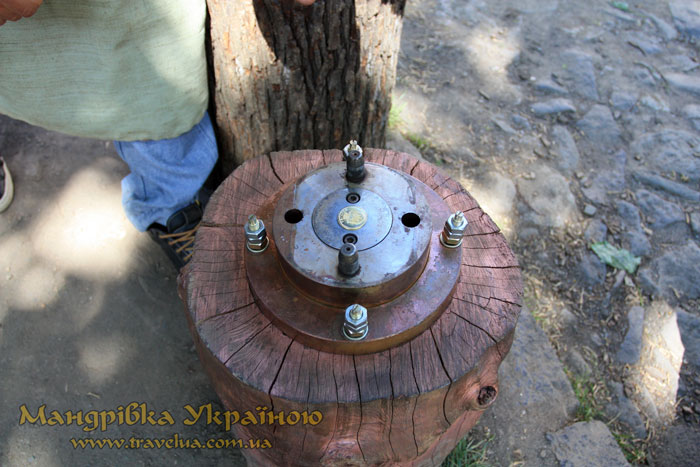
Another sculpture that decorates the courtyard of the castle is Hercules strangling a huge snake, or “Iron Ivan” as he was nicknamed by the people. This is all that remains of the glorious balneological resort p. Uzhok is a symbol of the healing power of the springs of the village.
According to legend, the statue was installed near one of the springs in 1842 by an American who got back on his feet after a course of treatment. The statue was cast at the foundry of the village Turya Remeta (author – Kinne V.)
Next to it is another popular character of Greek myths – the messenger of the gods, the patron of travelers, merchants, the guide of the souls of the dead – Hermes. It is assumed that the sculpture was cast at an iron smelter near Mukachevo.


Interesting:
The legend of the White Maiden
As in all real castles, Uzhhorodsky also has its own ghosts. According to legend, the owner of the fortress was the respected knight Druget, who had a beautiful daughter. At that time, these lands were attacked by Polish troops, and one noble voivode wanted to capture Uzhhorod. He changed his clothes and came to the city to scout everything well, and Druget’s daughter, having fallen in love with him, told how many military forces were in the castle and how best to take it. The father, having learned about the betrayal, ordered her to be buried alive in the fortress wall. Since then, during a storm, a girl can be heard crying.
Working hours: from 10.00 to 17.00, closed – Monday.
Cost of entrance fee to the castle territory:
Adults – UAH 20, students – UAH 15, pupils – UAH 10
The cost of the entrance fee for museum visitors:
Adults – UAH 50, students – UAH 40, pupils – UAH 20
Cost of the excursion:
Adults / students – 200 UAH, students – 150 UAH.
Ordering excursions: tel. 0312-614609
Museum workers, war invalids, children, orphans, conscripts are served free of charge.


Where to stay in Uzhgorod
When you zoom out of the map, you can see more offers. Hover over the price rectangle to see information about the property, or click to go to booking.
There are no comments for this post. Comment or ask questions first