
Lutsk (Polish: Łuck, German: Luzk, Latin: Luceoria) is a large regional center of Volyn Oblast.
A good location at the intersection of trade routes to the Western and Baltic countries, shipping arteries with Kyiv, ports of Ukraine and other Black Sea states contributed to the development of the city and turned it into an important economic center.

Lutsk was mentioned for the first time in 1085 in the Ipatiev Chronicle as the center of the regional principality “Luchesk the Great on Styria”. Its first inhabitants were Dulibs or Luchans. Some researchers derive the name of the city from the word “Luchany”.
The name of the city is also associated with the nature of the bed of the Styr River – it makes a bow here. Luka – “curvature, bay, bend, shore of the bay, shore of the river arc.”
People used to say about Lutsk: “In Lutsk, everything is not humane: water is around, trouble is inside.”


According to legend, the ancient city was founded by Luka, the leader of the Eastern Slavic tribe of Dulibs. Polish historian Jan Dlugosz attributes the founding of the city to Prince Volodymyr Svyatoslavych of Kyiv and dates it to the year 1000, but there is evidence that the city existed as early as the 7th century. The Arab geographer Massudi mentions him when he talks about the state of Valinan (consonant with “Volhynians”).
Around 1000, Volodymyr the Great annexed Volhynia to Kievan Rus and built a fortress in Lutsk, which withstood the siege of the Polish king Boleslaw the Bold, Andriy Bogolyubsky, the Galician princes Volodymyr Volodarevych, Yaroslav Osmomysl, and the Tatar-Mongol horde. The city was a reliable support on the western borders of the Kyiv state.
In 1199, the Volhynia and Galicia principalities were united into a single Galicia-Volhynia principality.

In 1340, Lutsk was granted the status of the capital of the Galicia-Volyn principality. At the same time, the residence – the fortress of Prince Lyubart – Lutsky was built castle. The city had an advantageous defensive location – from the north and west, the boundaries were defined by the bend of the Styr River, the Hlushets River flowed in the south, and impassable swamps surrounded the east.
In 1387, the Polish king Władysław II Jagailo removed from power Lubart’s son, Prince Fyodor, and handed the city over to his cousin, the Lithuanian prince Vytautas. Lutsk was chosen as the prince’s second residence after Vilna and became the unofficial capital of the Principality of Lithuania.
Together with Vytautas, Armenians who were excellent builders came to Lutsk. Almost all the stone buildings of Lutsk, Lviv, Kamianets-Podilskyi were built by Armenians.

In 1429, a congress of the most powerful European monarchs took place in Lutsk to discuss the problems of protecting Europe from the Ottoman invaders.
In 1431, a victorious battle of the Luchans took place against the army of the Polish king Władysław II Jagail. The Poles were forced to conclude an armistice agreement. Since 1432, Lutsk has received Magdeburg rights. In 1453, the Tatars destroyed part of the city and enslaved several thousand of its inhabitants. It was in Lutsk that the Ukrainian political elite hid from the Tatar army at the end of the 15th century. Polish royal chancellor Albrecht Radziwill also has his residence here.


In 1500, a 15,000-strong Tatar horde burned Lutsk and several other towns in Volyn. The city is being rebuilt very quickly and is becoming a center of international trade.
In 1569, as a result of the Union of Lublin, the Volyn lands came under the control of Poland, and Lutsk became the capital of the newly formed Volyn Voivodeship.
In 1595, the Cossacks of Severyn Nalivayka captured the city, and the people of Luhansk took an active part in the peasant-Cossack uprising.
From the end of the 16th century. Lutsk Castle begins to lose its importance as a defensive stronghold, but the city remains the secular and spiritual capital of the region and even receives the name – “Rome of Volhynia”. In addition to Ukrainians, Lithuanians, Poles, Armenians, Tatars, Jews and Karaites lived in the city at that time. Each community had its own shrine, tax system, architecture and specific planning of quarters.


To resist the Catholicization of the Orthodox population of Ukraine at the beginning of the 17th century. church brotherhoods began to be created. One of these brotherhoods also appeared in Lutsk in 1617. In 1619, the Lutsk Orthodox brotherhood received official recognition from the king with the privilege of building a church and shelter.

In 1648, there was an uprising of the Luchans led by Fedor Lypka and their participation in the Liberation War under the leadership of Bohdan Khmelnytskyi.
At the turn of the 17th and 18th centuries. Lutsk begins to gradually decline. The city is weakened by fires, floods, and epidemics, and Ukrainian cultural and religious life fades. In 1702, Danylo Bratkovsky was executed in Lutsk, a public figure and satirist poet, an active participant under the leadership of Semen Pali.
In 1706, during the Northern War, Lutsk was captured by the Swedes for several months. The city was looted and destroyed.
In 1795, as a result of the third partition of Poland, Western Volhynia passed to the Russian Empire. Zhytomyr becomes the capital of the newly formed Volyn province, and Lutsk remains the center of the county.
In 1846, Taras Shevchenko visited the city.
In 1879, he moved to Lutsk Kosachiv family. Lesya Ukrainka begins her poetic work here.

At the end of the 19th century after the construction of the branch of the South-Western Railway, the economic rise of Lutsk begins. As of 1895, the number of city residents was 15,125.
During the First World War, Volyn became the epicenter of fierce battles. From August 1915 to May 1916, Lutsk was occupied by Austrian troops. In the summer of 1916, the famous Brusylov breakthrough took place in the vicinity of Lutsk.
After the February Revolution of 1917, the yellow-blue flag flew over Lutsk for the first time. In April 1917, the first Ukrainian socio-political society “Ukrainian Community” was created in the city. During the hetmanate in August 1918, “Prosvita” was formed. On December 20, 1918, detachments of Ataman Simon Petliura entered Lutsk. On May 16, 1919, Polish troops entered the city, and according to the Riga Treaty of 1920, western Volhynia became part of the Second Polish-Lithuanian Commonwealth.

In March 1921, Lutsk became the capital of the new Volyn Voivodeship. Active reconstruction of the city begins. Residential quarters for officers and power plants are being built, Polish and European banks, hospitals and medical institutions, numerous trading firms, a resort are being opened, water supply and sewage networks are being laid, central streets are being paved, a bicycle track, a gym with a swimming pool, bridges, cinemas, and a city theater are being reconstructed.

The buildings erected at that time were mainly in the constructivist style. School No. 1, the National Bank, the post office, the Volyn Museum of Local History, the officers’ house, the old building of the university, the premises of the SBU and many others are vivid examples of this style.

In 1928, Lutsk received a railway connection with Lviv, river passenger transportation to Kolok and Pinsk and regular intercity bus service were opened. The population as of 1939 was 40,000.
In the autumn of 1939, as a result of the division of Poland, the city became part of the USSR and became the center of the Volyn region of the Ukrainian SSR.
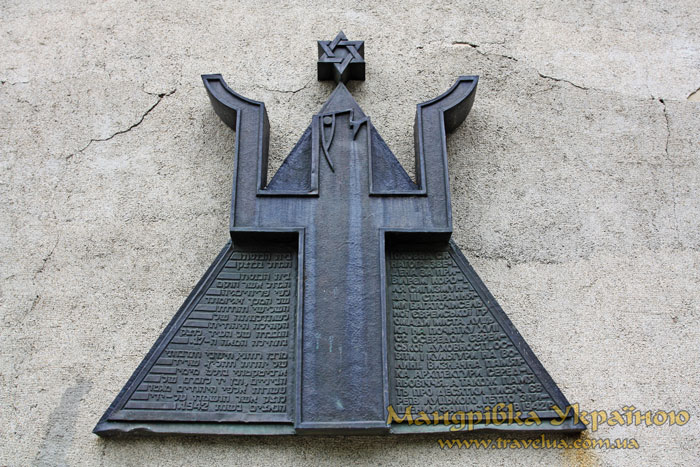
On June 25, 1941, Lutsk was occupied by German troops. During the war, several Jewish ghettos were formed in the city, where about 17,000 Jews lived. In 1942, they were all destroyed.
In February 1944, the city was liberated from the occupiers.
In the post-war period, Lutsk was gradually rebuilt and renewed.

In the 60s and 70s of the 20th century. the new boundaries of the city territory were approved, the construction of powerful enterprises and residential areas began, and the trolleybus line was launched.
In 1982, the 100,000th car rolled off the assembly line of the automobile plant.
With the independence of Ukraine, Lutsk maintains a leading position in the political, economic, cultural and religious life of Volyn. As of 2008, the city’s population is more than 202,000.

Sources: Familiar Strangers: The Origin of the Names of Ukrainian Settlements/A.P. Koval – K.: Lybid, 2001. – pp. 33-34. Volyn diocese information – 2006. – No. 10 (23). Tourist guide “Volyn Tourist”. -K.: World of success, 2008. – p.26-37. Old Lutsk. Guide, 2005.
There are no comments for this post. Comment or ask questions first