
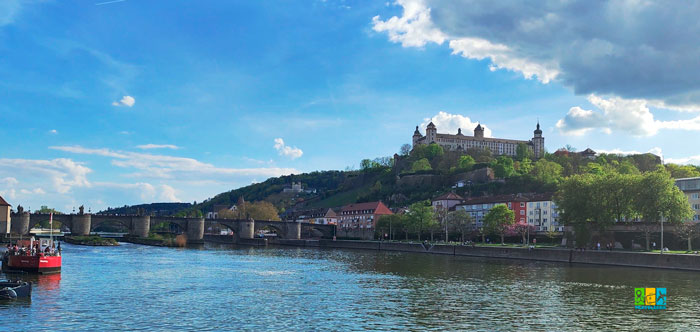
Würzburg is a compact city in Bavaria that many travelers skip on the way between larger tourist destinations. But that’s a mistake. It has everything you need for a short trip: beautiful architecture, a fortress with views over the city, an atmospheric old bridge, and great spots for local food and wine.
In this guide — what to see in Würzburg in 1–2 days, where to eat, what not to miss, and how to plan your trip comfortably.
A Brief History
Würzburg is a city in Bavaria that for centuries was the center of episcopal power. In the 17th–18th centuries, prince-bishops ruled here and turned the city into a true Baroque masterpiece.
During World War II, Würzburg was almost completely destroyed, but the historic center was restored as faithfully as possible. Today it is one of the most atmospheric cities in Franconia.
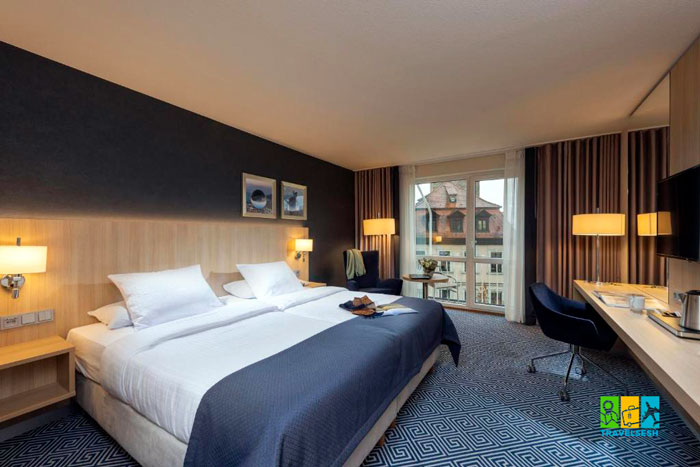
Where to Stay
Budget: ibis Hotel Würzburg City — a simple and convenient option not far from the center, perfect if you’re just looking for a place to sleep without extra frills.
Mid-range: Premier Inn Würzburg — a modern hotel near the train station, a good balance of price and quality, convenient for day trips.
Comfort / with a view: Maritim Hotel Würzburg — on the Main River, great location and pleasant views, a good choice if you want a bit more atmosphere.
What to See
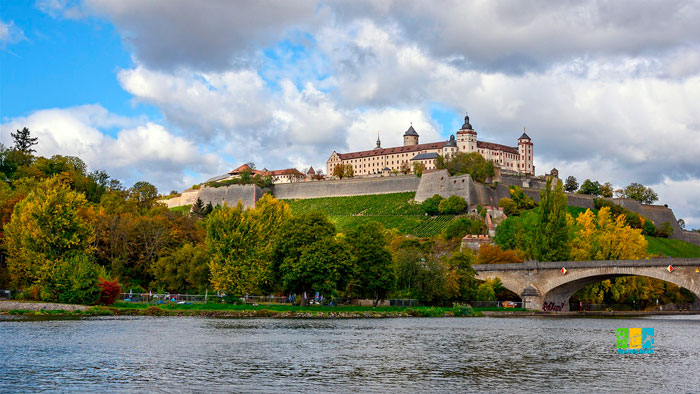
Marienberg Fortress (Marienberg Fortress)
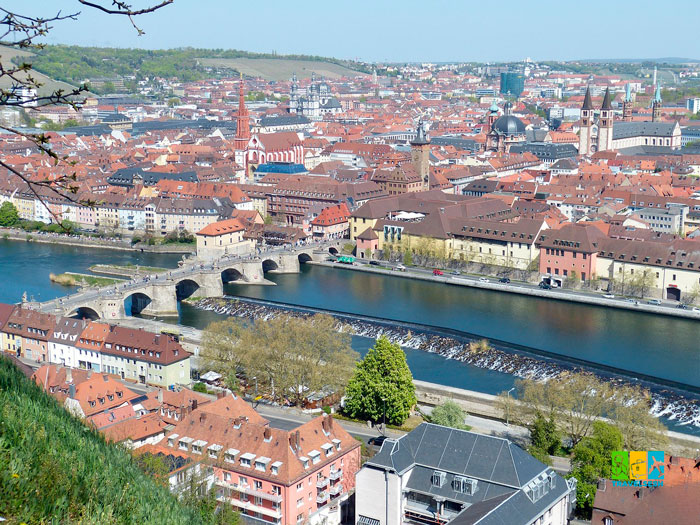
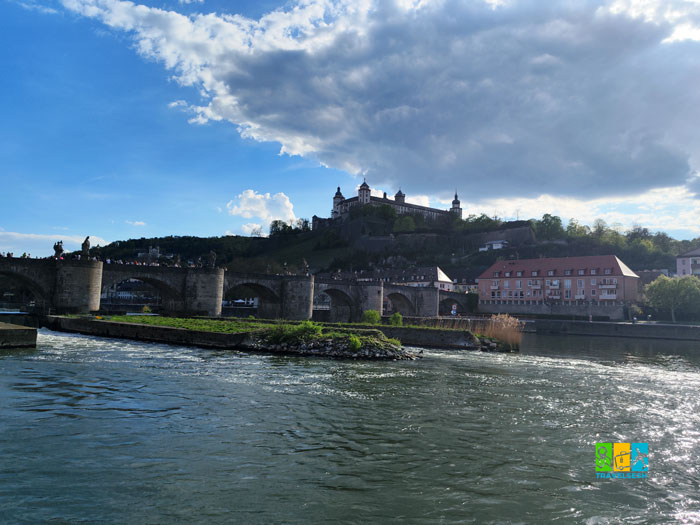
The fortress on the hill above the city is the best vantage point to see Würzburg from above. This is where you get that iconic view of red rooftops, the Main River, and the old bridge.
Once the residence of the prince-bishops, before the palace was built. Today it houses museums, inner courtyards, and viewing platforms.
You can walk up (about 20–30 min, a gentle climb) or take a car/taxi.
The best time to visit is around sunset — the views are at their most atmospheric.
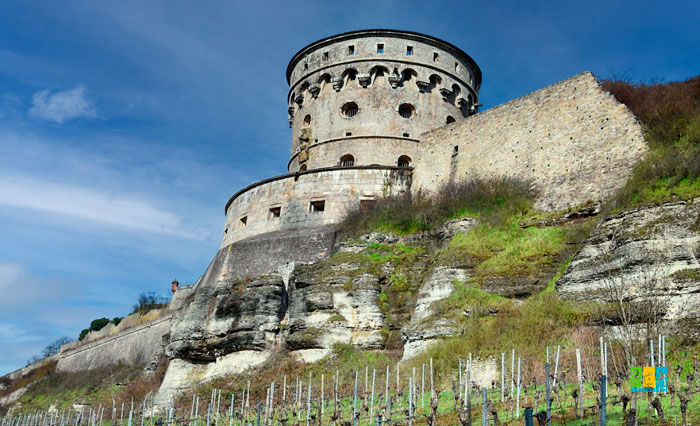
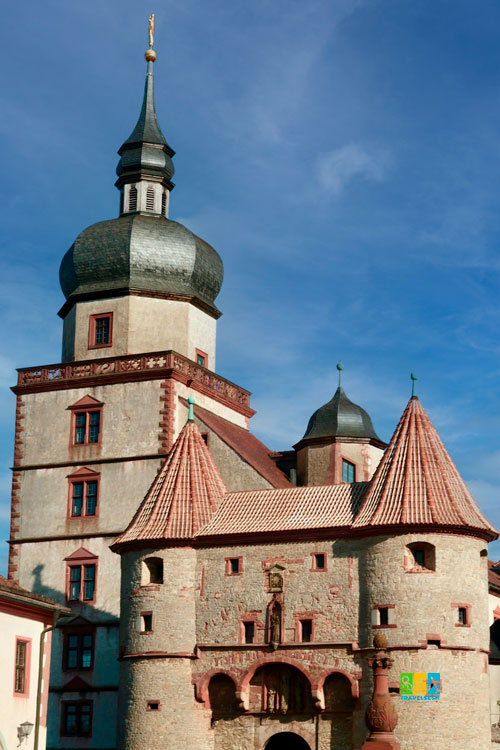
Machicolation Tower (Maschikuliturm)
A small but atmospheric medieval tower near the path up to Marienberg Fortress. The name comes from “machicolations” — openings in the walls once used for defense. It’s not a major tourist attraction, but it adds a genuine medieval feel to the climb up to the fortress. A great spot for a quick stop and photo on the way up.
Fortress Viewpoint (Marienberg Viewpoint)
The viewing platform within Marienberg Fortress is one of the best panoramic spots in the city. This is where you get the classic Würzburg view: red rooftops, the Main River, and Alte Mainbrücke. It’s the main reason to climb the hill — the photos come out perfectly postcard-worthy. Come closer to sunset when the light turns soft and the city looks even more stunning.
Burkard Gate (Burkarder Tor)
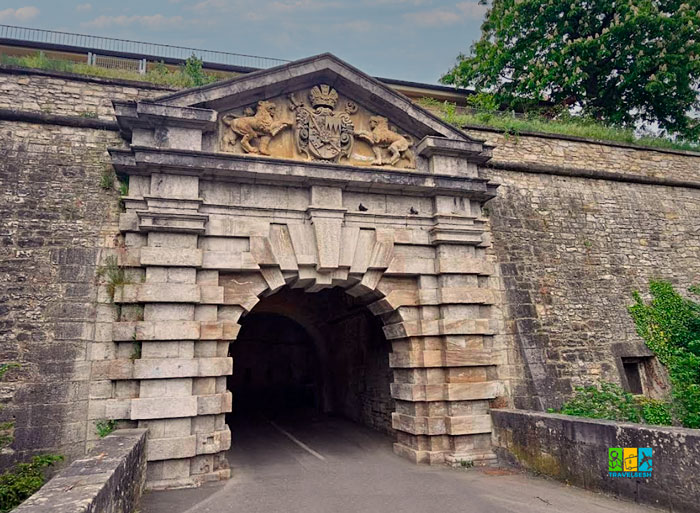
Historic city gate near the ascent to Marienberg Fortress. It’s one of the few surviving sections of the city’s old fortifications, through which one once entered Würzburg. Today it’s more of an atmospheric stop along the route than a standalone sight, but it conveys the medieval character of the city beautifully. Best combined with the climb to the fortress — as part of the route.
Würzburg Residence (Würzburg Residence)
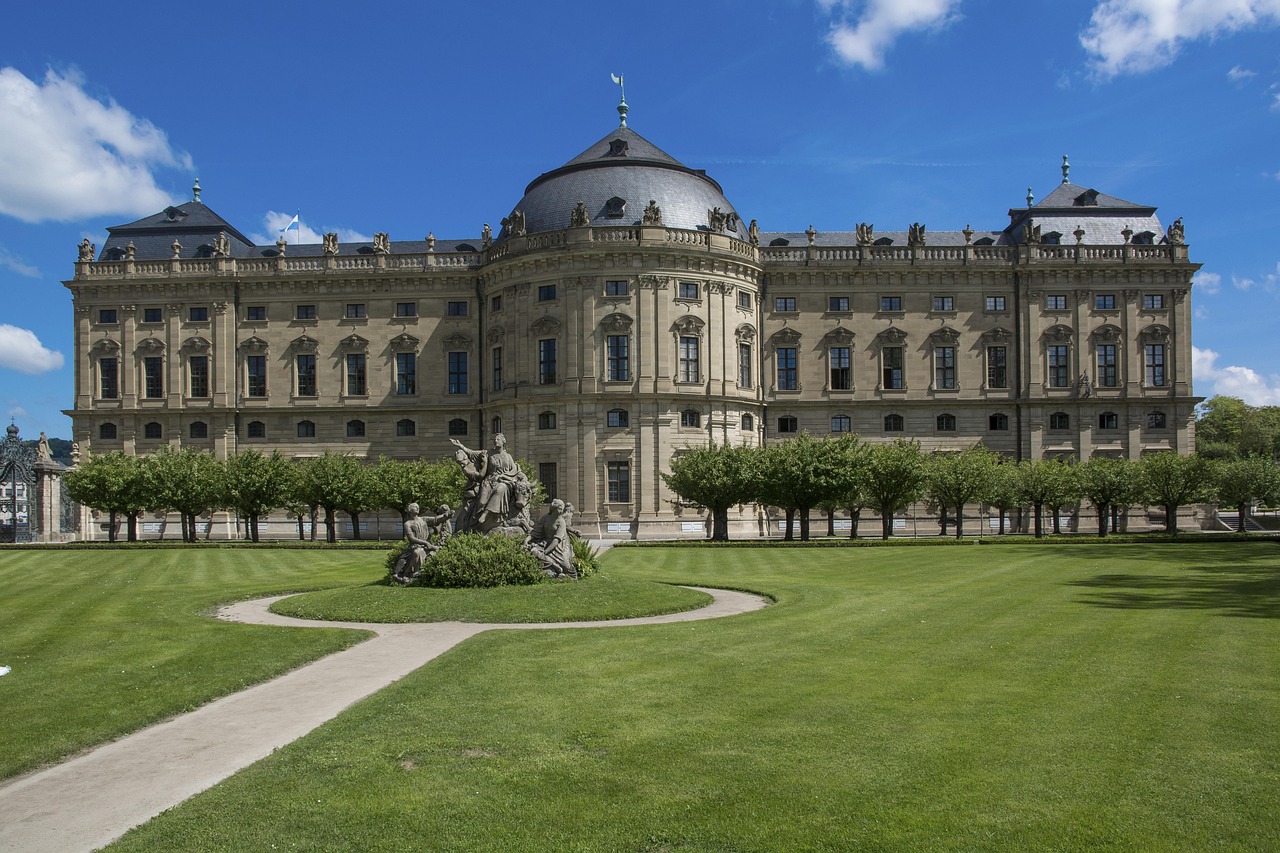
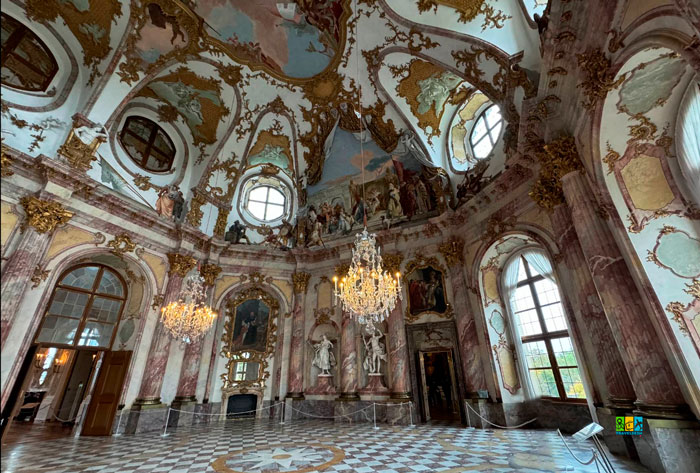
The city’s main attraction and the reason to come here even for just one day. The palace is a UNESCO World Heritage Site and is considered one of the finest examples of Baroque architecture in Europe.
Inside: lavish halls, detailed interiors, and an enormous ceiling fresco by Giovanni Battista Tiepolo — one of the largest in the world. Pay special attention to the grand staircase — it’s one of the most spectacular parts of the palace.
Allow at least 1.5–2 hours; getting an audio guide or joining a tour is recommended — without it, you’ll easily miss the details.
Court Garden Orangery (Orangerie des Hofgartens Würzburg)
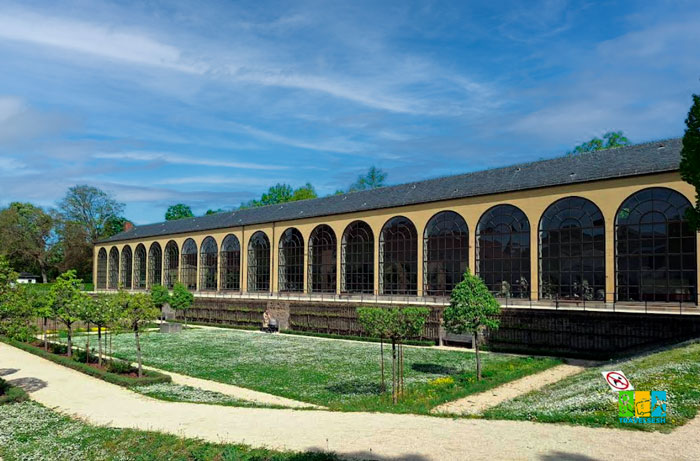
The orangery in the garden of the Würzburg Residence is a peaceful and very photogenic spot right next to the city’s main attraction. A Baroque building with symmetrical alleys, flower beds, and manicured lawns — perfect for a break after the palace. There are fewer people here than inside the Residence, and the atmosphere is much more relaxed.
Worth spending at least 20–30 minutes: stroll through the garden, take some photos, and simply rest from the city’s pace.
Old Main Bridge (Alte Mainbrücke)
An old stone bridge over the Main — one of the most atmospheric places in the city. It’s often compared to Charles Bridge in Prague, but with far fewer tourists and a much more local vibe.
The main thing to do: enjoy a glass of Franconian wine right on the bridge. Locals and visitors simply buy wine from the nearby kiosks and stand here with a view of the river and the fortress. Especially atmospheric in the evening as the sun sets.
This isn’t just a bridge — it’s a gathering place. People don’t just walk across; they come here to spend time.
Town Hall Tower (Grafeneckart)
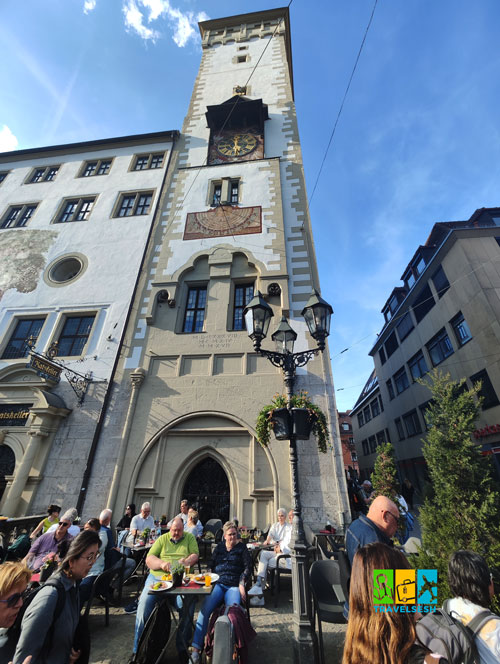
The oldest part of Würzburg’s town hall and one of the few medieval towers that survived in the city center. The tower is part of the city council complex and stands right next to Alte Mainbrücke.
Once the residence of city administrators, the building gradually expanded into the modern town hall. Today it’s less of a tourist attraction and more a part of the historic urban landscape.
Würzburg Cathedral (Würzburg Cathedral)
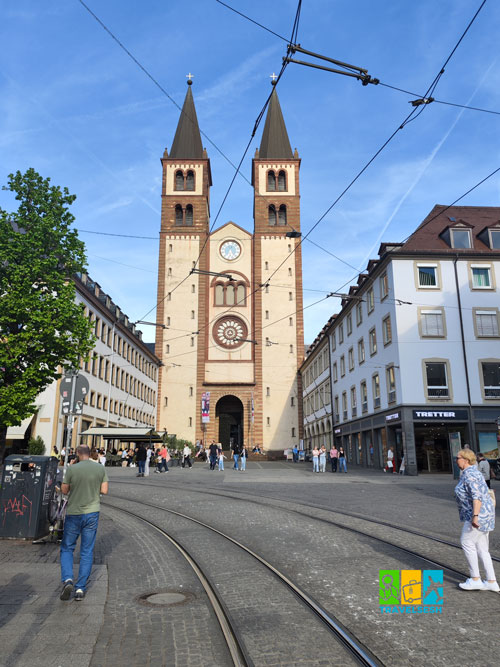
One of the largest Romanesque cathedrals in Germany and the city’s main church. The exterior is quite restrained, but inside you’ll find a blend of styles that accumulated over the centuries.
The cathedral was rebuilt multiple times, especially after the destruction of World War II, so it’s fascinating to see how Romanesque, Baroque, and modern elements mix here.
Worth stepping in for at least 20–30 minutes during a walk through the center — it’s one of the key landmarks in the city, but without the crowds you’d find at more heavily touristed places.
Schönborn Chapel (Schönbornkapelle)
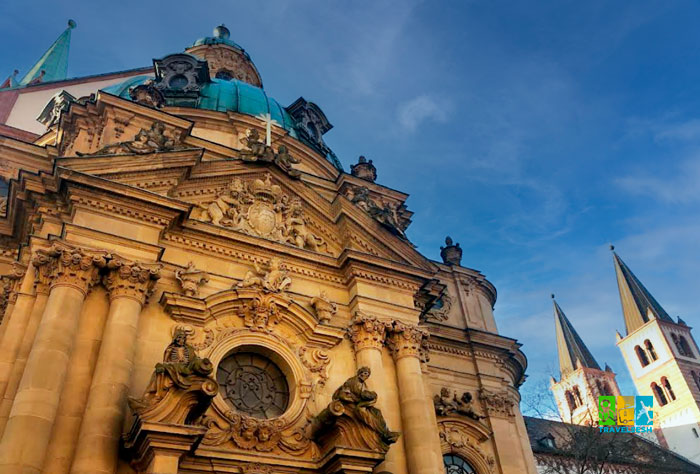
The Schönborn family burial chapel is one of the most unusual and underrated sights in Würzburg. It sits right next to Würzburg Cathedral and often goes unnoticed by tourists.
Inside — the tombs of the influential Schönborn dynasty of prince-bishops, who played a key role in the city’s development. The interior combines Baroque richness with a stern, almost monumental mood.
University of Würzburg (Julius-Maximilians-Universität Würzburg)
The University of Würzburg is one of the oldest in Germany (founded in 1402) and an important part of the city’s fabric. It’s thanks to the students that Würzburg has a lively, non-touristy atmosphere. Notable scholars studied and worked here, including Wilhelm Conrad Röntgen, who discovered X-rays right here in Würzburg. For a tourist it’s not a “must-see” like the palace or fortress, but it’s worth strolling through the campuses or stepping inside the historic buildings — especially if you want to experience the city as more than just a tourist destination.
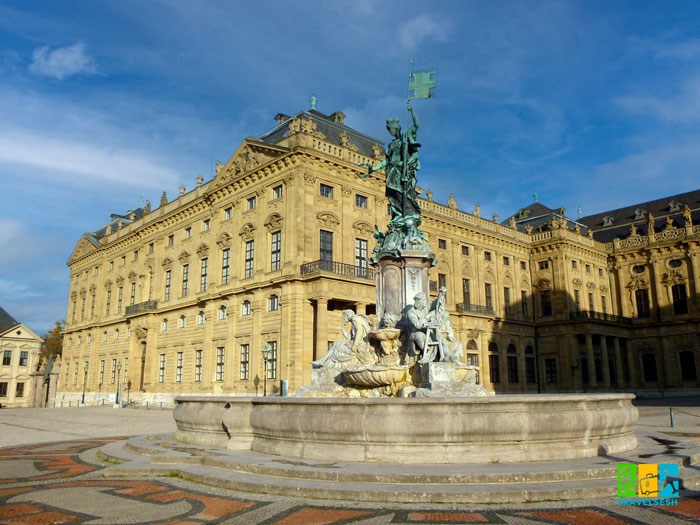
University Church (Neubaukirche)
The former university church, located right next to Julius-Maximilians-Universität Würzburg. The exterior is fairly modest, but inside the space feels more like a concert hall than a traditional church. Today it’s no longer used for regular services — exhibitions, events, and concerts are held here instead.
A good place to step away from the standard tourist circuit and see another side of the city — more student-oriented and contemporary.
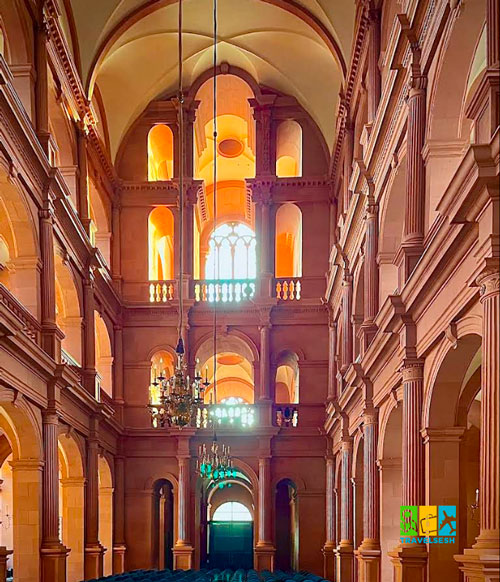
Neumünster Church (Neumünster Church)
One of the most interesting churches in Würzburg’s center, often overshadowed by the cathedral despite being right next door. Outside: a massive Baroque facade in reddish stone. Inside: a bright space with a dome and a calm atmosphere, without the excessive grandeur of the larger cathedrals.
This is where the medieval poet Walther von der Vogelweide is buried, which gives the place added historical weight.
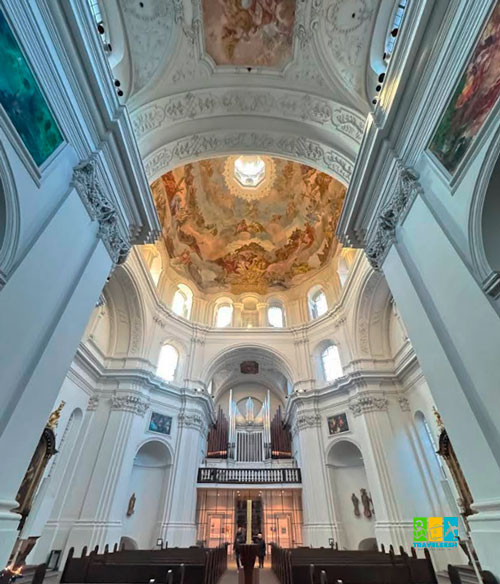
Main Square (Marktplatz Würzburg)
The main square of the old town and one of the most vibrant spots in Würzburg. This is where markets, Christmas fairs, and city events take place. The square is surrounded by historic buildings and is essentially the heart of the old center.
What to see on the square:
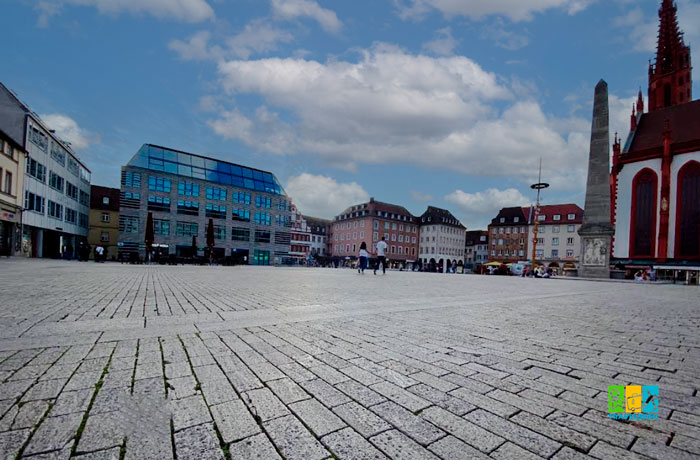
St. Mary’s Chapel (Marienkapelle)
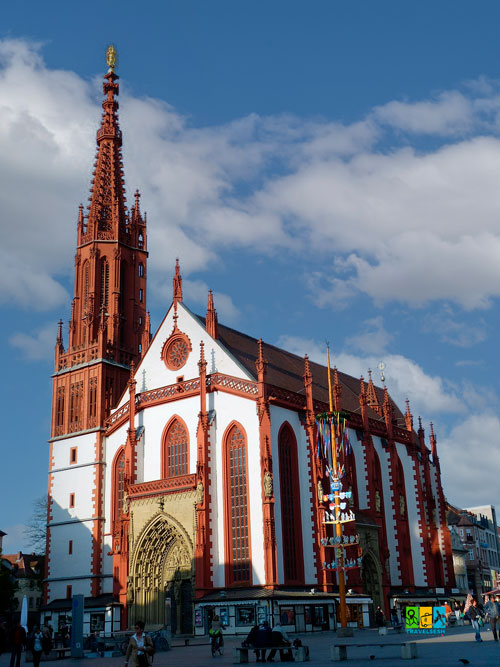
A Gothic chapel dedicated to St. Mary, right on the square. It immediately catches the eye with its tall towers and red sandstone. One of the most recognizable buildings in the city.
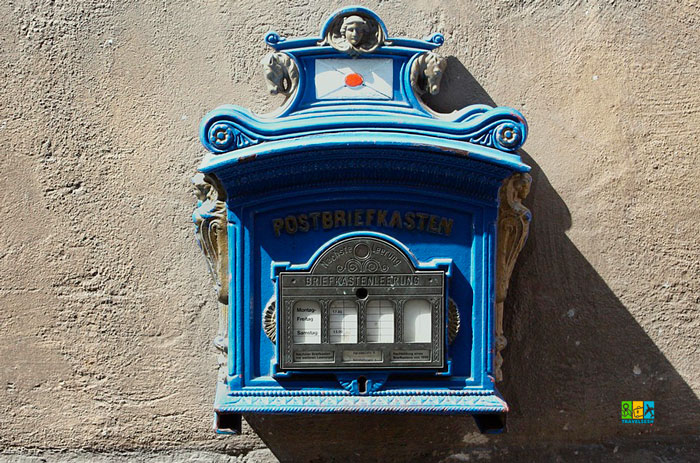
Historic Postbox (Alter nostalgischer Briefkasten)
Located right in the city center, not far from Marienkapelle. You won’t miss it on a regular stroll through the center — it’s like a small bonus to the main sights, adding atmosphere and looking wonderfully photogenic.
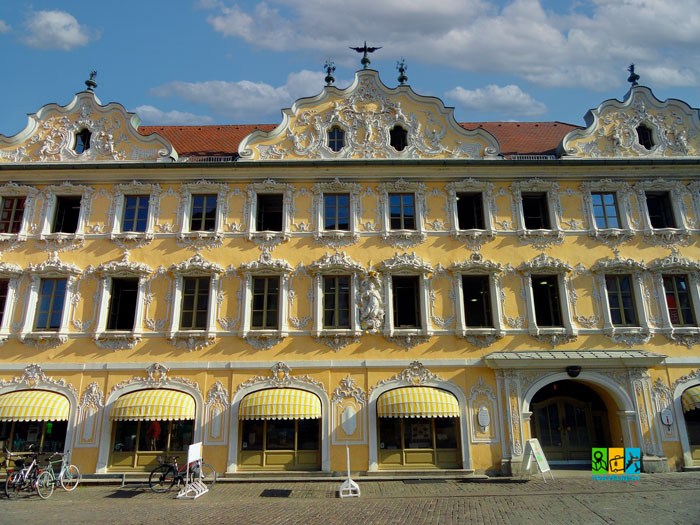
Falcon House (Falkenhaus)
The “Falcon House” is the most striking building on the square, with a yellow Rococo facade. Once a hotel, today it houses the tourist information center and a library. The facade is one of the most photogenic in Würzburg.
Oberer Markt
Part of the market area next to Marktplatz. There’s more local life here: shops, cafés, and less tourist noise. A nice continuation of the walk after the main square.
Häcker Fountain (Häckerbrunnen)
A small but characterful fountain in the city center, connected to Franconia’s wine culture. The name “Häcker” means winemaker, and the fountain itself symbolizes the region’s viticulture traditions. Located near the market area and Marktplatz Würzburg, so it naturally falls into your route during a walk through the center.
This whole area is the best place to experience “living” Würzburg — not the museum version, but the everyday, urban one.
Juliusspital Foundation (Stiftung Juliusspital Würzburg)
One of the oldest charitable institutions in Bavaria — the Julius Hospital Foundation, which has existed since the 16th century. It was established as a hospital for the poor and today still operates as a medical and social institution, while also being renowned for its winemaking traditions.
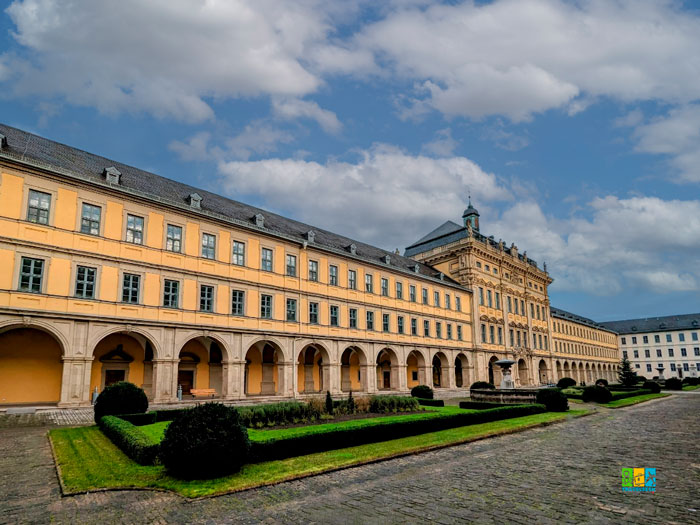
Gartenpavillon Juliusspital
On the grounds of the complex there is a garden pavilion — a small but very elegant Baroque building in a quiet inner courtyard. It’s part of the larger Juliusspital Weinstuben complex, known for its wine and traditional cuisine.
Juliusspital Bakery
The bakery at the Stiftung Juliusspital Würzburg complex is a place where you can quickly get a taste of Würzburg without restaurant pretension.
They sell classic German baked goods: pretzels, rolls, pastries, and seasonal sweets. Everything is fresh, simple, and aimed at locals, not tourists.
The place isn’t touristy in the conventional sense, but it’s very atmospheric: a combination of history, medicine, and Würzburg’s wine culture all in one courtyard.
Würzburg Viewpoints
If you want to see the city from above — Würzburg has several genuinely impressive spots. They each have a different atmosphere: some are more “city and tourists,” others offer quiet vineyards.
Fortress Viewpoint (Marienberg Viewpoint)
The most popular viewpoint in the city, located near Marienberg Fortress. This is where you get the classic Würzburg view: red rooftops, the Main River, and Alte Mainbrücke.
Pro: the best “postcard” angle
Con: can be crowded
Best time: around sunset
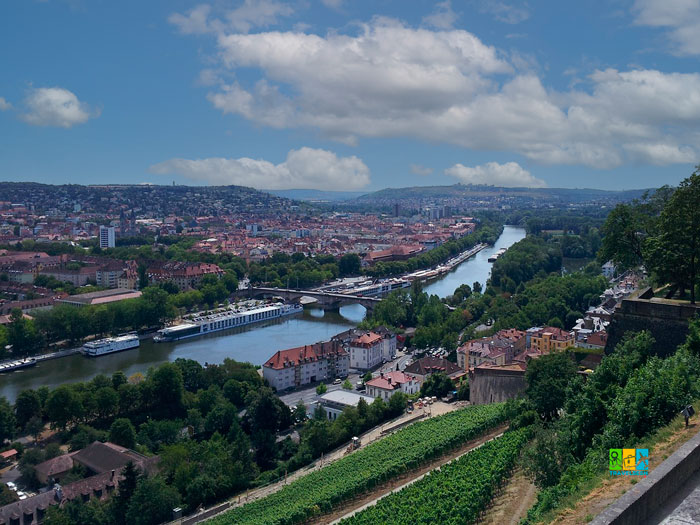
terroir f Würzburg
A modern viewing platform among the vineyards above the city — one of the most interesting panoramic spots in Würzburg. It’s part of the “Literatur und Wein” project, combining scenery, architecture, and the theme of wine.
From here you get a wide view of the city, the Main River, and the vineyard-covered hills. The atmosphere is completely different from Marienberg Viewpoint — more nature, more calm.
Pro: fewer tourists, beautiful vineyards
Con: a bit further from the center
Best time: on a clear day or at sunset
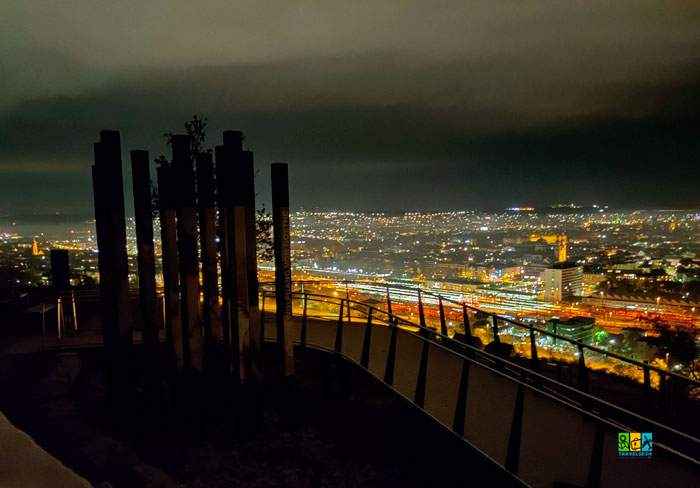
Blick über Würzburg Reußenweg
Another great viewpoint that not all tourists know about. Located a little above the city, in the vineyard area, it offers a very clean, open view of Würzburg without the crowds. From here you can clearly see the Main River, the old bridge, and the city center — a classic “postcard” angle, but without the tourist hustle of Marienberg Viewpoint.
Pro: peaceful and very few people
Con: requires a bit of a climb
Best time: in good weather or at sunset
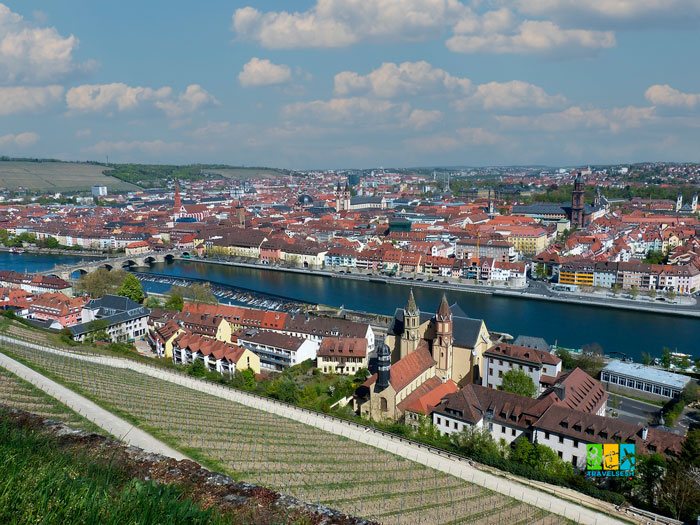
Aussichtsplatte Würzburg
Another viewpoint above the city, often included in the same route as terroir f Würzburg. It’s a purpose-built platform among the vineyards with an open view of Würzburg and the Main Valley. Less touristy than Marienberg Viewpoint, and more peaceful and nature-focused. No city noise — just the view and vineyards all around.
Pro: great panoramic view + fewer tourists than the popular spots
Con: not quite as “wow” as Marienberg, and requires a short walk
Best time: in clear weather or at sunset
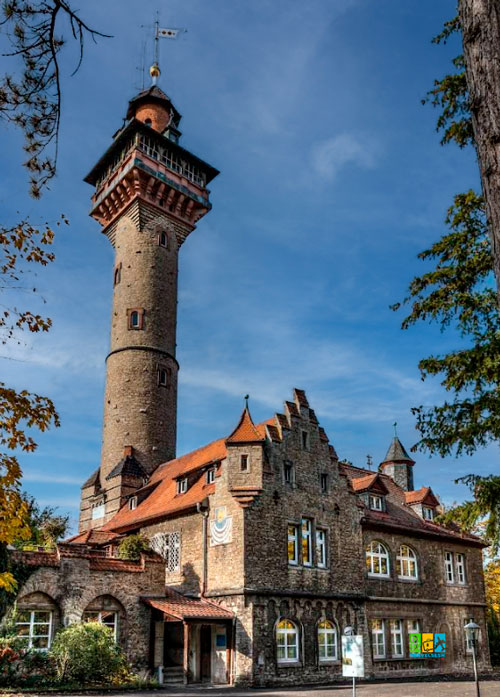
Observation Tower (Frankenwarte Würzburg)
An observation tower on the hill above Würzburg, offering a panoramic view of the city and the Main Valley. Less touristy than the classic spots in the center, but gives a real sense of space and height.
Pro: tall observation tower with a wide panorama of Würzburg and surroundings
Con: not in the center — you need to make a special trip
Best time: in clear weather — the better the visibility, the more powerful the effect from the height
Museums
Museum of Lower Franconia (Mainfränkisches Museum)
A regional history museum located right inside Marienberg Fortress. One of the best options for understanding the history of the city and region (especially the sculpture and medieval art collections).
Opening hours: Tuesday – Sunday: 10:00 – 17:00 (April–October), Tuesday – Sunday: 10:00 – 16:00 (November–March), Monday – closed
Admission: adults: ~€5, concessions: ~€4, children under 18 – free, Sundays: ~€1
In practice: this is not a “quick 30-minute museum” — allow 2–3 hours, plus a bonus stroll through the fortress and nearby viewpoints.
Memorial Room (Memorial Room 16 March 1945)
The memorial room is located inside the town hall and is dedicated to one of the darkest dates in Würzburg’s history — 16 March 1945, when the city was almost completely destroyed in an air raid. In a single night, the historic center was reduced to rubble. The exhibition is small but emotionally powerful: before-and-after photographs, personal stories of residents, and documents about the postwar reconstruction.
This place gives you an entirely different perspective on Würzburg — not as a tourist destination, but as a human and historical story. Best visited after a walk through the old town, to understand why it looks the way it does today.
Martin von Wagner Museum (Martin von Wagner Museum)
The museum is housed in the south wing of the Würzburg Residence, a UNESCO World Heritage Site, and spans several eras: antiquity, Egypt, medieval art, and painting. One of the largest and oldest university museums in Europe — a great option if you want to add substance to your visit to the Residence beyond just the interiors.
Opening hours: Tuesday – Saturday: Antiquities Collection: 10:00 – 13:30, Picture Gallery: 13:30 – 17:00. Sunday: 10:00 – 13:30 (exhibitions alternate weekly). Last entry 30 minutes before closing.
Admission: Adults: ~€3, concessions: ~€2.
Röntgen Memorial Site
The place where Wilhelm Conrad Röntgen discovered X-rays — one of the most important scientific discoveries in history. The museum is located in the Julius-Maximilians-Universität Würzburg building where it happened.
A fascinating museum about science, experiments, and the moment of discovery that changed medicine.
Opening hours: Monday – Friday: 08:00 – 20:00, Saturday, Sunday and public holidays: 10:00 – 18:00
Admission: Free entry
A small museum that fits easily into your route when visiting the University of Würzburg — it doesn’t take long, but adds an interesting scientific dimension to the trip.
Where to Eat (Authentic Food + Wine)
In Würzburg, food isn’t just about grabbing a bite — it’s a local experience. Franconia is one of Germany’s main wine regions, so ordering a glass of wine here makes more sense than a beer (though that’s available too). The main format is cozy Weinstuben: simple interiors, local cuisine, and house wine.
Wirtshaus Lämmle — a classic Franconian restaurant without any fuss. They serve traditional dishes: schnitzel, roast meat, sausages, potato sides. The atmosphere is very local — mostly Germans, fewer tourists. A great first introduction to the regional cuisine.
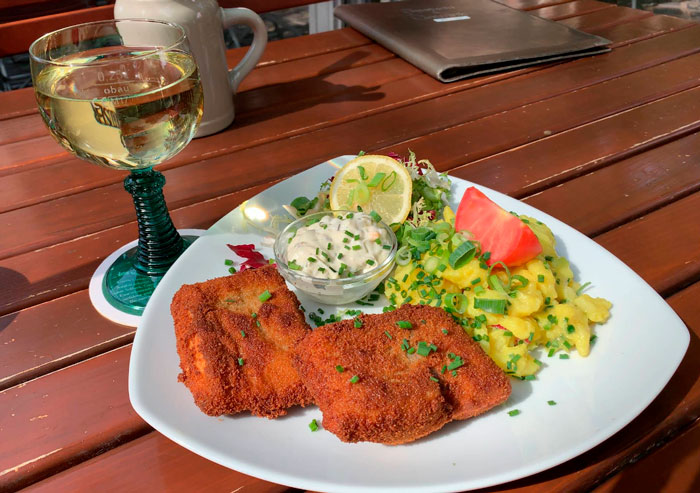

Juliusspital Weinstuben — another iconic spot at the Stiftung Juliusspital Würzburg wine estate. A combination of history + wine + local cuisine. Perfect for dinner or a quiet evening.

Wineries in Würzburg
Würzburg is not about beer — it’s about wine. Winemaking here has a history of 700+ years, and some of the wineries are located right in the city center. In summer, it’s one of the best wine destinations in the region.
Here are the top places really worth visiting:
Juliusspital Weingut Würzburg — one of the most famous wineries in Germany, with a history dating back to 1576. Large grounds, a park, and wine cellars. Wine tastings are available on-site. Atmosphere: “history meets premium.”
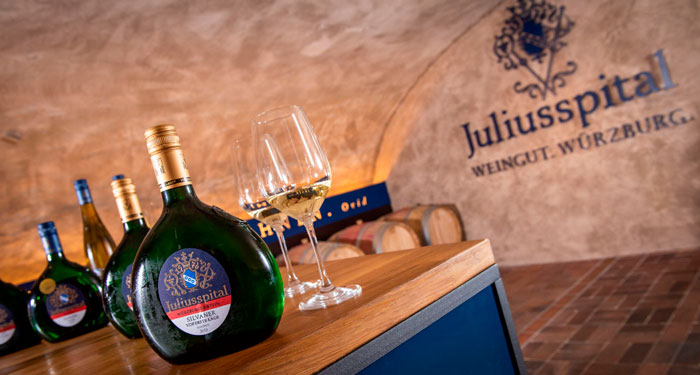
Bürgerspital Winery — an even older winery (founded in 1316), one of Würzburg’s symbols. Wine in the signature Bocksbeutel bottles. Has a vinothek and restaurant. Very authentic wine cellars.
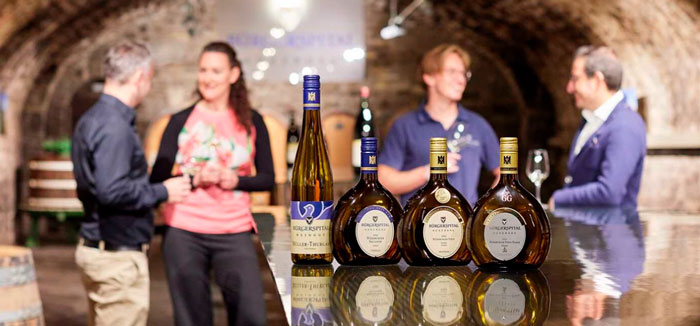
Staatlicher Hofkeller — a winery located directly beneath the Würzburg Residence. One of the oldest wine cellars in Europe. Tastings held underground. A top location for a “wow experience.”
And most importantly: in Würzburg, drinking wine is part of the culture, not just an option.
Tours in Würzburg
If you don’t just want to “walk around on your own” but want to understand the city and have a real experience, Würzburg offers several genuinely good tour formats:
Walking Tour of the Old Town
The classic option — a 1.5–2 hour walk through the center: Marktplatz Würzburg, Falkenhaus, Marienkapelle, Alte Mainbrücke.
Often this is more than just “history” — many tours include wine, such as a tasting right on the bridge.
Available with a guide or as an audio tour.
Wine Tours of Franconia
This is a must-do in Würzburg. Format: vineyards, cellars, tastings of 5–7 wines. Often includes Staatlicher Hofkeller or other wineries. Guides explain grape varieties, soils, and why the wine here is different.
Duration: 4–5 hours, starting in the afternoon.
Price: ~€45–65
Available as group tours or as a “wine walk” through the city.
Main River Cruise
A more relaxed option — seeing the city from the water.
Formats: short city cruises, trips to Veitshöchheim, combined tours (boat + guided tour)
Duration: ~2–2.5 hours
Price: ~€40–50
Takeaway: In Würzburg, tours aren’t about “listening to a guide” — they’re about wine + history + atmosphere. The ideal approach is to combine: daytime for the city, evening for wine.
How to Get to Würzburg (and why people often skip it)
Würzburg is a classic story: the city sits on a popular route, but many people simply drive past. That’s a mistake — it’s one of the best places to pause between major cities.
From within Germany
Train — the most convenient option:
Direct ICE/RE trains, no transfers. Perfect for a day trip format.
What the route looks like in practice:
- ICE along the München ↔ Frankfurt corridor
- or RE/IC along the Nürnberg ↔ Würzburg ↔ Frankfurt line
Example services (for reference):
- ICE 523 / ICE 529 (often run via Nürnberg → Würzburg → Frankfurt)
- ICE 627 / ICE 629 (morning/daytime options on this route)
- RE 10 / RE 55 (slower, but cheaper)
Journey time: 55–70 min
Frequency: roughly every 30–60 minutes
From Europe
The most common option is via Frankfurt Airport.
You land → board a train → in about 1 hour you’re in Würzburg. Logistically very straightforward.
Typical trains:
- ICE 621 / ICE 623 / ICE 627 (Frankfurt ↔ Würzburg ↔ Nürnberg / München direction) ~55–70 min
- IC on the same corridor (slightly slower) ~1:10–1:30
By car
Ideal if you’re traveling around Germany. Good autobahns and easy access to the city. We rent cars here.
Würzburg fits naturally into a route:
Frankfurt → Würzburg → Nuremberg, Munich, or onward along the Romantic Road
Würzburg: What You Must Do
Würzburg is a city that doesn’t try to “impress” at first glance, but quickly draws you in with its atmosphere: the Main River, wine terraces, the old town, and a fortress overlooking it all.
Climb to the Fortress at Sunset
Festung Marienberg — the city’s main panoramic viewpoint. The climb is not difficult; plan it for the evening. This is where you best appreciate the scale of the city: the river, the bridges, the vineyards, and the red rooftops.
Have a Glass of Franconian Wine on the Bridge
Alte Mainbrücke — a place that has become a symbol of the city. People don’t just walk across; they stand with a glass of white Franconian wine and take in the city. Especially atmospheric at sunset, when the bridge fills with people but still feels relaxed rather than chaotic.
Wander the Old Town Without a Plan
The center of Würzburg is a place you should not “tick off a list” — just walk through it:
- narrow streets
- squares with cafés
- old facades and Baroque architecture
- random wine bars and hidden courtyards
The rule that applies here: “get lost — find the best things”
Conclusion
Würzburg is an underrated city that can genuinely surprise you. There are no crowds like in Munich or Prague, but there is architecture, atmosphere, and a very pleasant pace of life. It’s ideal for a short trip or as a stop on a Bavaria itinerary — especially if you’re looking for wine, panoramic views, and a calm European city without the tourist noise.
There are no comments for this post. Comment or ask questions first