
To get from Kyiv to Romania, there are several possible routes, but we will share ours, which ran from Kyiv to Chernivtsi and there is already a transition to Romania.
Our road route, schematically it was like this: Kyiv – Chernivtsi – Siret – Throne Fortress in Suceava – Neamts Fortress – Iasi. Several points can be added to this route along the way: Agapia Monastery, Cantacuzino Palace, Alexander Ioan Kuza Memorial Palace. As long as you are mobile enough, we will definitely mention them in the description of the route.

Kyiv – Chernivtsi
This stage of the route is 530 km. Allow 8 hours for the trip. There are several road options. We drove the classic route Kyiv – Zhytomyr – Berdychiv – Letychiv – Khmelnytskyi – Kamenets-Podilskyi – Khotyn – Chernivtsi.
We arrived in Chernivtsi in the evening, settled in a hotel and went for a walk for dinner near the hotel.
It is conveniently located at the exit from the city towards the border. We booked a room a couple of days before departure, when we were driving on the way back, we wanted to book on the same day, but there was already no room, so you have to book in advance. They took a three-bed room, a large room with a double bed, a TV and air conditioning, fucking bedside tables, a carpet in the middle and on each side of the bed. The second room has a single bed, there is a refrigerator, a table and chairs. There is a small kitchen. The bathroom is clean, there were soaps and shampoos, a towel for the feet, two towels for each person, the bed was clean, it was comfortable. There is a parking lot on the territory, the gate is locked. Good check-in and check-out, there is a shop and a pizzeria nearby.

After the road, we didn’t want to go anywhere or go far, so we found a pizzeria near the hotel Пікантіко. Usually a lot of people, especially since it was a Friday. We sat in the middle, but there is a terrace, but it’s a pity that it was very smoky, there was nothing to breathe from the smoke, it’s terrible. We ordered chicken soup, shurpa, a large pizza and a non-alcoholic mojito, our check came out to about UAH 350 for three (not sure what the prices are now). Regardless of the cigarette smoke on the terrace, we enjoyed it and everything was tasty and fresh.
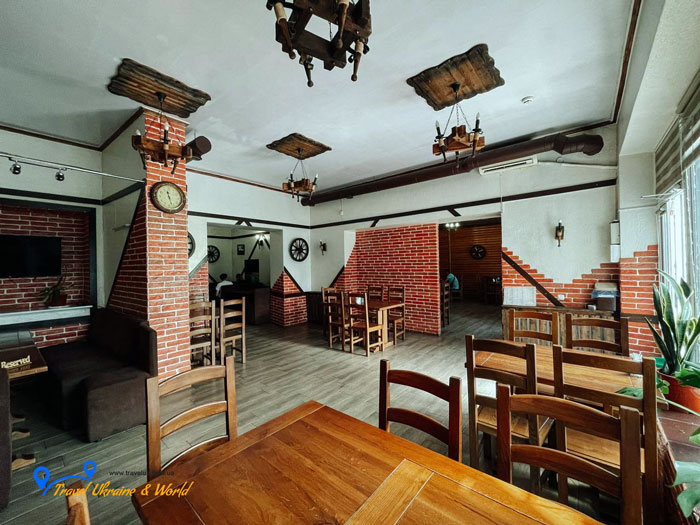
There will be no stopping at what you can see in Chernivtsi. This is a separate topic, but we can assure you that it is also necessary to go here for an excursion.
In the morning, we left in the direction of the border, it is only 30-40 minutes to the border, we filled up a full tank on the way, you can find gas stations of various brands on the way, so there is a choice. If you fill up a full tank of fuel, it will be enough for the entire weekend route.
Search for bus, train and plane tickets ⇓

Border
Porubne – Siret checkpoint. As a rule, the transition was not very busy, at least no matter how many times we passed it, there were never queues.
Since you cross the border early in the morning, after crossing the border you can stop in the town of Siret, which is 14 km away, and drink coffee. We liked La Brasserie Siret which has a great Costa Coffee that works from 6 in the morning. Delicious coffee, cocoa for the child and a small snack of croissants. The cost of coffee, depending on the drink and size, is 4-9 lei, a croissant with fillings 6-8 lei, a regular one 3-5 lei, sandwiches 11-16 lei, there are other dishes.
After breakfast, we left for the first point of our trip, the city of Suceava, the main purpose of visiting the Throne Fortress. This is not the first time we are in Suceava, so this time we did not walk around the city, but we will tell you what to see.

Suceava
Throne fortress in Suceava (Cetatea de Scaun a Sucevei)
It is a medieval fortress located on a hill. It was built in the 15th century and has a wonderful appearance. You can explore it from the outside or visit the museum located inside the castle, climb the walls, or walk through the dungeons.
Suceava Fortress was one of the places where Moldavian princes were crowned and was an important residence of Moldavian rulers. Moldovan princes such as Stefan III (the Great), Petru Rareș, and Ion Vode were crowned here.
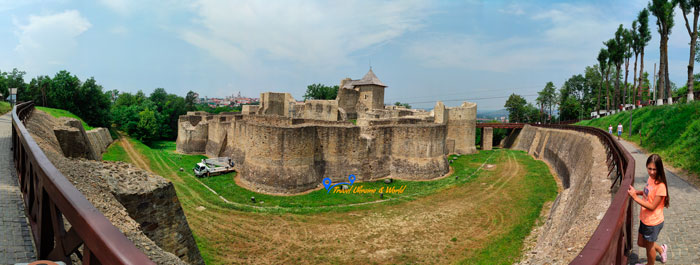
Depends on the season, in summer Monday – Sunday 09:00 – 22:00, last entry at 21:00. In spring 09:00 – 20:00, in autumn 10:00 – 19:00, in winter generally 10:00 – 18:00. Monday is a holiday except in summer.
Ticket prices:
Permanent exhibition adults – 12 lei; pupils, students with valid certificates – 3 lei; pensioners – 6 lei.
Hall of the Royal Council adults – 4 lei; pupils, students with valid certificates – 1 lei; pensioners – 2 lei.
Visit the sections (Ancient History, Middle Ages, New History, Modern History) adults – 4 lei; pupils, students with valid certificates – 1 lei; pensioners – 2 lei.
Treasury for adults – 4 lei; pupils, students with valid certificates – 1 lei; pensioners – 2 lei.
Virtual reality, adults, pupils, students with valid ID cards – 5 lei.
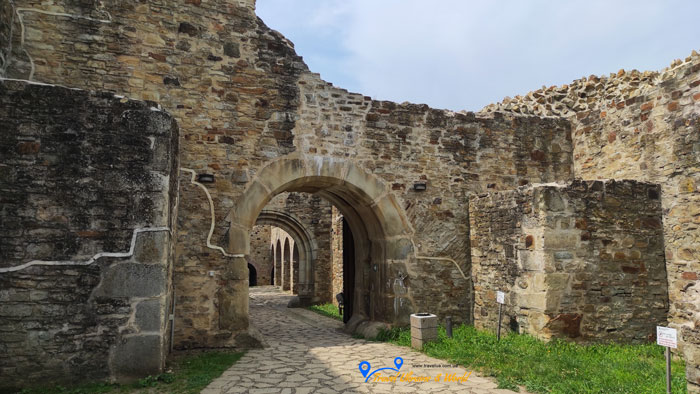
Museum of Ethnography and Nature of Bukovyna (Muzeul Satului Bucovinean)
This museum is dedicated to the culture, traditions and natural resources of the Bukovina region. Here you will find exhibits related to folk art, crafts, and nature reserves.
Hours of work:
Depending on the season, from April to October it is open Tuesday – Sunday from 10:00 a.m. to 6:00 p.m., last entry at 5:30 p.m.; Monday is a day off.
Ticket prices:
Permanent exhibition, adults – 8 lei; pupils, students with valid certificates – 2 lei; pensioners – 4 lei.
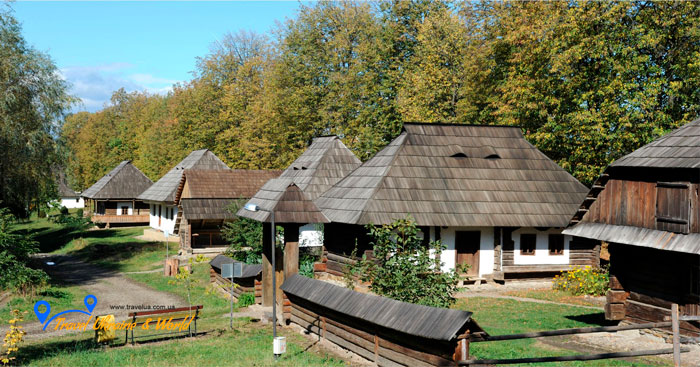
Monastery of Saint John the New (Suchavskyi) (Mănăstirea „Sfântul Ioan cel Nou” de la Suceava)
This monastery was founded in 1534 and has significant historical and spiritual value. The monastery attracts attention with its architecture and cultural significance. It is known for its magnificent frescoes, icons and wooden carved artefacts. You will be able to enjoy its peaceful atmosphere and explore the places of worship, including the church and monastic buildings.


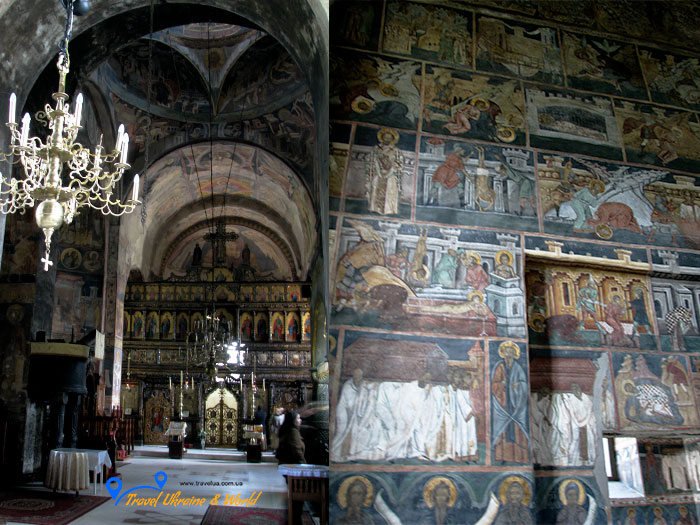


National Museum of Bukovyna (Muzeul Național al Bucovinei)
It is a significant cultural institution that demonstrates the history, art and heritage of the Bukovyna region. The museum features a variety of exhibits and artifacts that provide insight into the region’s rich cultural and historical history.
Visitors to the National Museum of Bukovyna can familiarize themselves with various collections covering different periods and aspects of the history of Bukovyna. The museum presents exhibits related to archeology, ethnography, fine arts, and natural history. You can admire ancient artifacts, traditional crafts, folk costumes, religious icons, historical documents, and more.
Hours of work:
From Tuesday to Sunday: 10:00 – 18:00 – last entry 17:30. Monday is a day off. In the winter period, it works less per hour.
Ticket prices:
Permanent exhibition – adults – 12 lei; pupils, students with valid certificates – 3 lei; pensioners – 6 lei.


Where to eat
The city of Suceava has a variety of restaurants and cafes where you can taste local and international cuisine.
We can immediately mark the restaurant in the hotel Continental Suceava, there are not only delicious breakfasts, but also excellent local cuisine. Therefore, first of all, we recommend that you stay at the hotel Continental Suceava, then you can safely visit their restaurant.
Here are some recommended places in Suceava:
Apropo Cafe ($$)
The building where the “Apropo” cafe is now located is the former House of Marriages. This restaurant offers a variety of food and drinks and can be a good option for visitors looking for a place to have a nice lunch or dinner.
Casa Bucovineana Restaurant ($$)
It is a well-known restaurant and hotel in the city of Suceava. The restaurant is famous for its authentic Bukovyna cuisine and traditional dishes from the region. You will find a wide selection of dishes, including meat dishes, fish, local cheeses and desserts. A unique atmosphere with a touch of traditional Bukovyna culture. It can be a great place to try authentic dishes and enjoy the taste of regional cuisine.
Hotels
On this particular trip there was no need to stay in Suceava, but usually we always stay in a hotel Continental Suceava. Detailed information about the hotel in our separate post about the hotel тут.
Order a tour safely
The next point is Neamts Fortress, which is 60 km from Suceava.
Neamt
Neamts Fortress (Nyamț Fortress)
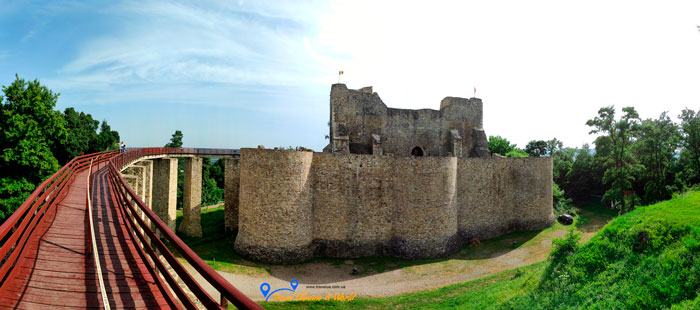
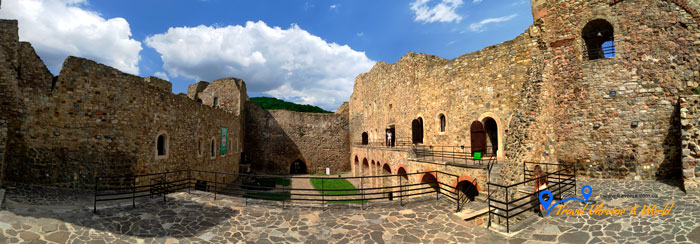
Neamts Fortress is a historical building, one of the most important defensive fortresses in Bukovina and has a rich history dating back to the 15th century. This fortress was of strategic importance in the history of the region, as it served as a defensive structure and the residence of Moldavian princes. She witnessed many important events, such as the Battle of Suceava in 1675. The fortress consists of stone walls and towers, which give it a monumental appearance.
Hours of work:
From Tuesday to Sunday from 10:00 to 18:00, Monday is closed
Ticket prices:
The entrance costs 24 lei per person, but there was another couple of Romanians with us at the entrance and they offered to buy tickets for 5 people so that the cost was 12 lei, so you can save a lot.
Where to eat
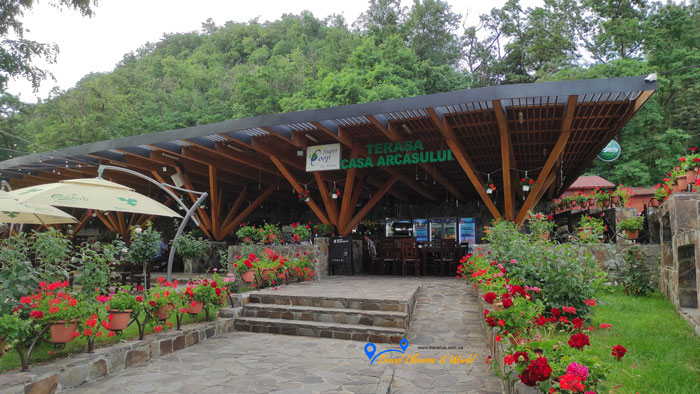
Right next to the path to the fortress there is a restaurant Terasa Casa Arcaşului. We had a very tasty lunch there, local cuisine, relatively not expensive for such a place. There was an atmospheric atmosphere and coziness.
There is another similar restaurant opposite Pensiunea La Cetate and there is also a pretty good hotel how suddenly you wanted to stay here for the night. Prices and booking here.
But after lunch we went on to the last point for today, the city of Iasi. It was 116 km from the fortress to our hotel. Since the day and the road were quite full, we decided to rest in the evening and walk around Iasi in the morning.
Hotel
Since we were already choosing a hotel along our route and this time we didn’t have to stay in the city center, the emphasis was on price and parking. We chose a hotel 6 km from Yassiv, taking into account that we are driving, so we count what is nearby. Hotel Pension Garofita rented a 3-bed room with breakfast. In front of the hotel is a closed area with parking, there are interesting terraces with flowers. Everything looks quite colorful, you live as if in someone’s country house. We read reviews that there were problems with card payment, but we didn’t have any problems, but keep in mind anyway. Breakfast, portions, and all kinds of jams, tea, whatever you could take yourself. Simple, but in principle it is normal for breakfast.

Iasi
Palace of Culture (Palace of Culture)
The Palace of Culture of Iasi, also known as the Palace of Culture and Science, is one of the most prominent buildings in the city of Iasi. It is located in the central part of the city and serves as an important cultural and scientific center of the region.
The Palace of Culture from Iași is a symbol of the cultural life of the city and an important place for the preservation and promotion of art, science and education. Its architectural beauty and significance have made it a popular tourist attraction worth visiting to appreciate the cultural heritage of Yass.
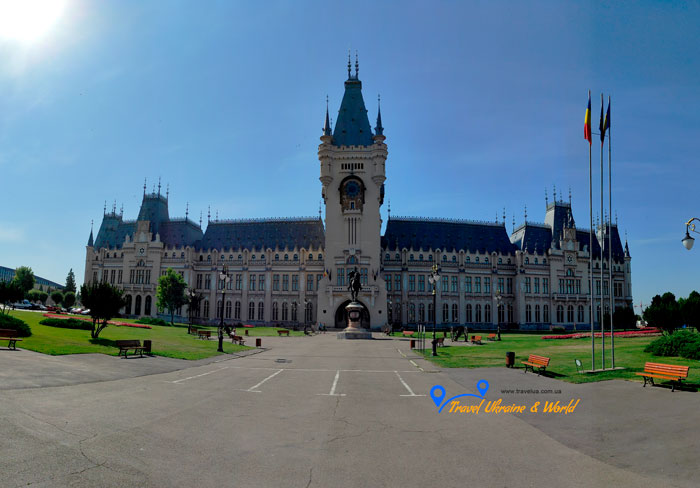
Hours of work:
Wednesday – Sunday 10-17, closed Monday, Tuesday, public holidays
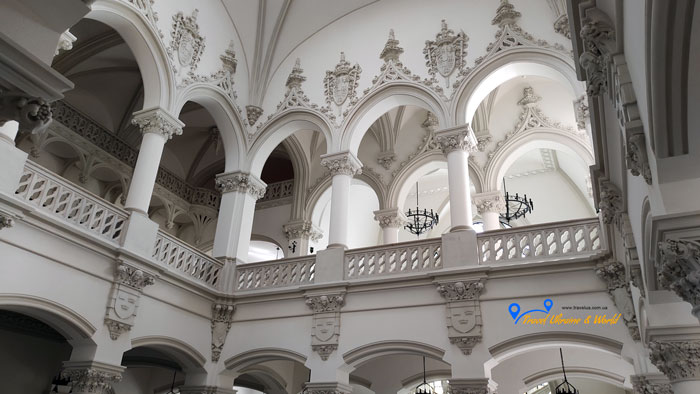
Tickets can be purchased directly at the Palace of Culture or online, you can also see all price options here tickets. The cost of individual museums is 20 lei. But there are complex tickets, we took the one for 60 lei.
Visiting the Palace of Culture – provides access to the “Stefan Prokopiu” Museum of Science and Technology, the Historical Museum of Moldova, the Art Museum, the Ethnographic Museum of Moldova, costs 60 lei per adult.
Visiting the national museum complex of Moldova (Palace of Culture + 3 museums in Iasi) costs 75 lei per adult.

75% discount on the entire ticket price for: pupils and students, including pupils and students of accredited private educational institutions; Euro 26 card holders under the age of 30; adults with moderate or mild disabilities;
50% discount from the full price of the ticket for: pensioners.
There are also cases when the entrance can be free, you can get acquainted with them on the official website.
Parking lot
There are several public parking lots near the palace, payment is in the machine, an hour costs 5 lei, 30 minutes is free after paying for maneuvers with departure.
We advise you to come park your car first, see the palace, and then take a walk in the city center.
Opposite the palace begins the central boulevard Stefan cel Mare si Sfant (Stefan cel Mare si Sfant Boulevard), it is a pedestrian green street, on which the main attractions of the city, you can also buy souvenirs, or buy a snack, or something to drink here.
So the first point, at the beginning of the boulevard.

Monastery of the Holy Three Saints (Mănăstirea Sfinții Trei Ierarhi)
Also known as Iasi Monastery, this Orthodox monastery is one of the country’s most prominent religious and cultural sites. It was founded in 1562, but has since been rebuilt and expanded in several stages.
The monastery consists of several buildings, including the main temple, the monastery building, the bell tower and other structures. The main temple of the monastery is dedicated to three saints: Saints Basil the Great, Gregory the Theologian and John Chrysostom. It is famous for its architecture, frescoes and icons.
Today, the Monastery of the Holy Three Saints is a popular destination for pilgrims and tourists. People come here to pray, sanctify and enjoy its beauty and peace.
Monastery of the Three Saints, So the Monastery of the Three Saints in Iasi is an important religious and cultural symbol of Romania, attracting many people with its architecture, history and spiritual atmosphere.
Opening hours: Museum “Gothic hall”: 12:30 – 18:30 (Friday, Saturday, Sunday).
Entrance ticket: 5 lei

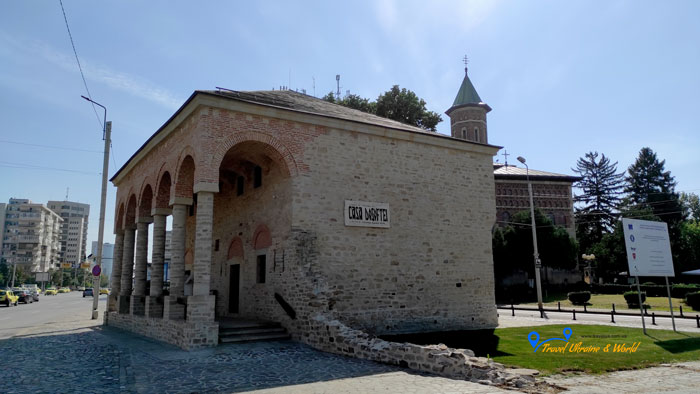
House-museum of Dosoftey (Casa Dosoftei)
It is named after Dimitrii Cantemir, a Moldavian prince, scientist and writer who took the pseudonym “Dosoftey”.
The Dosoftei House is a 17th-century building, one of the oldest surviving examples of Moldovan civil architecture. It was built between 1672 and 1673 and served as the residence of Dosoftius during his tenure as Metropolitan of Moldova.
Today, the Dosoftey House serves as a museum dedicated to the life and work of Dimitry Kantemir. It displays manuscripts, books, and artifacts related to his literary and scholarly endeavors. Visitors can explore various rooms in the house, including Dosoftey’s study, bedroom and chapel, which offer insight into the lifestyle and activities of this influential figure.
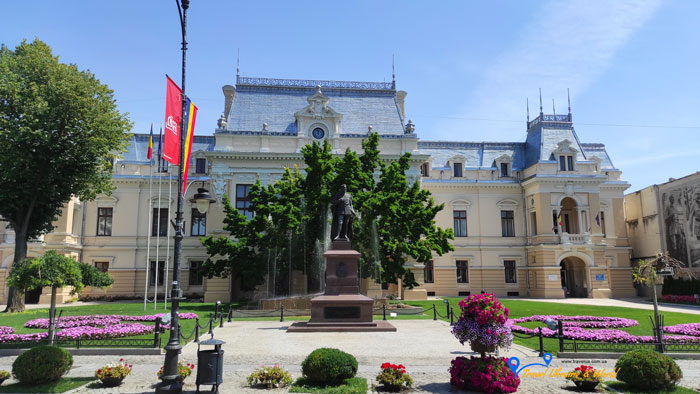
Roznovanu Palace (Roznovanu Palace)
Also known as Rosette-Roznovanu Palace. It is considered one of the most impressive architectural monuments of the city.
The palace was built in the 18th century and originally served as the residence of the Roznovanu family, a wealthy Moldavian noble family. It is a fine example of neoclassical architecture, characterized by elegant proportions, decorative elements and grandeur.
Over the years, the palace has served various purposes.
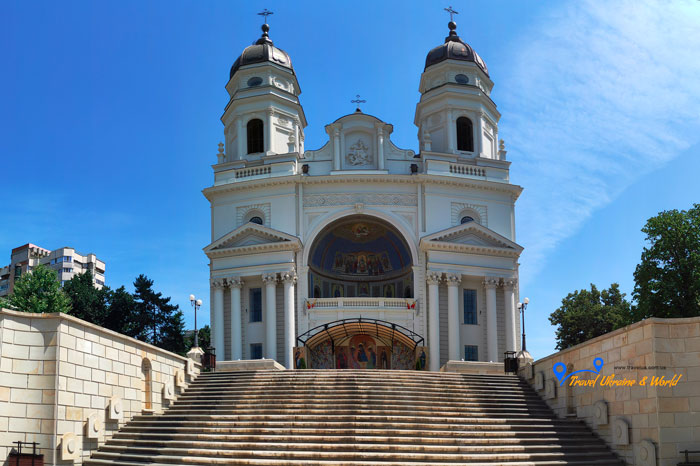
Iasi Metropolitan Cathedral (Metropolitan Cathedral Iasi)
The Metropolitan Cathedral, also known as the Metropolitan Cathedral of Iasi or the Cathedral of St. Paraskiva, is an iconic religious landmark in Iasi. It is the residence of the Romanian Orthodox Archbishop of Iași and one of the largest Orthodox churches in Romania.
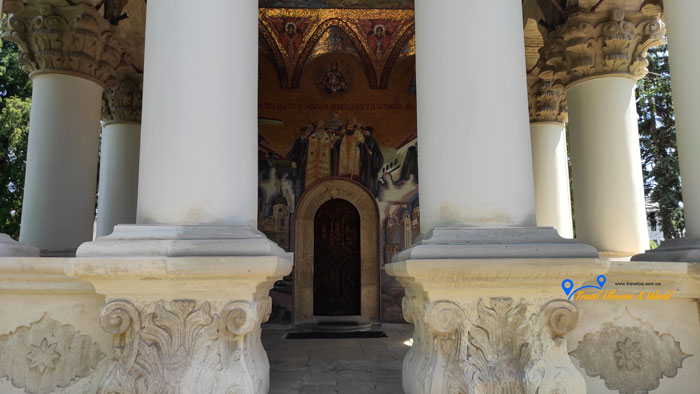
The construction of the Metropolitan Cathedral began in 1833 and was completed in 1887. The exterior of the cathedral is decorated with exquisite decor, intricate stone carvings and beautiful frescoes.
No less impressive is the interior of the cathedral with a spacious nave, a complex iconostasis and exquisite religious works of art. The walls are decorated with stunning frescoes depicting scenes from the Bible and the lives of saints. The central dome rises to a height of 37 meters (121 ft) and is decorated with colorful paintings.
The cathedral is dedicated to St. Paraskiva, the patron saint of Iasi. Her relics are buried in a special chapel in the cathedral, and they attract numerous pilgrims and believers.
Iasi Metropolitan Museum (Iasi Metropolitan Museum)
Dedicated to preserving and showcasing the cultural and religious heritage of the Romanian Orthodox Church in the region.
The museum’s collection includes ancient icons, religious paintings, religious objects made of precious metals, and historical documents. These artifacts provide insight into the religious and cultural development of the region over the centuries.
Vasyl Oleksandri National Theater (Teatrul Național Vasile Alecsandri Iași)
It is one of the oldest and most important theater institutions in the country. The theater was founded in 1840 and was originally housed in a building known as the Old Royal Theatre. However, in 1894, a new theater building was built specifically for the Vasyl Alexandri National Theater. The architectural style of the building is neoclassical, which is characterized by an elegant facade and grandeur.
Vasile Alexandri National Theater is named after the outstanding Romanian poet, playwright and politician Vasile Alexandri. Alexandri is considered one of the most important figures in Romanian literature, and his works have greatly influenced the country’s cultural heritage.

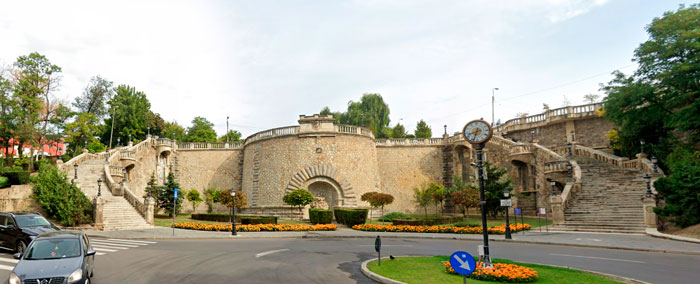
Elizaveta Esplanade (Esplanada Elisabeta)
It is a popular recreation destination and a place for locals and visitors to relax, exercise and enjoy outdoor activities.
The park is located in the central part of the city, near the Palace of Culture and the Metropolitan Cathedral. It covers an area of approximately 11 hectares (27 acres) and has well-kept lawns, walking paths, benches and shade trees.
Elizabeth Park is named after the Romanian Queen Elizabeth, who played a significant role in the country’s history. The park was designed and created at the end of the 19th century as part of the city’s urban development plan to enhance the aesthetics of the city and provide green areas for its residents.
City Museum “Regina Maria” (Muzeul Municipal “Regina Maria”)
The city museum “Regina Maria” is named after the Romanian Queen Maria, who had a significant impact on the history and culture of the country. The museum displays a variety of artifacts, documents, photographs, and artworks that reflect various aspects of Iași’s past.
Visitors to the museum can familiarize themselves with collections that highlight the city’s architecture, urban planning, traditions and prominent figures. Exhibits may include historical objects, archaeological finds, period costumes, and interactive displays that provide insight into the city’s evolution over time.

If you arrive in Iasi early in the morning for the opening of the Palace of Culture, then you will have enough time to see the museum, visit all the main attractions that we wrote about above and get to Chernivtsi on the same day. It is approximately 200 km from Yassa to Chernivtsi. We managed to arrive in Chernivtsi around nine in the evening and spent the night already in Chernivtsi. Unfortunately, Hotel Chernivtsi Apartments in which we spent the night on the way to Romania, there were no places, so we booked a new hotel on the way Leoton Chernivtsi. There are enough hotels in Chernivtsi, below you can choose any one to your taste.
There are no comments for this post. Comment or ask questions first