
Pripyat is an abandoned city of regional significance in Kyiv Oblast, on the banks of the Prypyat River. Founded on February 4, 1970. Abandoned by the population on April 27, 1986 as a result of the Chernobyl accident. The reason for the establishment of the city was the construction and subsequent operation of one of the largest in Europe, the Chornobyl nuclear power plant, a city-forming enterprise that gave Pripyat the honorary title of the city of nuclear workers.


Since the beginning of construction, Pripyat has automatically become a major transport hub. Together with the founding of the city, the previously short shipping fairway of the Pripyat River was extended – since 1976, its length has reached 591 kilometers from the mouth. In addition, a powerful railway hub – the Yanov station, as well as a convenient network of highways – became an important transport artery. 1982 was a peak year for the Pripyat bus station. On May 21 of that year, the bus station received and dispatched 52 bus flights in 14 directions. In addition to ordinary passengers, Pripyat, like a model Soviet city, was visited by many tourists and various evaluation commissions.


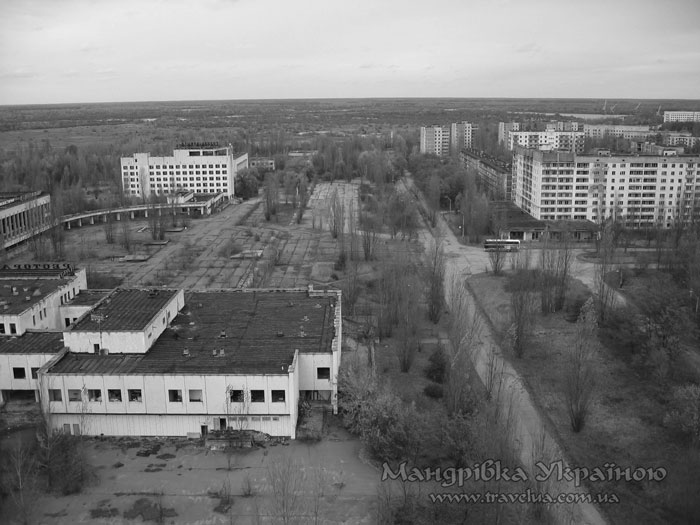


Pripyat is a city with a distinct center. According to tradition, administrative buildings (city council), leisure, culture and recreation facilities (cinema “Prometheus”, GPKyO, palace of culture “Energetik”), universal food and industrial goods stores, and a hotel complex were located in the city center. And although there are still 19 palaces of culture and 11 cinemas in the former Soviet Union, built according to the same project as DK “Energetik” and K/T “Prometheus”, Pripyat is a standard of building uniqueness and Soviet architectural inventions.


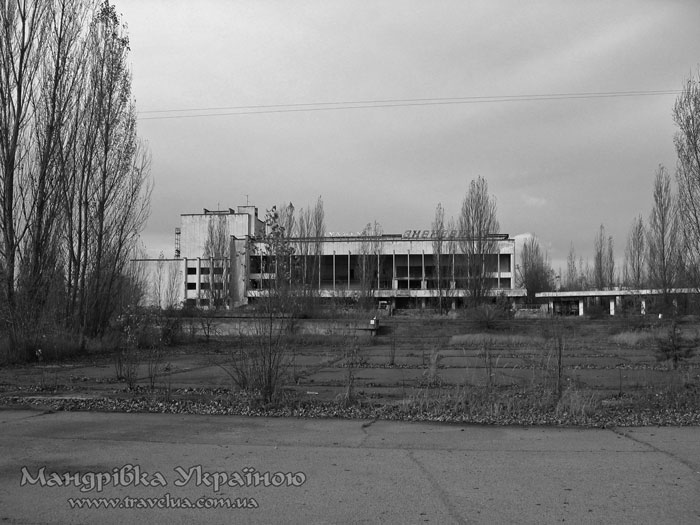


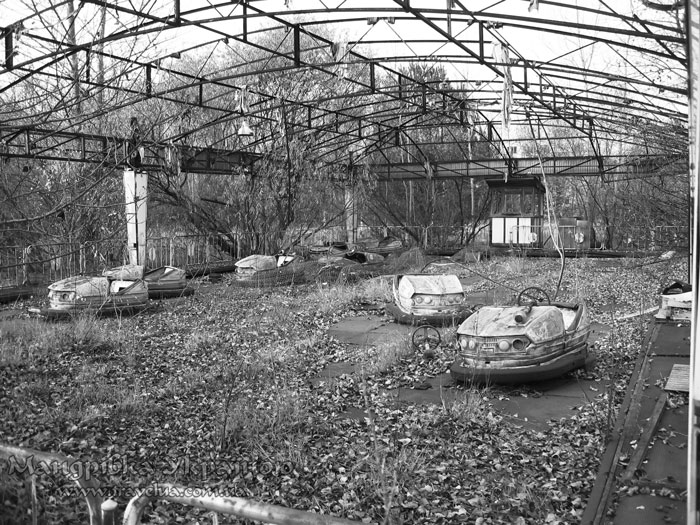
By the end of 1988, two large shopping centers (one of them “Prypyatskiye Stars”), the Palace of Pioneers and a new two-screen cinema, the Palace of Arts “Yuvileyny” and the Hotel “Zhovten”, two sports complexes – ” Chernihiv” and “Prypyatchanin”. Also, a 52-meter-high repeater of television signals was supposed to appear at the intersection of Budivelniki Avenue and Lesya Ukrainka Street.


The population was almost 50 thousand people. People who lived in the new, modern city at that time received high salaries and had good housing. It was prestigious to work at a nuclear power plant.
On April 27, 1986, the evacuation of the city began.
Announcement of temporary evacuation from Pripyat
“Attention, attention! Dear comrades! The City Council of People’s Deputies informs that due to the accident at the Chernobyl nuclear power plant in the city of Pripyat, there is an unfavorable radiation situation. Party and Soviet bodies, military units are taking the necessary measures.
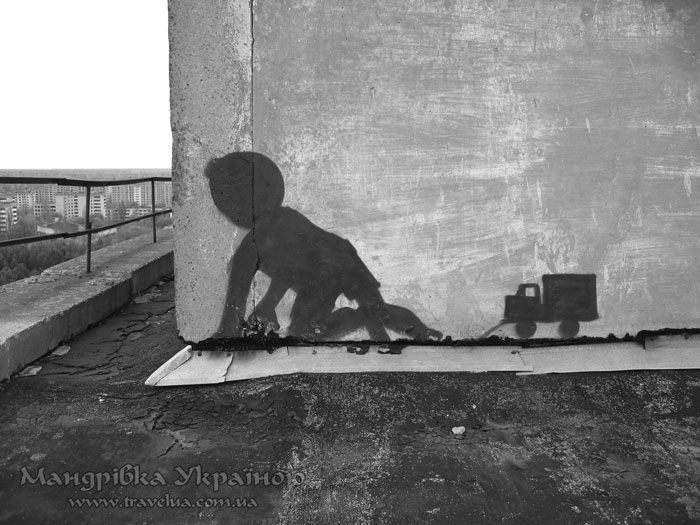
However, in order to ensure the complete safety of people, and, first of all, children, there is a need to conduct a temporary evacuation of the city’s inhabitants to the settlements of the Kyiv region. To do this, buses accompanied by police officers and representatives of the city executive committee will be sent to each residential building today, April 27, starting at 14:00.


It is recommended to take documents, extremely necessary things, and, just in case, food. The managers of the enterprises also established a certain circle of employees who remain in place to ensure the normal functioning of the city’s enterprises.
All residential buildings will be guarded by police officers during the evacuation period. Comrades, temporarily leaving your home, please do not forget to close the windows, turn off the electric and gas appliances, and turn off the water taps. Please observe calmness, organization and order during the temporary evacuation.”

Chernobyl accident
At approximately 1:23:50 a.m. on April 26, 1986, an explosion occurred at Unit 4 of the Chornobyl NPP that completely destroyed the reactor.

The building of the power unit partially collapsed, a fire started in various rooms and on the roof. Subsequently, the remains of the active zone melted. A mixture of molten metal, sand, concrete and fuel particles spread under the reactor premises. As a result of the accident, there was a release of radioactive substances, in particular isotopes of uranium, plutonium, iodine-131 (half-life of 8 days), cesium-134 (half-life of 2 years), cesium-137 (half-life of 30 years), strontium-90 (half-life of 28 years).


The population was not informed about the accident. In the first hour, it was probably due to a misunderstanding of the scale of the danger. However, very soon it became clear that the evacuation of Pripyat would be necessary, which was carried out on April 27. In the first days after the accident, the population of a 10-kilometer zone was evacuated. In the following days, the population of other settlements in the 30-kilometer zone was evacuated. Despite this, neither 26 nor 27 April residents were warned about the existing danger and there were no recommendations on how to behave in order to reduce the impact of radioactive contamination.

In the 30-kilometer zone around the Chernobyl nuclear power plant, specialists seconded to carry out work on and around the emergency unit, as well as military units, both regular and made up of urgently called up reservists, began to arrive. All of them were later called “liquidators”. The liquidators worked in the dangerous zone in shifts: those who gained the maximum permissible dose of radiation left, and others came in their place. The main part of the works was carried out in 1986-1987, approximately 240,000 people took part in them. The total number of liquidators (including subsequent years) was about 600,000.


After the accident at the 4th power unit, the operation of the power plant was stopped due to the dangerous radiation situation. However, already in October 1986, after extensive work on the decontamination of the territory and the construction of the “sarcophagus”, the 1st and 2nd power units were brought back into order; in December 1987, the work of the 3rd was resumed. In 1991, a fire broke out at the 2nd power unit, and in October of the same year, the reactor was completely decommissioned. In December 1995, a memorandum of understanding was signed between the Government of Ukraine and the governments of the “big seven” countries and the Commission of the European Union, according to which the development of the program for the complete closure of the station by the year 2000 began. On December 15, 2000, the reactor of the last, 3rd power unit was permanently shut down.


Chronology of events
On April 25, 1986, the 4th power unit of the Chornobyl NPP was scheduled to be shut down for routine maintenance. It was decided to use this opportunity to conduct a number of tests. The purpose of one of them was to check the design mode, which involves using the inertia of the generator turbine to power the reactor systems in case of loss of external power supply. The tests were supposed to be conducted at a power of 700 MW, but due to operator error when reducing the power, it dropped to 30 MW. It was decided not to raise the capacity to the planned 700 MW and limit it to 200 MW.

With a rapid decrease in power, and further work at the level of 30 – 200 MW, the poisoning of the active zone of the reactor with the Xenon-135 isotope began to intensify. In order to increase the power, a part of the regulating rods was removed from the active zone. After reaching 200 MW, additional pumps were included to serve as a load for the generators during the experiment. The amount of water flow through the active zone exceeded the permissible value for some time. At this time, the operators had to raise the rods even harder to maintain the power. At the same time, the operational reserve of reactivity was below the permitted value, but the reactor personnel did not know about it.


At 1:23:04, the experiment began. At that moment, there were no signals about malfunctions or about an unstable state of the reactor. Due to the decrease in the revolutions of the pumps connected in the “running out” generator and the positive steam coefficient of reactivity (see below), the reactor experienced a tendency to increase power (positive reactivity was introduced), but the control system successfully counteracted this. At 1:23:40, the operator pressed the emergency protection button. The exact reason for this action by the operator is unknown, it is believed that it was done in response to the rapid increase in capacity.

However, A. S. Dyatlov (deputy chief engineer of the station for operation, who was at the time of the accident in the room of the control panel of the 4th power unit) confirms in his book that this was foreseen earlier in the briefing and was done in regular (not emergency) mode for shutting down the reactor together with the start of turbine runout tests, after the rods of the automatic power regulator have reached the bottom of the active zone. The reactor control systems also did not register an increase in power until the emergency protection was activated. The control and emergency rods began to move down, plunging into the active zone of the reactor, but after a few seconds, the thermal power of the reactor jumped to an unknown high value (the power exceeded the scale according to all measuring devices).


There were two explosions with an interval of several seconds, as a result of which the reactor was destroyed. There is no single idea about the exact sequence of processes that led to the explosions. It is generally accepted that first there was an uncontrolled acceleration of the reactor, as a result of which several fuel rods were destroyed, and then, caused by this, a violation of the tightness of the technological channels in which these fuel rods were located. Steam from the damaged channels went into the reactor space between the channels. As a result, there was a sharp increase in pressure, which caused separation and lifting of the upper plate of the reactor, through which all technological channels pass. This purely mechanically led to the massive destruction of the channels, simultaneous boiling in the entire volume of the active zone and the release of steam outside – this was the first (steam) explosion. Regarding the further course of the emergency process and the nature of the second explosion that completely destroyed the reactor, there are no objective recorded data and only hypotheses are possible.

According to one of them, it was an explosion of a chemical nature, that is, an explosion of hydrogen, which was formed in the reactor at a high temperature as a result of the vapor zirconium reaction and a number of other processes. According to another hypothesis, it is an explosion of a nuclear nature, that is, a thermal explosion of the reactor as a result of its acceleration on instantaneous neutrons, caused by complete dehydration of the active zone. A large positive steam coefficient of reactivity makes this version of the accident quite probable. Finally, there is a version that the second explosion is also a steam explosion, that is, a continuation of the first; according to this version, all the destruction was caused by a flow of steam, throwing out a significant part of the graphite and fuel from the mine. And the pyrotechnic effects in the form of “fireworks of red-hot fragments” flying out, which were observed by eyewitnesses and burning, are the result of “the occurrence of zirconium vapor and other chemical exothermic reactions.”
Causes of the accident
There are at least two different approaches to explaining the cause of the Chernobyl accident, which can be called official, as well as several alternative versions of varying degrees of credibility.
At first, the blame for the disaster was placed exclusively, or almost exclusively, on the personnel. This position was taken by the State Commission formed in the USSR to investigate the causes of the disaster, the court, as well as the KGB of the USSR, which conducted its own investigation. The IAEA in its 1986 report also generally supported this view. A significant part of publications in the Soviet mass media, including recent ones, is based on this version. Various artistic and documentary works are based on it, in particular, the well-known book by Grigory Medvedev “Chernobyl notebook”.
According to this version, the gross violations of the NPP operation rules committed by the ChNPP personnel were as follows:
* conducting the experiment “at all costs”, regardless of the change in the state of the reactor
* a conclusion from the operation of proper technological protections, which would have simply stopped the reactor before it entered a dangerous mode
* silence of the scale of the accident in the first days by the management of ChNPP However, in the following years, explanations of the causes of the accident were revised, including by the IAEA. The Nuclear Safety Advisory Committee (INSAG) published a new report in 1993, paying more attention to serious problems in the design of the reactor. In this report, many of the conclusions made in 1986 were found to be incorrect. In a modern statement, the causes of the accident are as follows:
* the reactor was improperly designed and dangerous
* staff were not informed about the dangers
* personnel made a number of mistakes and inadvertently violated existing instructions, partly due to a lack of information about the dangers of the reactor
* disconnection of protection that did not affect the development of the accident or did not contradict regulatory documents
There are no comments for this post. Comment or ask questions first