
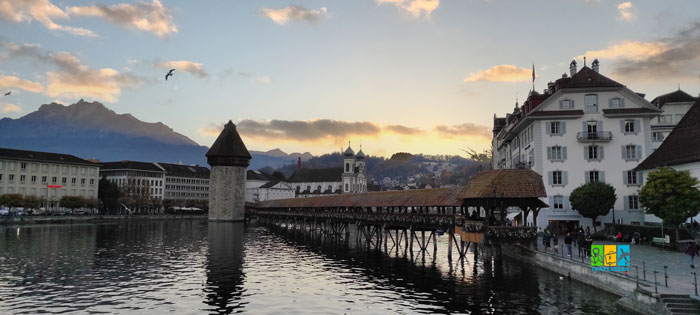
Lucerne is one of those cities where Switzerland appears in its classic form: a deep-blue lake, snow-capped Alpine peaks, old narrow streets, and a postcard-perfect wooden bridge. The city is small, yet incredibly atmospheric. That’s why it is often chosen for a short two-day trip — to feel the essence of real Switzerland. Here you get excellent infrastructure, rich history, museums, the lake, and mountains that can be reached in just half an hour.
Brief Historical Overview
Lucerne originated in the 8th century around the monastery of Saint Leodegar. Thanks to its strategic location on the shores of Lake Lucerne (Vierwaldstättersee) and the trade routes crossing the Alps, the city quickly grew into an important economic hub.
In 1332, Lucerne joined the Swiss Confederation, and by the 19th century it had become a popular travel destination for English and German visitors. Since then, the city has preserved the charm of its medieval old town while remaining modern, organized, and comfortable for travelers.
Where to stay overnight
Switzerland is not a cheap destination, but in Lucerne you can still find affordable accommodation options if you book in advance.
Barabas Hotel Luzern – a former prison transformed into a stylish budget hotel in the city center. The atmosphere is unique, and the prices are lower than in most hotels near the Old Town.
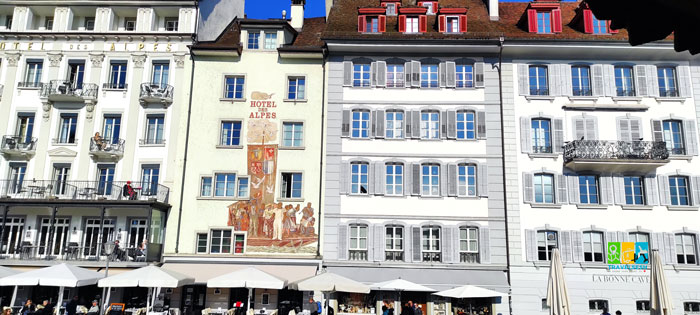
Hotel des Alpes – an excellent location right next to the Chapel Bridge. The windows offer views of the lake and mountains, and breakfast on the terrace is included.
Ibis Styles Luzern City – a practical option for families or couples, with air-conditioned rooms and breakfast included; a public transport stop is nearby.
What to see
The best way to explore Lucerne is on foot. The city is compact, so even in one day you can see most of the main sights.

Old Town of Lucerne (Altstadt)
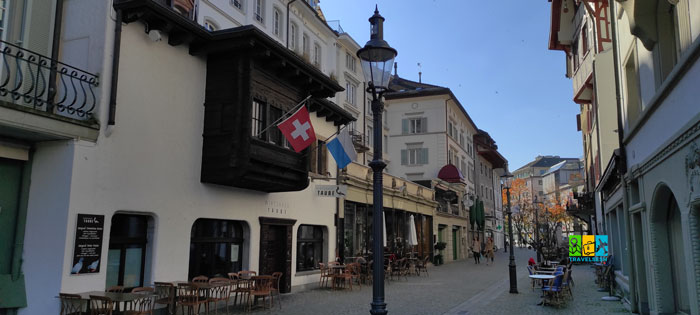
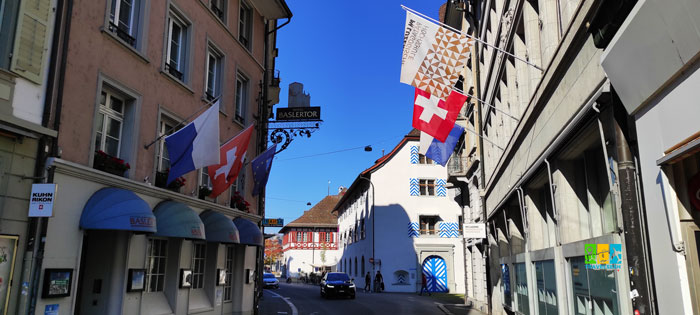
The Old Town is a lacework of narrow streets, frescoed facades, and historic houses that make you feel as if time has stopped. Most buildings here have been preserved since the Middle Ages, and the colorful paintings remind visitors that Lucerne was once a city of artists and merchants.
On the squares Weinmarkt, Kornmarkt, and Hirschenplatz you can see the best examples of old urban architecture. Here you’ll also find the Town Hall with its tower, boutiques, cafés, and small restaurants serving local dishes.
A walk through the Old Town is not only about sightseeing but also about immersing yourself in the calm and cozy atmosphere. Unlike many European tourist centers, Lucerne doesn’t feel overcrowded: the streets are quiet, and the Reuss riverfront offers beautiful views of the bridges and the Alps.

What to see:
Town Hall Square (Rathausplatz)
One of the most beautiful squares in Lucerne’s Old Town. This is where medieval fairs, city gatherings, and celebrations once took place, and today it’s a spot for meetups, street musicians, and cafés with terraces.
The main landmark of the square is the Town Hall (Rathaus), and nearby is the Town Hall Loggia, where covered markets were once held during rainy weather. From here you get a great view of the Chapel Bridge (Kapellbrücke) and the Reuss riverfront.
Tip: The best time for photos is late afternoon, when the sun lights up the frescoes on the facades and the riverfront reflects in the water.
Lucerne Town Hall (Rathaus Luzern)
The Town Hall is one of the most famous historical buildings in Lucerne and a true highlight of the Old Town. It was built in the early 17th century (1602–1606) in the style of the Italian Renaissance, but with a distinctive Swiss Alpine roof.
For centuries, the building served as the city’s administrative center and a major trading hub. The ground floor once housed a covered market where salt, wine, and grain were sold, while the upper floors contained the meeting hall of Lucerne’s Great Council. Today, the Town Hall hosts official receptions, exhibitions, and cultural events.
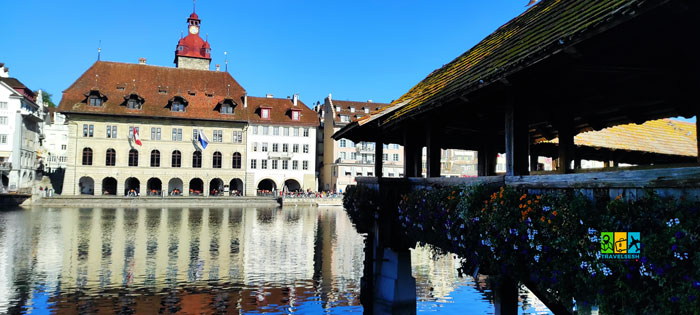
The most striking feature is its frescoed facade, which tells the story of the city and its guilds. You can enter the building only during special guided tours, but even from the outside it deserves attention — it perfectly reflects the atmosphere of prosperous, trade-oriented Lucerne of the 17th century.
Entrance: outside — free; interior visits are available only during events or on select tours.
Best time for photos: morning or sunset, when the frescoes take on a warm glow.
Tip: After visiting the Town Hall, take a walk along the Reussquai promenade — it offers one of the most beautiful views of the Chapel Bridge and Lucerne’s historic houses.

Chapel Bridge (Kapellbrücke)
The ancient 14th-century wooden bridge is a true symbol of Lucerne and, without exaggeration, the most famous bridge in all of Switzerland. Its length is over 200 meters, connecting the banks of the Reuss River in the very heart of the city.
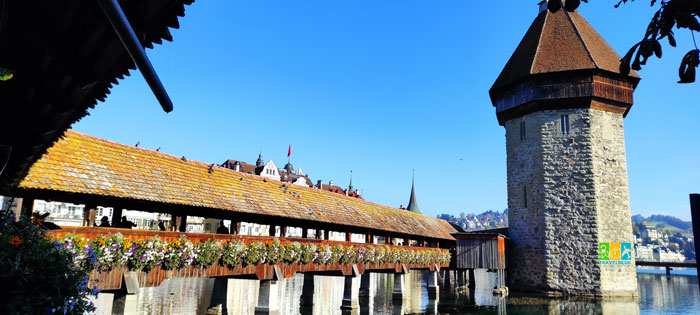
The bridge is decorated with triangular paintings under the roof — historical scenes from Lucerne’s past created back in the 17th century. Most of them survived even after the major fire of 1993, when part of the bridge had to be rebuilt.
In the middle stands the Water Tower (Wasserturm) — an octagonal stone tower that once served as part of the city fortifications and later as a prison and archive.
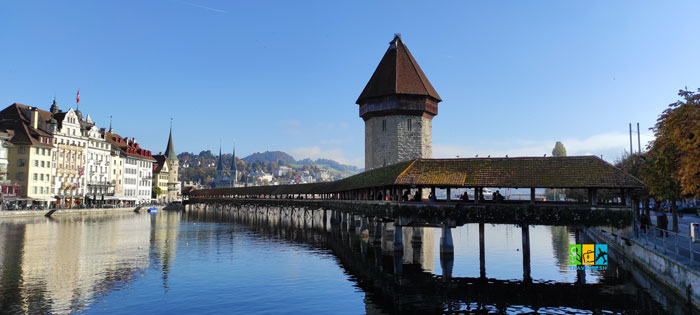
Today, Chapel Bridge is not only an architectural landmark but also a place where you can truly feel the atmosphere of old Lucerne: the flowers along the bridge, the view of the Old Town, church bells and the reflection of rooftops in the river create a special harmony.
Tip: Be sure to walk across the bridge twice — during the day to see the paintings, and in the evening when the illuminated roof and reflections on the water create a magical atmosphere.

Water Tower (Wasserturm)
One of Lucerne’s most recognizable structures, located right next to Chapel Bridge. Despite its name, the tower was never used as a water tower. This is a medieval defensive tower from the 13th century, which was part of the city fortifications and served various purposes over the centuries. At different times it functioned as a prison, archive, treasury and even a guard tower.
Today, access to the interior is usually closed, but from the outside it looks spectacular and is one of the most photographed landmarks in Switzerland. It is especially beautiful in the evening when illuminated together with the bridge.
Tip: The best view of the tower is from the Rathausquai promenade — one of the spots where Lucerne looks truly postcard-perfect.
Weinmarkt
One of the coziest and most beautiful squares of Lucerne’s Old Town. In medieval times, wine markets were held here, and today it is a peaceful corner with half-timbered houses, frescoes, and small restaurants, preserving almost the authentic atmosphere of the 16th–17th centuries. In the center of the square stands the elegant Weinmarktbrunnen fountain, decorated with a colorful figure of a knight. Created in 1481, it is considered one of the oldest in Lucerne.
Around the square are the oldest residential buildings in the city, where you can see unique facade paintings depicting scenes from the history of Lucerne and its guilds. Each house here has its own name and artistic story.

Tip: Explore the small side streets around the square — this is where you’ll find the most interesting facades and the coziest local cafés offering affordable desserts and coffee (important for Switzerland).
Spreuer Bridge (Spreuerbrücke)
Another atmospheric bridge in Lucerne, smaller and less famous than Kapellbrücke, but much “darker” in mood. Its special feature is a series of 17th-century wooden triangular paintings known as “Dance of Death” (Totentanz), depicting medieval views on the inevitability of death for all social classes.
This is the place where Lucerne reveals its more mystical and historical side.

Musegg Walls (Museggmauer)
This is the best-preserved part of Lucerne’s medieval fortifications. The walls date back to the 14th century and stretch along a hill above the Old Town. To this day, nine defensive towers have survived, and several of them are open to visitors free of charge.

Dächliturm, a small tower with a characteristic simple roof, is one of the central towers of the Musegg Wall. It is well preserved and offers a nice photo spot during a walk along the fortifications.
Männliturm, one of the most distinctive towers of the wall, named after the decorative figure of the “little man” on its roof. It stands on a slope and has a picturesque silhouette easily visible from the city.
Luegislandturm, whose name means “look over the land” — from this tower people once observed the surroundings. It is tall, austere, and strategically positioned on the eastern part of the wall.
Wachtturm, the “Watch Tower,” which served as an observation point controlling access to the city. Massive, simple, and one of the oldest structures in the complex.
Zytturm, the most famous tower of the Musegg Wall, featuring a large 15th-century astronomical clock. Inside, you can see old mechanisms, and the upper floors contain viewing platforms.

Pulverturm, a massive gunpowder tower where ammunition was once stored. With its thick walls and strong construction, it is one of the most robust towers of the complex.
Panorama Terrace, a viewpoint along the Musegg Wall that offers panoramic views of Lucerne, the lake, and the mountains. One of the best free viewing points in the city.

Climbing one of the towers offers a panoramic view of the Old Town, the lake, and the snowy peaks of Pilatus and Rigi. This is one of the best budget-friendly activities in Lucerne — no ticket needed, just great views and the feeling of living history.
Tip:
Go to the Old Town early in the morning — when it’s still quiet and sunny, Lucerne looks completely different than during the day.
Hofkirche St. Leodegar (Hofkirche St. Leodegar)
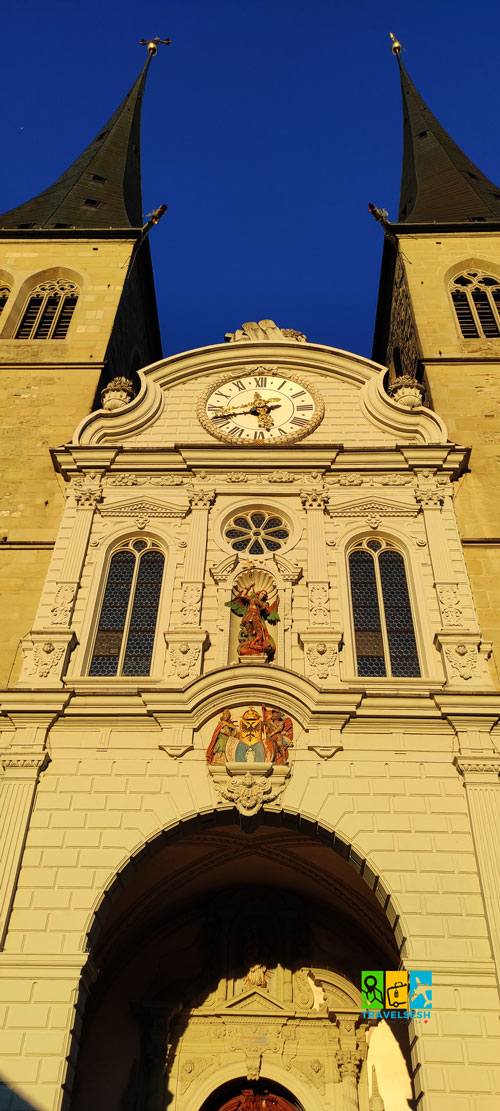
Hofkirche St. Leodegar is one of the most beautiful and most important churches in Central Switzerland. It stands on a small elevation next to Lake Lucerne, and its two slender Gothic towers have become one of the city’s symbols. Inside, you will find unique wooden carvings, a historic organ, and several significant relics.
Tip: If your route allows, stop here on the way from the Old Town to the Glacier Garden (Gletschergarten) and the Lion Monument — it’s a logical and scenic walking route.
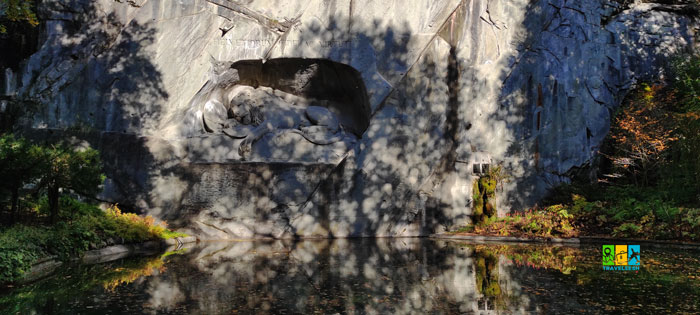
Lion Monument (Löwendenkmal)
One of Lucerne’s most famous and emotionally powerful landmarks. The lion sculpture, carved directly into the rock, commemorates the Swiss Guards who were killed in 1792 during the storming of the Tuileries Palace in Paris, while defending King Louis XVI.
Jesuit Church (Jesuitenkirche Luzern)
One of the most beautiful sacred buildings in Lucerne and the first Baroque church built in Switzerland. Located right on the banks of the Reuss River, next to the Old Town and the Chapel Bridge, it immediately stands out with its two towers and bright façade. Entry to the church is free, making it easy to include in a walk through the city center.

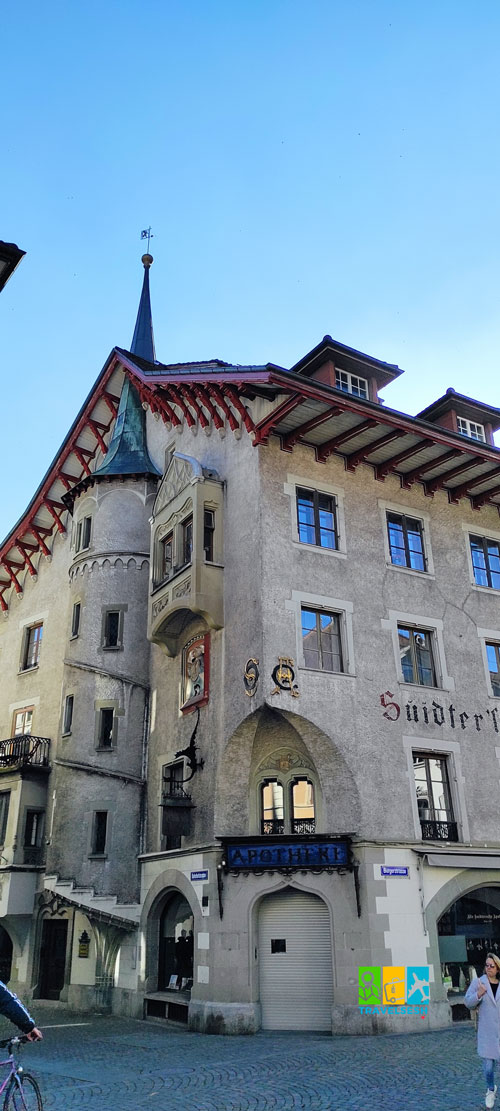
Old Süter Pharmacy (Zytturm Apotheke)
An atmospheric historic pharmacy near the Zytturm tower. From the outside, it resembles an old craftsmen’s shop with an authentic façade and decorative details. This is one of the most photogenic spots in the Old Town, perfectly capturing the spirit of medieval Lucerne.
Museums
Lucerne has several museums that are truly worth visiting, most of which can be entered with a single combined ticket or at a discount using the Lucerne Guest Card.
Lucerne Glacier Garden (Gletschergarten Luzern)
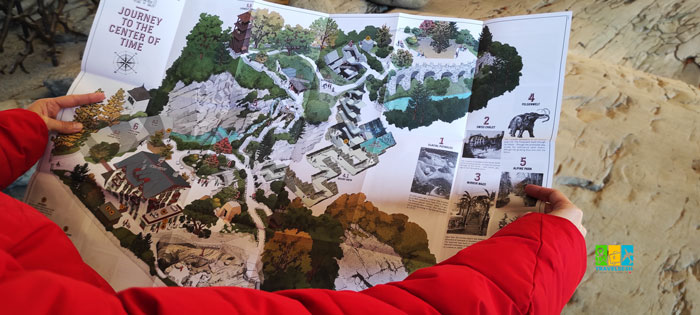
Located next to the famous Lion Monument, the Glacier Garden is a unique blend of a museum, geological park, and natural wonder. Here you can see real glacial potholes formed more than 20,000 years ago, when alpine glaciers covered the region. They left behind impressive traces — smoothed rocks, deep cavities, and fossilized shell imprints.
Inside the museum, you’ll find an engaging exhibition about the formation of the Alps, historic maps and models, as well as a mirror maze dating back to the 19th century. This is especially popular with children — the place combines learning and fun.
Opening hours: daily from 10:00 to 18:00 (winter hours may vary).
Admission: adults — around 15 CHF, children — 8 CHF; family tickets offer good savings.
Tip: Start your route at the Lion Monument — it’s free to visit, and afterward go to the Glacier Garden to learn how glaciers shaped this part of Switzerland.
Swiss Museum of Transport (Verkehrshaus der Schweiz)
The most popular museum in Lucerne and one of the best themed museums in Europe. It is a large interactive exhibition about all types of transport: from the first locomotives and steamboats to modern aviation, cars and space technologies. The museum works in the “learn, touch, try” format, making it interesting for both adults and children. Many exhibits can be opened, turned or tested. There are flight simulators, interactive stands, VR zones, a cinema and a planetarium. What to see inside: Historic and modern trains, a collection of cars — from retro models to innovative electric vehicles, real airplanes, helicopters, and an exhibition on the history of aviation in Switzerland. Model Swiss roads, tunnels and railway networks. A large section dedicated to space and satellites, with interactive experiments. Marine and river transport: models, ship cabins and the history of navigation on the lakes.
Buy your Swiss Museum of Transport entrance ticket here and skip the line. Free cancellation.

Tip: If you want to save money, buy a combined ticket (museum + planetarium) or look for discounts with the Swiss Travel Pass — it offers free entry or a significant discount.
Richard Wagner Museum (Richard Wagner Museum)
Located in the former villa of the composer on the shore of Lake Lucerne. A cozy garden, lake views and authentic interiors create an atmosphere of immersion into Wagner’s life and creativity. The museum houses manuscripts, personal belongings, musical instruments and rare documents that reveal the private side of the genius.
Lucerne Historical Museum (Historisches Museum Luzern)
This location is ideal for those who want to gain a deeper understanding of the history of the city and the Central Switzerland region. The museum is located in an old building on the bank of the Reuss River, not far from the Old Town, making it easy to reach during a walk. The exhibition presents Lucerne’s life through various eras — from the Middle Ages to the 20th century. Here you can see original weapons and armor, household items, tools and craftwork, historical costumes, models of the city and fortifications, and archaeological artifacts.
One of the museum’s highlights is its interactive format: many exhibits are presented as “living stories,” and the information is delivered in a clear and modern way. This makes the museum interesting not only for adults but also for children. A visit takes approximately 1 hour.
Cafés with a Local Atmosphere
Heini Conditorei – a traditional Swiss confectionery with desserts everyone in Lucerne knows. A great place to try the Lucerne specialty Birnenweggen (a pear-filled pastry) or simply enjoy a coffee with a view of the Old Town.
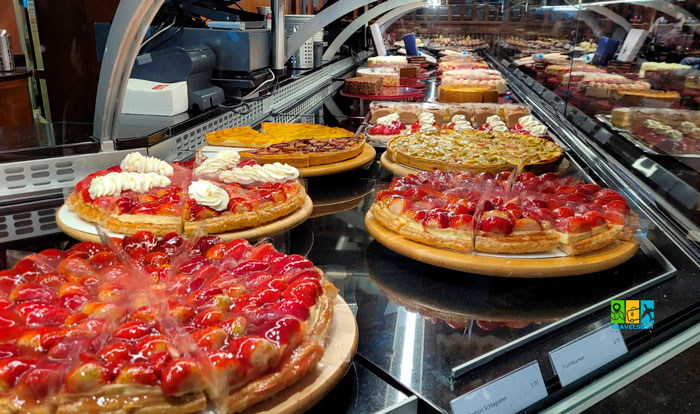
Café Tacuba – a small, cozy café with an atmosphere where time seems to stop. Perfect for a morning pause before exploring the Old Town.
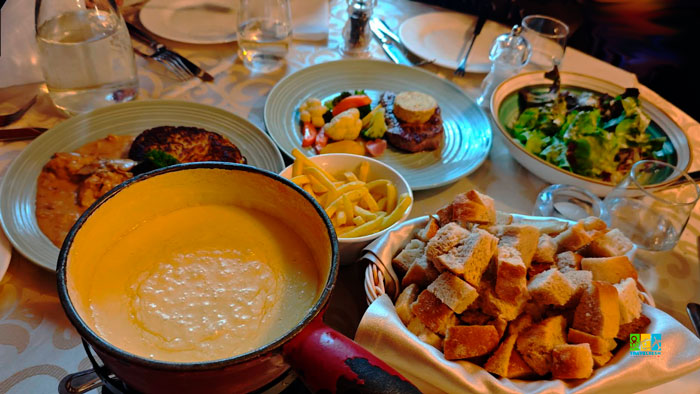
Places for Lunch and Dinner with Local Flair Wirtshaus Galliker – a family-run tavern operating for more than 150 years. They serve local dishes such as Luzerner Chügelipastete, Rösti, and seasonal menus. The atmosphere reflects old Switzerland without excess. Restaurant Fritschi – located in a building with a painted façade in the heart of the Old Town. A place with strong Swiss character: wooden tables, a warm atmosphere, and classic cuisine.
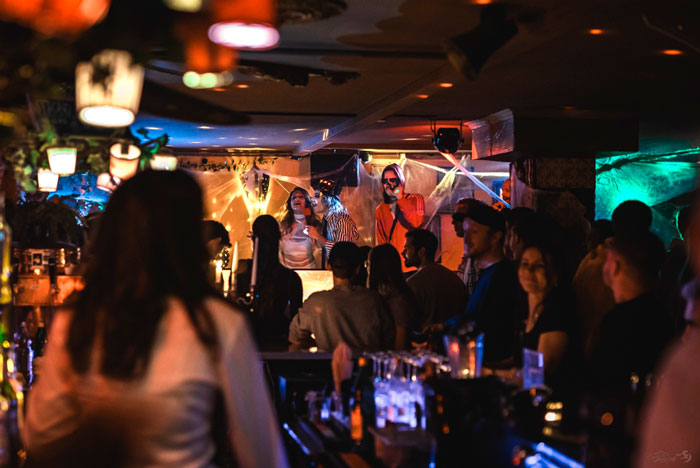
Jazzkantine Luzern – a bar with a calm musical atmosphere, often featuring live performances. Locals love it for its intimacy and style.
Bar 59 – an art space and bar at the same time. Local events and concerts are often held here — a great way to feel the cultural side of the city.
Natural Attractions
Nature is Lucerne’s main advantage. The city is surrounded by mountains, and within minutes you can find yourself on a peak or in the middle of the lake.
Mount Pilatus (Pilatus)
One of Lucerne’s most iconic natural landmarks, rising 2132 m above sea level. Getting up here is already an adventure: you can take the world’s steepest cogwheel railway or a modern cable car with panoramic cabins. At the summit, you’ll find breathtaking views of the Alps and the lake, several viewpoints, easy walking trails, and restaurants. A perfect trip for those who want to see Lucerne from an unforgettable height.
Lake Lucerne (Vierwaldstättersee)
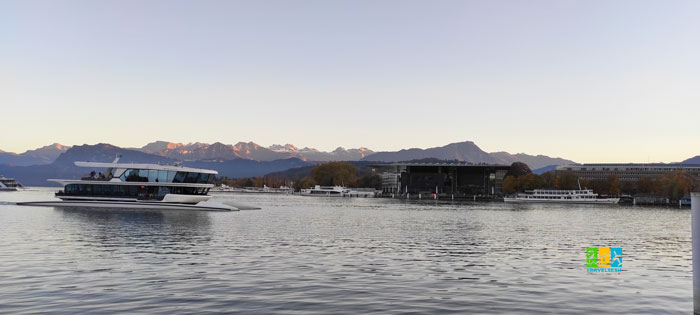
one of the most beautiful lakes in Switzerland, with crystal-clear water, boats and yachts gently gliding between the mountains. Along the waterfront, you’ll find comfortable walking paths where you can simply sit on a bench and enjoy the silence. And a boat cruise on the lake is the best way to see Lucerne from a different perspective: offering views of the old town, the mountains, and picturesque bays unreachable from the shore.
Mount Rigi (Rigi)
One of the most popular day-trip destinations from Lucerne, known as the “Queen of the Mountains”. It’s easy to reach thanks to a combination of cable cars and a cogwheel railway operating year-round. The ascent is not only convenient but also very scenic — the views start opening up long before you reach the summit.
At the top, the panorama is stunning — you can see several lakes at once, including Lake Lucerne, as well as the villages scattered below. It’s a perfect place for easy hiking routes, family walks, or simply relaxing on a terrace overlooking the Alps.
Excursions Around the City
Lucerne is an excellent starting point for short trips around Central Switzerland. Thanks to convenient rail connections, it’s easy to add other cities and natural attractions without spending much time on transportation.
Interlaken — a popular resort town located between two lakes, and a starting point for trips to Jungfraujoch, Schynige Platte, and other peaks of the Bernese Alps. The journey from Lucerne takes around 2 hours, making it realistic to combine both cities in one itinerary.
Zurich — the largest city in Switzerland and an important transport hub. Perfect for shopping, museums, and urban architecture. A high-speed train gets you from Lucerne in about 45 minutes.
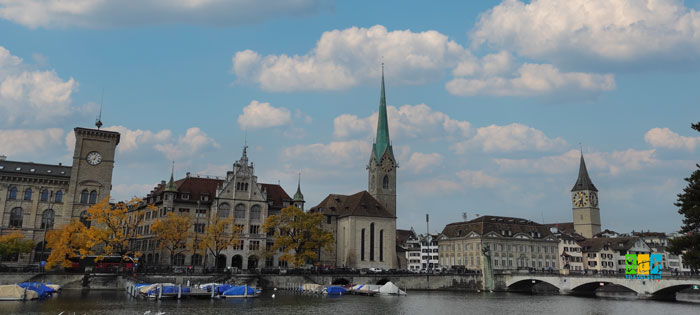
Thun — a charming town with a picturesque old town, a castle, and direct access to the lake. It’s easy to get here by train, and the trip itself feels like a separate excursion.
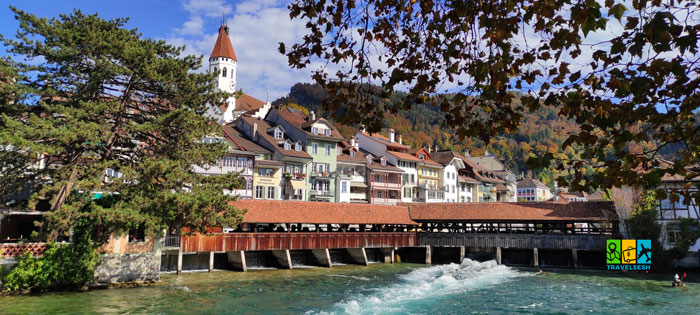
This travel format is especially convenient for those who want to see more in a short time: by staying in Lucerne, you can take comfortable day trips without switching hotels every day.
Parking in Lucerne
Parking in the center of Lucerne can be challenging — most spaces are paid, and street zones are divided by colors (blue, white, yellow). The most convenient option for tourists is the underground Parkhaus garages, located close to the Old Town and the main train station.
Popular parking garages in the center:
Parkhaus Altstadt — the closest to Chapel Bridge.
Parkhaus Kesselturm — convenient for walks in the Old Town.
Parkhaus Löwencenter — close to the Lion Monument and the Gletschergarten.
Parkhaus Bahnhof — ideal if you’re visiting for one day.
All of them operate 24/7, with rates around 3–4 CHF/hour.
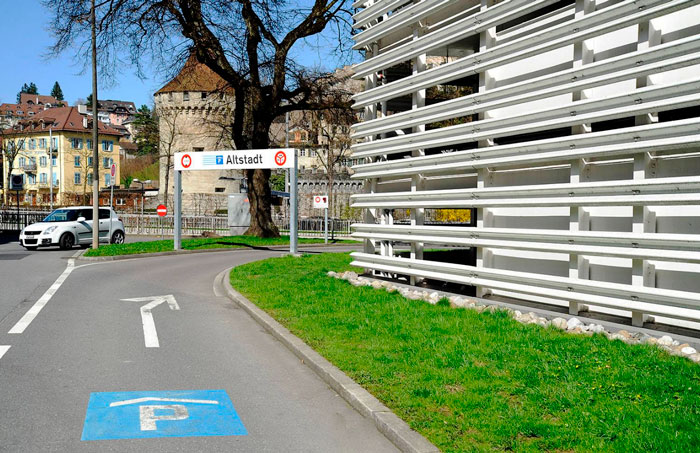
Street parking
White zone — paid, usually 2–3 CHF/hour.
Blue zone — for local residents, visitors can park only at specific hours.
Yellow zone — private parking, parking is prohibited.
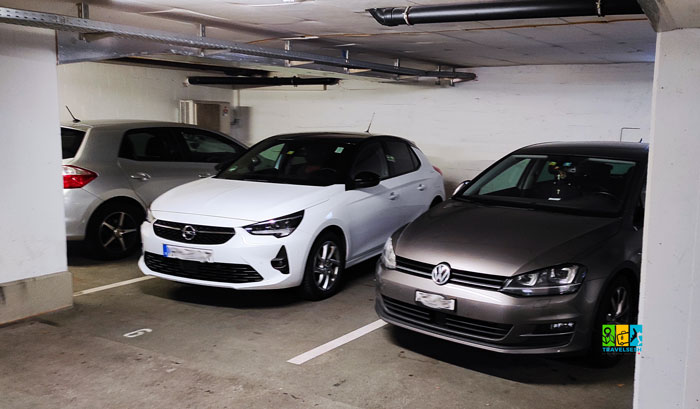
We stayed at the ibis budget Luzern City. We chose this hotel specifically because of the private parking availability — a major advantage in Lucerne, where central parking is expensive and often full. Another benefit is the hotel’s location: you can easily walk to the city center without using your car at all. You leave your car in the hotel’s parking area and stroll calmly to Chapel Bridge, the lake, or the Old Town. This saves time, money, and nerves, as searching for parking in the city center can be quite a challenge.
Budget Travel Hacks
Switzerland is known for its high prices, but even here you can travel smart.
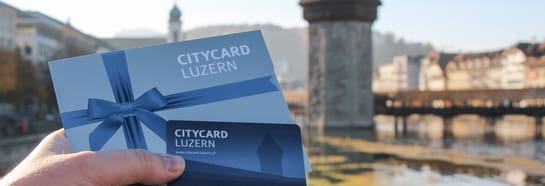
Lucerne Guest Card – a city guest card that all tourists staying in Lucerne in officially registered accommodations (hotels, hostels, serviced apartments) receive. The card is issued free of charge during check-in, either in digital or paper form.
What the Lucerne Guest Card offers:
Free public transport within the city of Lucerne (zones 10/Sursee–Emmenbrücke).
Discounts of 10–50% on popular museums, attractions, and activities, including:
-
-
-
Swiss Museum of Transport
-
Bourbaki Panorama
-
Gletschergarten
-
Rigi and Pilatus cable cars (often with promotional fares)
-
-
Discounts on lake cruises and various types of water transport.
Special offers at restaurants and shops (depending on the season).
Free Wi-Fi at city access points.
Why this is useful for tourists:
The card really helps save money, especially if you plan to visit museums or use public transport. For a family or a couple, it can provide significant savings over 2 days in Lucerne.
Swiss Travel Pass — the main travel pass for tourists, making travel across Switzerland much easier and cheaper. If you plan to actively use transport, visit museums, and take at least one mountain trip, this pass can save you dozens of euros.
What is included: Unlimited travel on all types of public transport in the country:
-
-
-
intercity and regional trains;
-
trams and buses;
-
funiculars and some cable cars;
-
ferries and boats on lakes.
-
-
Free entry to over 500 museums.
Discounts on most cable cars (sometimes 25–50%).
Free lake cruises on Lake Lucerne, Zurich, Thun, Brienz, etc.
Validity options: 3, 4, 6, 8, or 15 consecutive days.
Who benefits:
those planning to visit several cities during the trip;
travelers without a car;
those who want to save on expensive lake cruises and museums;
families: children under 16 travel free of charge with the Swiss Family Card.
Example: when the pass pays off in Lucerne:
-
Lake Lucerne cruise
-
Trip to Rigi or Pilatus (partially covered)
-
Transport Museum
-
Active use of city transport
In total, this is usually more expensive than the price of the Swiss Travel Pass, especially if purchasing individual tickets.
Tip:
For budget travel, it’s worth calculating future expenses. If you plan to just explore the city and visit one museum — the pass is not necessary. If you want to see Lucerne + lake + mountain + 1–2 more cities, the Swiss Travel Pass becomes a cost-effective choice.
Dining at Coop Restaurant or Migros — one of the most reliable ways to significantly save on food in Lucerne. These are not snacks or “grab-and-go” sandwiches, but full hot meals, salads, soups, desserts, and seasonal menus.
Prices here are 2–3 times lower than in regular restaurants, which is especially noticeable when traveling with family or in a group of three. The self-service format allows for quick selection of dishes, making it a popular choice among local office workers and students. Perfect for a busy travel schedule: you can eat cheaply without spending extra time.

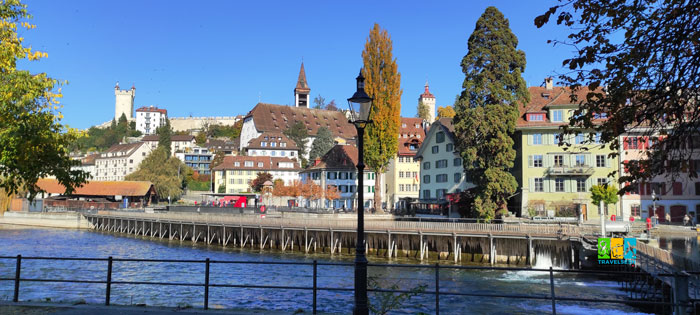
In the Old Town of Lucerne there are many interesting and completely free locations worth including in a walk. Among them: Chapel Bridge, Lake Lucerne promenade, frescoes on historic building facades, Town Hall Square, and narrow medieval streets.
If traveling with family, book apartments or aparthotels — having your own kitchen is much cheaper than buying three breakfasts at a café.
Lucerne Railway Station (Bahnhof Luzern)
The main gateway to the city, where all trains from Zurich, Basel, Bern, and other Swiss cities arrive. The modern station building is large, spacious, and convenient for transfers: it houses a supermarket and cafés. All city buses start from the station — getting around Lucerne is very easy.
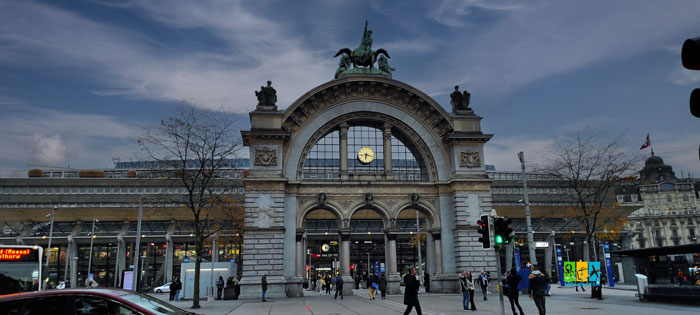
Right in front of the station stands Torbogen Luzern — an arch from the old railway station that burned down in the 1971 fire. The arch was preserved as a historical symbol and has now become one of the city’s landmarks.
How to Get There
Lucerne is conveniently located in the center of the country, making it easy to reach from almost any direction.
From Germany: by train from Munich via Zurich – approximately 4 hours.
From Austria: from Innsbruck or Salzburg – via Zurich, travel time about 5–6 hours.
From Zurich: the most convenient option is a direct SBB train, which arrives in less than 45 minutes.
From Bern: about 1 hour, trains run hourly.
From Interlaken: a scenic route through the mountains takes about 2 hours.
Conclusions
Lucerne is an example of how a compact city can combine the very best of Switzerland: lakes, mountains, historic architecture, and a relaxed pace of life. Two days here is enough to understand why Lucerne is often called the “showcase of Switzerland.”
Visiting the city does not have to be expensive — proper planning, a guest card, and a few simple tips will allow you to see the city fully while keeping your budget intact.
Lucerne is one of the most beautiful cities in central Switzerland, popular among tourists and travelers searching for “Lucerne what to see”, “Lucerne in 2 days”, “Lucerne itinerary”, “Lucerne on a budget”, and “Lucerne landmarks”. The city is ideal for a short 1–2 day trip, both for couples and family travel. Among the main attractions most frequently searched under “what to see in Lucerne” are: Kapellbrücke (Chapel Bridge), Wasserturm (Water Tower), Spreuerbrücke, Löwendenkmal (Lion Monument), Altstadt (Old Town) with painted facades, Town Hall, Kornschütte, Jesuitenkirche, Christuskirche, and viewpoints along the Museggmauer (towers such as Nölliturm, Männliturm, Zytturm, Wachtturm, and others). Historical buildings like the old Zytt Apotheke also attract significant interest. Popular museums in Lucerne often searched by tourists include: Swiss Museum of Transport (Verkehrshaus), Gletschergarten, Richard Wagner Museum, Historical Museum, and other thematic locations. For family trips, guides related to “Lucerne for kids” are useful.
Natural attractions in Lucerne include: Mount Pilatus, Mount Rigi, Lake Lucerne (Vierwaldstättersee), and numerous walking routes. Travelers often combine Lucerne with visits to Interlaken, Zurich, Thun, Bern or other Swiss cities, searched under “Lucerne excursions”.
For budget travel, it’s worth using the Lucerne Guest Card or Swiss Travel Pass, which provide discounts on transport, museums, and cable cars. The city has many free attractions, making it appealing for searches like “Lucerne on a budget”. For food, tourists often choose Coop Restaurant and Migros — affordable options compared to regular restaurants.
When traveling by car, consider limited parking in the city center. Searches for “Lucerne parking” often recommend staying in hotels with private parking. We stayed at ibis budget Luzern City, where having a parking spot was a key advantage. Its location allows walking to the city center while leaving the car in the parking lot.
Getting to Lucerne is easy by train from Zurich, Bern, Basel, Interlaken, as well as from Germany and Austria. Queries like “how to get to Lucerne” often lead to advice on SBB trains and convenient transfers. The main station, Bahnhof Luzern, is located near the symbolic Torbogen Luzern arch.
This guide helps travelers understand what to see in Lucerne in two days, how to plan an itinerary, save money, and which locations to include in a city and nearby exploration.
There are no comments for this post. Comment or ask questions first