
Most travellers heading to Bavaria fly straight to Munich — and that’s understandable. But 80 kilometres north of the Bavarian capital stands a city that knows how to surprise: medieval walls and Gothic towers sit alongside the Audi factory, and Frankenstein was born within the walls of an ancient anatomical theatre. Welcome to Ingolstadt — a city where past and present share the same neighbourhood.

A Brief History: From University Town to Automotive Empire
Ingolstadt is one of Bavaria’s oldest cities. Founded in the 8th century, it long served as the residence of the Bavarian dukes, and in 1472 the first university in Bavaria opened here. Within these very walls in 1519, Johann Eck held his famous debate with Martin Luther — a dispute that shaped the course of the Reformation.
In the 19th century the city became a formidable fortress: architect Leo von Klenze designed grand fortifications around it, parts of which survive to this day. In the 20th century Ingolstadt gained a new identity when Audi established its headquarters and factory here, transforming a provincial town into one of Europe’s industrial centres.

Where to Stay
Ingolstadt is a compact city, and staying centrally is a genuine advantage. Most hotels are within easy reach of the Old Town.
Maritim Hotel Ingolstadt — one of the city’s finest hotels, with Danube views and full facilities. Ideal for those who value comfort and don’t want to think about logistics.
NH Hotel Ingolstadt — a solid business-class choice: convenient location, clean rooms, breakfast included. Reliable, with no surprises.

Come In Hotel — a budget option with an excellent price-to-quality ratio. Well reviewed by independent travellers.
Tip: if you plan to visit the Audi Forum in the morning, consider staying nearby in the northern part of the city. Otherwise, a central location is more practical for exploring on foot.

What to See: Top Sights
Altstadt (Old Town)
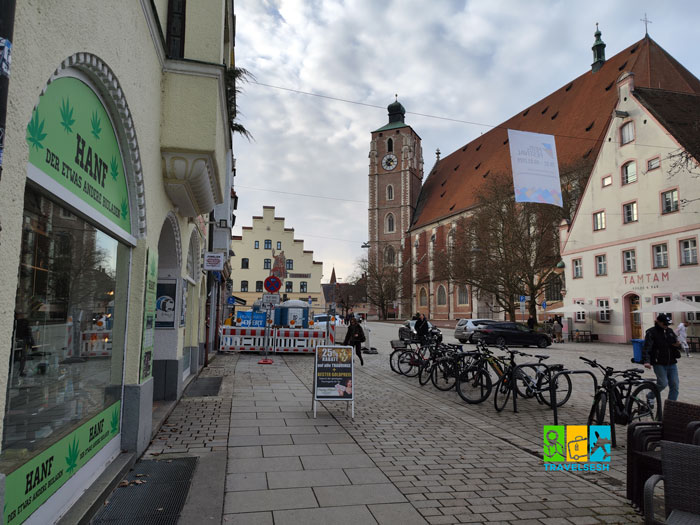
Ingolstadt’s historic centre and the main hub for sightseeing. This is where you’ll find the Kreuztor, Liebfrauenmünster, Altes Rathaus and most of the city’s museums. The compact size of the quarter means you can cover everything on foot in a few hours. Start your visit to the city here.

Kreuztor (Cross Gate)
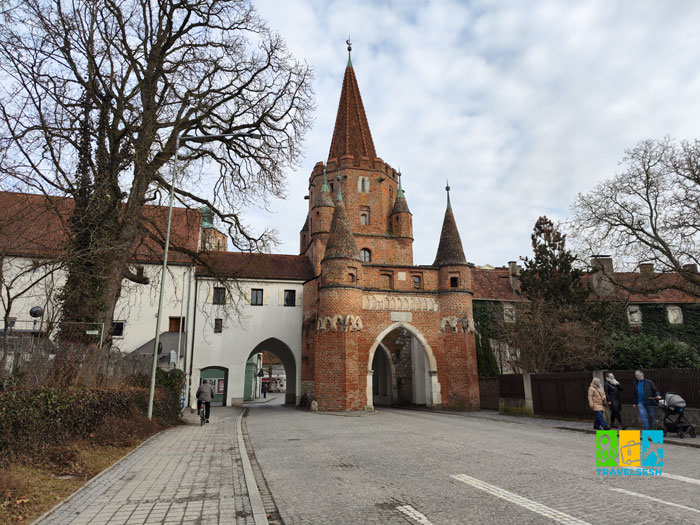
The symbol of the city. This medieval gate tower of red brick and limestone, built in the 14th century, is Ingolstadt’s most iconic image. Walk through it into the Old Town and time seems to slow down.
Pfeifturm (Pipe Tower)
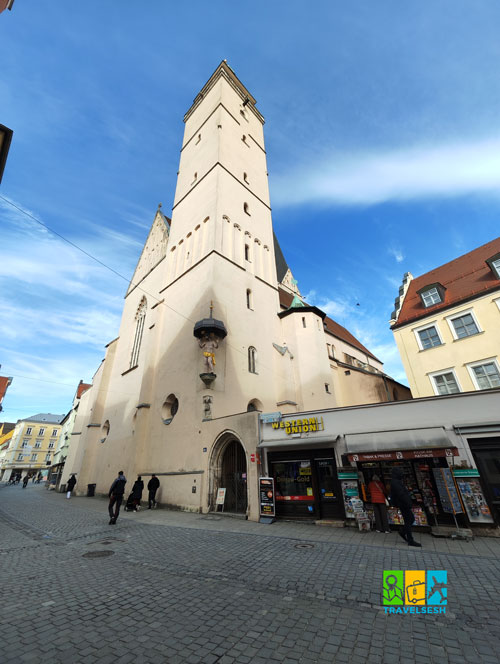
A 63-metre Gothic watchtower. Climb 200 steps and you’ll be rewarded with the best panorama in the city.
Altes Rathaus (Old Town Hall)
The historic town hall sitting at the very heart of Ingolstadt, one of the most handsome buildings in the Old Town. Its façade with a distinctive stepped gable and decorative detailing is a fine example of traditional Bavarian civic architecture. The building remains at the centre of city life to this day, and the square in front of it hosts markets and local festivities throughout the year.

Neues Schloss (New Castle)
The 15th-century ducal castle of Ludwig the Bearded, now home to the Bavarian Army Museum. In the courtyard stand 17 historic cannons, including the legendary 16th-century pair known as “Scherer and Schererin.”

Barocker Uhrturm (Baroque Clock Tower)
One of the most elegant details of Ingolstadt’s skyline. This 17th-century tower with its distinctive Baroque helm roof and clock face has been marking the hours for centuries. Stop by in the evening — lit up after dark, it’s particularly striking.

Liebfrauenmünster (Church of Our Lady)
A late-Gothic minster that dominates the city skyline. The roof of its nave is three times larger than that of Notre-Dame in Paris — a staggering detail that reveals the sheer scale of the building. Inside, a magnificent and intricately carved high altar awaits.

Asamkirche Maria de Victoria (Asam Church)
A small Baroque church that conceals one of the great secrets of Rococo art. The ceiling fresco by Cosmas Damian Asam, painted in a room just 10 metres high, is a masterpiece of optical illusion. Step inside and simply look up.

Klenzepark (Klenze Park)
A vast park along the Danube, laid out on the site of old fortifications. In summer there’s a beach bar, cycling paths and sun loungers on the riverbank — a firm favourite with locals.
Herzogskasten (Ducal Granary)
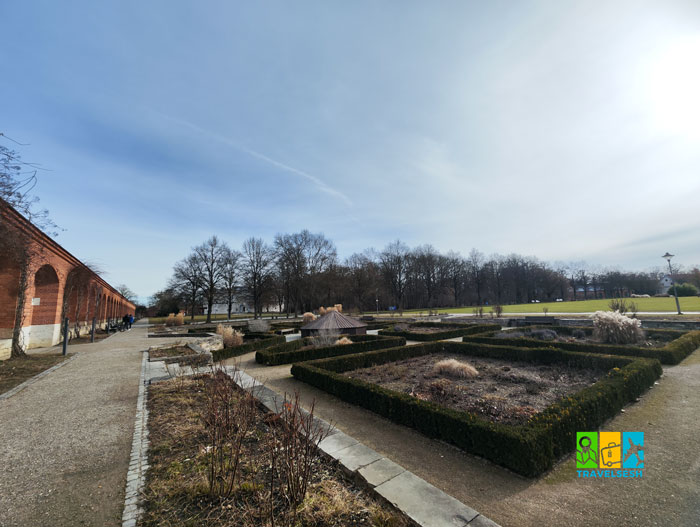
The oldest palace in Ingolstadt, built in the 13th century. Over its long history it served as a ducal residence, fortress and granary. Today it houses the Marie Luise Fleißer public library, but the building is worth a stop in its own right — a Gothic secular architectural masterpiece in the heart of the Old Town.
Kirche St. Moritz (St Moritz Church)
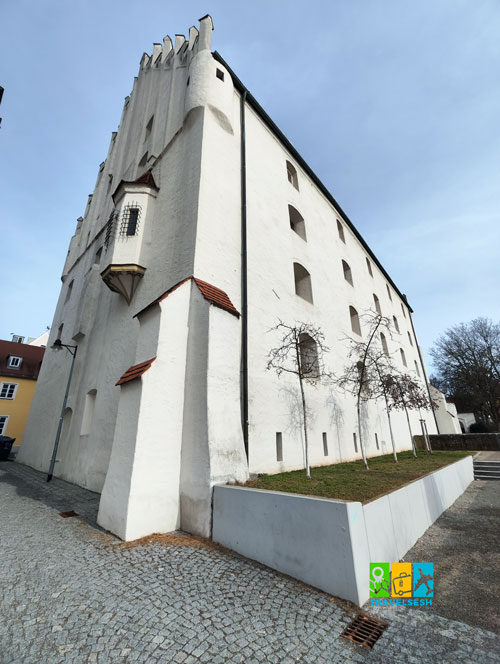
The oldest parish church in Ingolstadt, standing just behind the Altes Rathaus. A three-aisled Gothic basilica with Romanesque elements and a distinctive tower. Inside — striking violet stained-glass windows above the altar. Less well known to tourists than the Liebfrauenmünster, but uniquely beautiful in its own right.
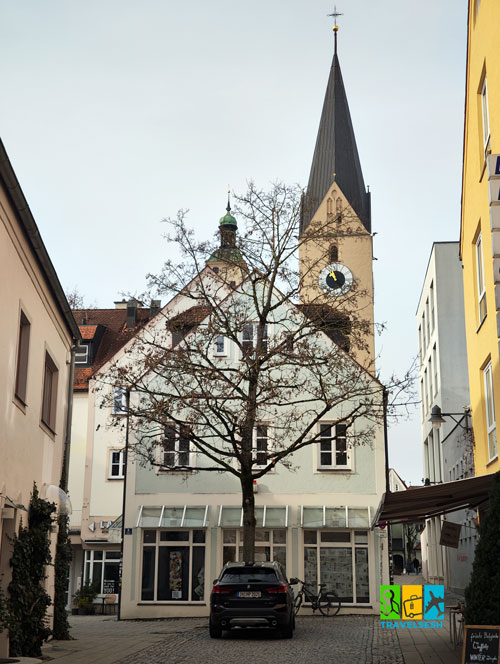
Baggersee (Baggersee Lake)
Ingolstadt’s largest lake, just 1.5 km from the Altstadt. A former gravel pit transformed into a recreational area — swimming, sunshine and nature. Perfect in summer.
Museums
Audi Museum Mobile
Arguably the city’s most famous museum. Housed in a circular glass-and-steel building, it holds around 50 cars and 30 motorcycles, from the legendary Horch, DKW and Wanderer marques to the modern Audi R8. The highlight is a paternoster lift that continuously rotates 14 cars in a vertical showcase. Entry is just €5, making it one of the best value automotive museums in Germany. Free parking and a 10% restaurant discount are included.

Bavarian Army Museum (Bayerisches Armeemuseum)
Germany’s oldest military museum, founded in 1879. The main collection occupies the Neues Schloss: weapons, armour and banners spanning the 1600s to the 1900s.

Museum of World War I (WWI Museum)
One of the most compelling exhibitions on the subject in Germany. Housed in the Reduit Tilly within Klenzepark, it spans more than 30 rooms and guides visitors through every stage of the 1914–1918 war: from the euphoria of August 1914 to the bitterness of defeat. Authentic weapons, soldiers’ personal belongings, documents and photographs combine to create an experience that stays with you long after you leave.

German Museum of Medical History (Deutsches Medizinhistorisches Museum)
A museum housed in the magnificent late-Baroque building of the former anatomical theatre. Over 1,000 medical instruments and artefacts from ancient Egypt to the 20th century, with a medicinal herb garden next door. Perfect for lovers of unusual museums.
City Museum (Stadtmuseum)
Located in the fortified Cavalier Hepp. Fifty rooms trace the history of the city. The star exhibit is the taxidermied horse of Swedish King Gustav II Adolf, shot near Ingolstadt in 1632 — considered the oldest preserved taxidermy specimen in Europe.
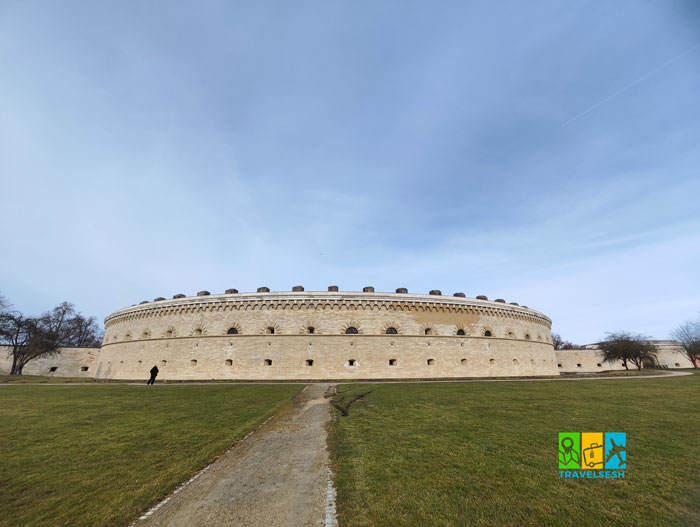
Bavarian Police Museum (Bayerisches Polizeimuseum)
Housed in the Triva Tower in Klenzepark. Covers the period from the Bavarian Revolution of 1918–1919 through to the Cold War and the protests of the 1980s. An unconventional choice for the curious traveller.
Museum of Concrete Art (Museum für Konkrete Kunst)
For fans of modern and abstract art. An unexpected but thoroughly worthwhile stop.

Must-Do Tours
Audi Factory Tour — separate from the museum, you can take a guided tour of the actual production line for €9. Watching a car assembled from sheet metal is an entirely different experience from admiring finished vehicles in a showroom. If you’re based in Munich or just passing through, we highly recommend the private day trip from Munich to Ingolstadt, the Audi Museum, Dachau and back. It means no logistics to worry about — just sit back and enjoy the scenery with a comfortable English-speaking driver.

Guided Walking Tour with a Local — book a 60-minute insider tour of the Old Town. The compact size of the city means you’ll cover the essentials comfortably in an hour.
Where to Eat: From Beer Hall to Michelin-Starred Restaurant
Weißbräuhaus zum Herrnbräu — a must. One of the oldest pubs in the city, right in the Old Town, with its own on-site brewery. The menu features classic Schweinshaxe (pork knuckle), Münchner Weißwürst and the house schnitzel “Rumpelstiltskin.” Every day at noon a carillon plays a march composed right here in Ingolstadt. Fresh pretzels in the morning are reason enough to stop by.

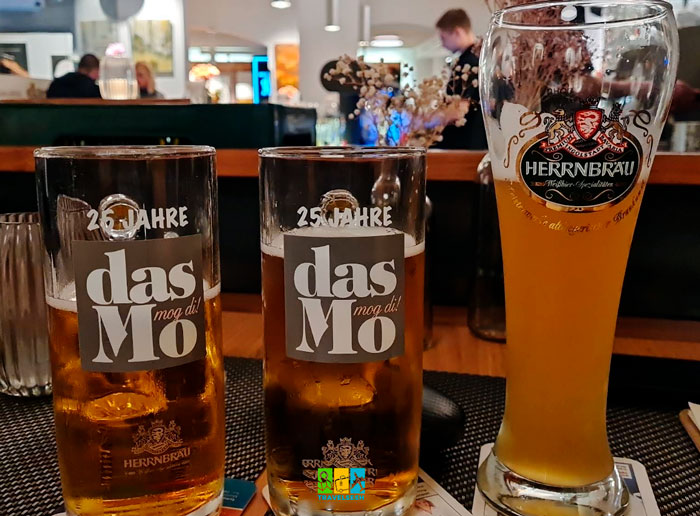
Hidden gem: Mundgerecht — a patisserie-restaurant where cakes and chocolates are crafted like works of art. If you’re looking for a gift or simply want to treat yourself, this is the place.

Shopping: From Outlet Village to the City Centre
Ingolstadt is a surprisingly enjoyable city for shopping. There’s a premium outlet, a convenient shopping centre and a lively pedestrian zone — something for every taste and budget.
Ingolstadt Village — the city’s headline shopping destination and one of the most well-known outlet centres in Germany. Over 110 boutiques from global brands including Burberry, Gucci, Prada, Hugo Boss, Armani and Polo Ralph Lauren — all with discounts of 30 to 70%. Located just 10 minutes from the city centre with ample parking and restaurants on site. If this is a deliberate stop on your trip, set aside at least half a day.
Primark — the European high-street favourite that needs no introduction. Ingolstadt has its own store with a wide range of clothing, accessories and homeware at very affordable prices.

Westpark Ingolstadt — a large shopping centre west of the city centre, home to popular chains including H&M, Zara, MediaMarkt, dm and Deichmann. Convenient if you want everything under one roof.
Fußgängerzone (Pedestrian Zone) — the heart of in-town shopping, running right through the Altstadt. Here you’ll find well-known brand stores, independent local boutiques, bookshops and cafés. A pleasant way to combine shopping with a stroll through the city.
Tip: if you’re planning a visit to Ingolstadt Village, check their website in advance and sign up to the loyalty programme. It unlocks additional discounts and early access to sales.
How to Get to Ingolstadt
By train — the most convenient option from Munich. Direct regional RE and RB trains run every hour, with a journey time of around 1 hour. Buy tickets on the Deutsche Bahn website (bahn.de) or via the DB Navigator app. Travelling in a group? The Bayern-Ticket allows unlimited passengers to travel all day for a fixed price. From Nuremberg, the journey takes around 40 minutes.
By car — Ingolstadt sits directly on the A9 motorway between Munich (80 km) and Nuremberg (90 km). City centre parking is paid but readily available. Free parking is available at the Audi Museum Mobile.

Car rental — if you plan to explore the surrounding region or want flexibility in your itinerary, renting a car is an excellent option. All major companies are represented in Ingolstadt: Hertz, Avis, Europcar and Sixt. Compare prices and book easily through a search aggregator or directly on company websites. Book in advance, especially during peak season.
By plane — the nearest airport is Munich (MUC), from where Ingolstadt is easily reached by train or rental car. A second option is Nuremberg Airport (NUE), which is smaller but closer for certain routes.
What to See Near Ingolstadt
If you have an extra day or two, there are several destinations within easy reach that are well worth the trip.
Munich (80 km) — if you haven’t been yet, the Bavarian capital with its world-class museums, Marienplatz, Olympic Park and beer gardens is essential. Easily reached by train in one hour.
Nuremberg (90 km) — one of Germany’s most beautiful medieval cities. The Imperial Castle, the Old Town, the Dürer House and the famous Christmas Market (if visiting in winter) make for a rich and rewarding day out.
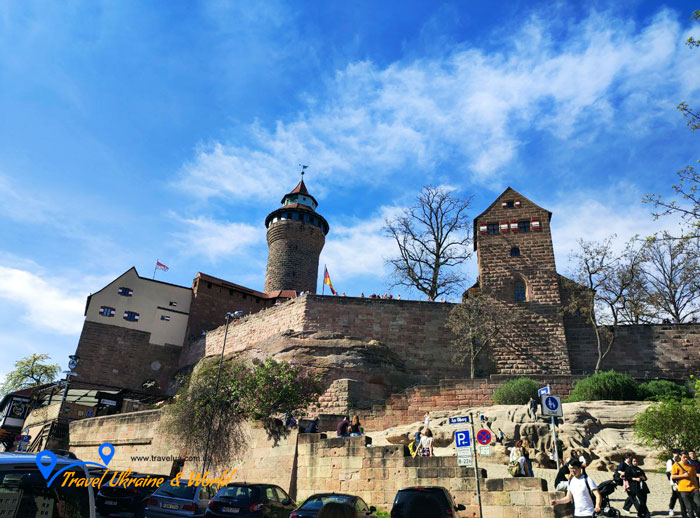
Eichstätt (25 km) — a small episcopal town with a stunning Baroque centre, Willibaldsburg fortress and the famous Jurassic limestone geopark. Perfect for a half-day trip. Easily reached by train or car.
Landshut (60 km) — a medieval city home to one of the tallest brick towers in the world — St Martin’s Church (130 m). Trausnitz Castle on the hill above the city and a charming Altstadt make it an excellent choice for a short excursion.
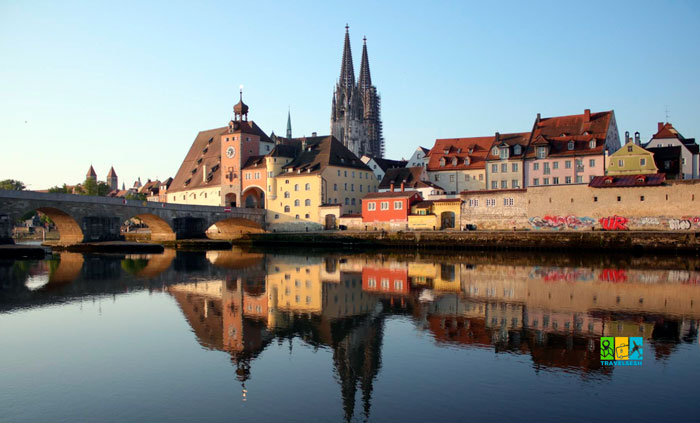
Regensburg (80 km) — a UNESCO World Heritage city and one of Germany’s best-preserved medieval centres. The 12th-century Stone Bridge, Gothic cathedral, narrow lanes and Old Town on the banks of the Danube are all unmissable. Easy to combine with Ingolstadt on a single itinerary.
Altmühltal Nature Park (from 20 km) — a natural park of scenic gorges, limestone cliffs and the gentle Altmühl river. Ideal for cycling, kayaking and hiking. One of Bavaria’s most beautiful natural landscapes.
Practical Tips
Getting there. From Munich — direct train, around 1 hour (RE or RB). The Bayern-Ticket is a great option for groups. By car — 80 km via the A9 motorway. Car rental is highly recommended!
How long do you need? One full day is the minimum to see the Old Town and one major museum. Two days is comfortable: Audi Forum, the fortress, and a proper meal somewhere good. Three days if you want to take it all in without rushing.
Best time to visit. Spring (April–May) and early autumn (September) are ideal. In summer you can relax in Klenzepark by the Danube. Winter is charming before Christmas, when the city hosts a small festive market.
Card payments are accepted everywhere. Cash is only really needed at traditional markets.
Conclusion
Ingolstadt is a city that doesn’t try to impress you on first sight. It reveals itself gradually: first the Kreuztor and the narrow streets of the Altstadt, then a ceiling fresco in a tiny church that stops you in your tracks, then a beer in a pub with its own brewery while a clock tower carillon plays overhead… Somewhere along the way you’ll realise you’ve stumbled into one of those places that doesn’t appear in every guidebook — and that’s precisely what makes it special.
Ingolstadt isn’t for everyone. But for those who love discovering Bavaria beyond the tourist trail — this is exactly the place.

There are no comments for this post. Comment or ask questions first