
Nuremberg, Germany is a city with a rich history, ancient architecture and a unique atmosphere. If you have 1-3 days, this is the perfect time to get to know the main attractions, taste traditional dishes and immerse yourself in the atmosphere of the medieval spirit that still lives here. In this post you will find everything you need for a comfortable trip: how to get there, where to stay, what to see and how to surprise yourself and your loved ones.
The hotel we stayed at: Holiday Inn Nürnberg City Centre.
Private transfer to/from the airport.
Tickets online – fly cheaper – look for flights marked as special offers.
We booked city tours here.
Accommodation
Nuremberg has a wide selection of places to stay for any budget: from inexpensive hostels to luxury hotels with exquisite service.
Budget level (up to 50-70 euros per night)
- Five Reasons Hostel & Hotel, Cozy hostel in the center, close to the old town. Clean rooms, friendly atmosphere and good value for money. Great for young people and short-term travelers.
- A&O Nürnberg Hauptbahnhof, Hostel near the train station, has both shared and private rooms. A budget choice with basic amenities.

- Motel One Nürnberg-City, A modern hotel with stylish design. Located near the train station, it offers comfortable rooms at an affordable price.
- Leonardo Hotel Nürnberg, A comfortable hotel with good transport connections and delicious breakfasts. Suitable for business trips or family vacations.
- Holiday Inn Nürnberg City Centre, Located in the old town, convenient for sightseeing. High level of service and cozy atmosphere.
Luxury level (over 150 euros per night)
- Sheraton Carlton Hotel Nürnberg, A luxurious 5-star hotel with a large SPA center. Located next to the train station, it is an ideal choice for a comfortable stay.
- NH Collection Nürnberg City, An elegant hotel with modern amenities. Known for its high quality service and exquisite cuisine.
- Park Plaza Nuremberg, A stylish hotel in the center with spacious rooms and premium service. A great choice for special trips.

A brief history
Nuremberg, the second largest city in Bavaria, has a rich historical heritage that dates back to the 11th century, when the city was founded on an important trade route. Thanks to its advantageous location, Nuremberg quickly became one of the main centers of the Holy Roman Empire. The imperial diets held here consolidated the city’s status as a political and cultural center.
In the Middle Ages, Nuremberg was known for its craftsmen, artists and inventors. Albrecht Dürer, one of the most famous artists of the Renaissance, worked here. At the same time, Nuremberg became the place where the first pocket watches were created and printing flourished.

What to see
Nuremberg is rich in historical, architectural and natural attractions that reflect its medieval grandeur and modern comforts. From the legendary castle to peaceful parks, here are the top places to include in your itinerary.
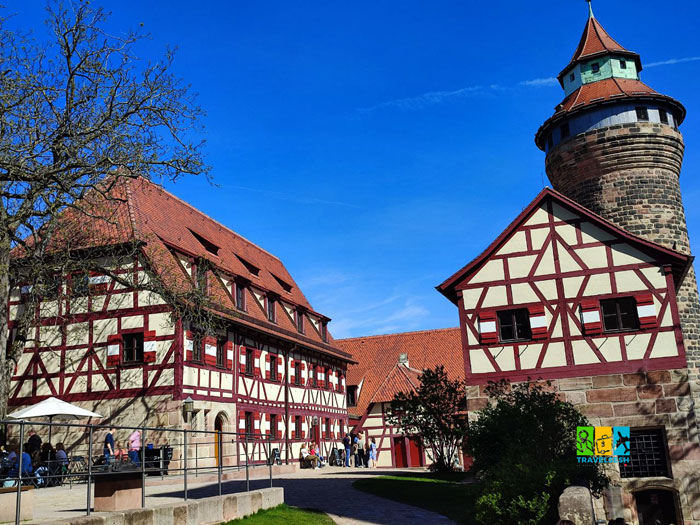
Imperial Castle (Kaiserburg)
The Imperial Castle is the main symbol of Nuremberg and one of the most important castles of the Holy Roman Empire. It served as the residence of the emperors during their visits to the city and was the center of political life in the Middle Ages. The fortress is located on a hill, from where there is a picturesque view of the old town.

What to see
The view from the castle tower (Sinwellturm) is impressive with a panorama of ancient roofs and city walls. The tower has a round shape, and its observation deck is an ideal place for photos.
The Imperial Castle Museum houses a unique collection of medieval weapons, armor and household items. The exhibition tells about the role of Nuremberg in imperial politics.
The deep well, 47 meters deep, is a technical achievement of the Middle Ages. Its legends add a mysterious atmosphere to the visit.
Opening hours
April 1 – September 30: daily, 9:00 – 18:00. October 1 – March 31: daily, 10:00 – 16:00. The castle is closed on December 24, 25, 31 and January 1.

Combined ticket “Imperial Castle”
Double Chapel Palace/Imperial Castle Museum + Deep Well + Synwell Tower 9 euros (regular), 8 euros (discounted)
Combined ticket “Imperial Castle + Cadolzburg Castle”
Admission to both castles 14 euros (regular), 12 euros (discounted). Free admission with Nuremberg Card.
Separate tickets
Double Chapel Palace / Imperial Castle Museum €7 (regular), €6 (concessions)
Deep Well + Sinwell Tower €4 (regular), €3 (concessions)
Castle Gardens and Maria Sibylla Marian Garden free
Children under 18 free
How to get there
The castle is located in the old town, just a few minutes walk from the central Hauptmarkt square. The most convenient way to get there is by underground to Lorenzkirche station (line U1).
Tip
Visit the castle in the morning to avoid the crowds, or in the evening to enjoy the breathtaking views at sunset.

Nuremberg City Wall (Stadtmauer)
The Nuremberg fortress wall, built between the 13th and 16th centuries, is one of the best-preserved defensive systems in Europe. Its length is more than 4 km, and it frames the old city, dividing it into inner and outer parts. The wall includes about 80 defensive towers and gates that served to protect the city. The most famous are Frauentor, Spittlertor, Laufer Tor. Observation paths have been preserved along the wall, which allow you to see the panorama of the old city, as well as feel the spirit of medieval Nuremberg. The wall not only protected the city, but also controlled the entrance to Nuremberg through numerous gates.

Cost
The exterior of the wall is free to visit. Some gates and towers are open to the public for a fee (from €3).
Interesting fact
In the 19th century, part of the wall was planned to be demolished to make way for the expansion of the city. Fortunately, most of the structures were saved thanks to the efforts of local residents.
Tip
Start your walk at the Frauentor, near the Central Station, and explore other key parts of the wall west of the old town. This is a great way to combine a historical tour with a leisurely stroll.

Old town (Altstadt)
Nuremberg’s Old Town is the heart of the city, where history meets modernity. Narrow cobblestone streets, old half-timbered houses, cozy cafes and an atmosphere of medieval charm make this part an ideal place for a stroll. The Pegnitz River divides the old town into northern and southern parts, which are connected by numerous bridges.

Weißgerbergasse
One of the most picturesque streets in Nuremberg, located in the old town (Altstadt) district. The street is known for its authentic medieval architecture, consisting of beautifully preserved half-timbered houses that once belonged to the Weißgerber (white ware) craftsmen.
Features:
- Architecture: Colorful half-timbered houses from the 15th and 16th centuries, many of which are now residential or have been converted into cafes, restaurants and art galleries.
- Atmosphere: The narrow, cobblestone street takes you back to the Middle Ages, preserving a unique historical spirit.
- Photogenicity: An ideal place for photos due to its authentic beauty.
Weißgerbergasse is one of the few streets in Nuremberg that remained almost intact after World War II. This makes it an important witness to the city’s history. It is recommended to walk along the street in the evening, when the houses are beautifully illuminated, creating a romantic atmosphere.

Town square (Hauptmarkt)
The Hauptmarkt is the central square of Nuremberg, one of the liveliest and most famous parts of the Old Town. It plays an important role in the life of the city, offering tourists and locals a variety of events, shops and historical sights. Every year the square hosts Nuremberg Christmas Market (Christkindlesmarkt), At the end of November, the square transforms into a magical Christmas market with Christmas tree decorations, traditional delicacies, and a festive atmosphere.

Frauenkirche Church (Frauenkirche)
The 14th-century Gothic church, built by order of Emperor Charles IV, is one of the main architectural gems of Nuremberg. The church has a Gothic facade with exquisite details, a central rose and numerous sculptures.
“Männleinlaufen” clock: Every day at 12:00, a mechanical clock performance dedicated to the Golden Bull of Charles IV comes to life on the facade. Figures of knights bow to the emperor, who gathers spectators around the church. Inside the church you can see a luxurious altar, preserved Gothic elements and stained glass windows.

Opening hours
Mon-Sat: 9:30am-5pm
Sun: 1pm-4pm
Admission Free (donations welcome).
Interesting fact
The church was built on the site of a former synagogue, reflecting the complex religious history of medieval Nuremberg.
Tip
Arrive a little early to get a good seat to watch the mechanical clock. Afterwards, stroll around the Hauptmarkt square to soak up the atmosphere of the medieval city.

Town Hall (Rathaus)
This is a unique building that combines elements of the Gothic style with Renaissance architecture. The main building was erected in the 14th century, and its extension in the 16th century gave the building a majestic appearance. During World War II, the Town Hall was seriously damaged, but was later carefully restored. The Gothic facade with window arches and decorative elements adjoins the Renaissance halls inside. One of the most intriguing parts of the Town Hall is its underground catacombs. Once there was a prison, interrogation chambers and even torture chambers. Visitors can see the ancient chambers and learn about medieval methods of justice.
Tours are conducted in groups accompanied by a guide. Time and cost should be specified at the tourist office. The main building has free access to the common areas.
Interesting fact
On the facade of the town hall there is a sculpture of the legendary Nuremberg executioner, who was a symbol of justice in the city.
Tip
A visit to the Town Hall dungeons is better planned in advance, as the number of places in groups is limited. This is an ideal option for those interested in the history and myths of Nuremberg.

Fountain “Schöner Brunnen”
“Schöner Brunnen”, or “Beautiful Fountain”, is one of the most famous landmarks in Nuremberg. It is located on the Hauptmarkt square and impresses with its elegant design and symbolism. The fountain, 19 meters high, was built in the 14th century and is a true gem of Gothic architecture. The 40 figures, arranged in four levels, represent philosophical, theological and social ideas of the Middle Ages. They include biblical prophets, philosophers of antiquity, evangelists and knights.
On the wrought iron fence of the fountain is a small golden ring. Legend has it that if you turn it, your most cherished wish will come true.

Interesting fact
The fountain was originally conceived as a church spire, but was later transformed into a city fountain, symbolizing the harmony of knowledge, faith and power.
Tip
Visit the fountain early in the morning or in the evening, when there are fewer tourists, to enjoy the details of the sculptures and to touch the magic ring without waiting in line. Also near the fountain Christmas markets are held in the winter season, creating an even more magical atmosphere.

Executioner’s Bridge (Henkersteg)
Henkersteg is a wooden covered bridge in Nuremberg, one of the most atmospheric locations in the old town. Built in 1457, the bridge is connected to the executioner’s house (Henkerhaus), which is now a museum. The executioner once lived here in seclusion due to his unpopular but important profession.
The wooden structure of the bridge blends harmoniously with the picturesque scenery of the Pegnitz River. The executioner’s house is located at one end of the bridge, and today serves as a museum where visitors can learn more about the life of medieval executioners. Henkersteg is ideal for taking atmospheric photos, especially at dawn or sunset.
Opening hours of the Henkerhaus Museum
Tuesday to Sunday: open from 12:00 to 16:30.
Closed: January to March (winter period).
Ticket prices
Regular ticket: 3 euros. Reduced ticket: 2 euros (for children and young people from 14 to 18 years old, students, schoolchildren, people with severe disabilities). Free admission: for children under 14 years old. Book a walking tour of the Old Town.
Tip
After walking across the bridge, visit the nearby Weidensteg, another picturesque bridge, to complete your riverside walk. This will allow you to better appreciate the city’s architectural heritage.

Saint Sebald (St. Sebaldus)
St. Sebald’s Church is the oldest church in Nuremberg, built in the 13th century in the Romanesque style and later supplemented with Gothic elements. It is dedicated to St. Sebald, the patron saint of the city. The church is located in the heart of the old town and is a landmark of history and art. In the center of the church is a luxurious bronze sarcophagus, the Tomb of St. Sebald, by Peter Fischer the Elder, which depicts scenes from the life of the saint. The stained glass windows are impressive in their detail, creating an unforgettable play of light in the church, and the organ is one of the oldest in Germany, its sound is noted during services and music concerts.

Monday-Saturday: 9:30am-5pm. Sunday: 1pm-5pm.
Cost
Entry is free, but donations are accepted to support the church. Tours cost around 2-4 euros, depending on the program.
Tip
Visit the church during an organ concert to experience its spiritual and musical atmosphere. Don’t forget to see the frescoes and sculptures that tell the history of the city and its patron saint.

Church of St. Lawrence (St. Lorenz)
The Church of St. Lawrence is one of the most magnificent Gothic churches in Nuremberg. Its construction began in the mid-14th century and lasted for more than 200 years. It is located in the center of the old town and is known for its rich decoration and unique artistic treasures. The main facade of the church is decorated with sculptures and a magnificent rose window. Inside is the famous crucifix by Veit Stoss – a masterpiece of wooden sculpture. The organ is one of the largest in Germany, the sound of which can be heard during regular concerts.

Opening hours
Open to visitors from 9:00 to 17:00 (access may be limited during services).
Admission is free, but voluntary donations are welcome.
Tip
Visit the church in the morning when the sunlight shines through the stained glass windows, creating a unique play of colors. You can also join the organ concerts that are held here regularly.
White Tower (Weißer Turm)
This historic tower is one of Nuremberg’s landmarks. Built in the 13th century as part of the old city fortifications, the White Tower today serves as a kind of bridge between the city’s past and present. It was originally part of the second ring of Nuremberg’s city walls. The name “White Tower” comes from the light-colored stone used for its construction. It is located next to the “Weißer Turm” metro station, making it easily accessible for tourists. Next to the tower is the “Wedding Ring” fountain (Ehekarussell), which symbolizes the different stages of marriage in a satirical way. The tower is located near the shopping areas, so it is easy to find a place to relax or shop after visiting.

Wedding ring (Ehekarussell)
This is a prominent fountain in Nuremberg, located on Ludwigsplatz near the White Tower. This bright and unusual sculptural composition is one of the most famous landmarks in the city.
The composition illustrates the different stages of marriage – from its romantic beginning to its possible crisis or end. The six groups of figures are executed in a humorous and sarcastic style, reflecting both happy and dramatic moments in the life of a couple.
The theme of the fountain is based on a poem by the 17th century German poet Hans Sachs, which describes love and marriage. Each scene is an allegory, demonstrating different facets of married life: from passion to everyday difficulties and even old age.
The fountain has caused controversy among locals due to its frankness and depiction of married life without embellishment.
Tip for tourists: Be sure to examine the fountain from all sides to understand the full story it tells. This is a great opportunity for reflection and unique photos.

Church of Saint Elizabeth (Elisabethkirche)
This is a Roman Catholic church dedicated to Saint Elizabeth of Hungary. It is one of the largest Catholic churches in the city, built in the 18th century. Its name honors Saint Elizabeth, known for her charitable work and helping the poor.
Visitor Tip: The church is a great place for those interested in history and architecture, as well as those looking for peace in the heart of the city.

Church of St. James (St. Jakob)
One of the oldest religious buildings in Nuremberg, located on Jakobplatz. It was founded in the 13th century and originally belonged to the Order of St. James. A Gothic building with impressive stone facades and elegant stained glass windows. The church is an important point on the pilgrims’ route to Santiago de Compostela (the Way of St. James). Inside you can see the works of German masters, including sculptures and wood carvings. The facade depicts the symbol of St. James – a comb, reminiscent of the role of the church in the history of pilgrimage. Admission is free, but donations are welcome.

Craftsmen’s Corner (Handwerkerhof)
Handwerkerhof is a small historic crafts corner located near Nuremberg’s main station. Behind the medieval Frauentor gate, the workshops of local craftsmen are gathered, resembling a miniature old town. The cobblestone streets and wooden houses create the illusion of traveling back in time. Unique handmade souvenirs: ceramics, metalwork, glass and textiles. Try traditional Nuremberg dishes, including the famous grilled sausages (Bratwurst) and gingerbread (Lebkuchen).
Opening hours
Mostly open from April to December. Monday-Saturday from 10:00 to 18:30. Sunday is a day off.
Admission to the area is free.
Tip
Buy souvenirs directly from the craftsmen – this is not only supporting traditional production, but also a guarantee of quality. The best time to visit is in the morning, when there are fewer visitors.

Nuremberg State Theater (Staatstheater Nürnberg)
The Nuremberg State Theater is an important cultural center of the city, known for its high-quality productions in the genres of opera, ballet, drama, and musical theater.

Nuremberg Dungeon (Historische Felsengänge Nürnberg)
The Nuremberg Dungeons are a network of historic tunnels and cellars that run beneath the old city. They were used for beer storage, wartime shelter, and other purposes. These tunnels are one of the most fascinating places to explore the city’s hidden history.
Interesting fact
In the dungeons, you can see ancient brewing techniques, confirming Nuremberg’s centuries-old beer-making tradition.
Opening hours
Tours are held several times a day. Times may vary depending on the season. Medieval dungeon tour.
Ticket prices
Regular: around 10-12 euros. Reduced: around 8 euros (children, students, pensioners).
Tips
The tunnels are quite cool (around 10°C), so bring warm clothes.

Church of Saint Egiden (St. Egidien Church)
One of the main Baroque churches in Nuremberg. The church was built in the 18th century on the site of a former Benedictine monastery and is dedicated to Saint Egiden (Saint Jerome).
The church is distinguished by its Baroque style, which harmoniously combines lush decorative elements and geometric symmetry. The interior is decorated with frescoes, marble and numerous works of art. It is not only a place for religious services, but also a space for classical music concerts and cultural events.

St. Egidien Church is an important symbol of Nuremberg’s spirituality and culture. Nearby is the Pellerhaus.
Pellerhaus
A Renaissance-style building that is one of Nuremberg’s most famous historical buildings. Built in 1605–1607 as the residence of the wealthy merchant Martin Peller, it became a symbol of the luxurious urban architecture of the era. The facade of the building is decorated with elegant arches, sculptures and decorative elements in the Renaissance style. The Pellerhaus is an important cultural monument and is partly used as the city library. The Peller Courtyard, one of Nuremberg’s most beautiful courtyards, is open to visitors and captivates with its authentic atmosphere.

Albrecht Dürer’s House (Albrecht-Dürer-Haus)
This four-story 16th-century house was the residence of Albrecht Dürer, a prominent Renaissance artist. It is now a museum dedicated to his life, work, and engraving techniques. Here, visitors can see a reconstructed Dürer workshop, his works, and exhibits illustrating the printing technologies of the time.
Visitors can learn about the process of creating engravings. An actress playing the role of Agnes, Dürer’s wife, leads theatrical tours that immerse you in the atmosphere of the era. Originals and copies of Dürer’s works demonstrate his mastery and influence on European art.
Opening hours
April to September: 10:00–17:00 (Mondays are closed). October to March: 10:00–16:00.
Ticket prices
Regular: 7.50 euros. Reduced (children): 2 euros. Free entry from Nuremberg Card.
Tip
It is recommended to come in the morning to avoid the queues and enjoy the peaceful atmosphere. The museum has audio guides in several languages.

Fembo House (Fembohaus Museum)
The museum is located in the only preserved Renaissance patrician residence in Nuremberg. The Fembo House, built at the end of the 16th century, offers a journey through the history of Nuremberg, focusing on culture, crafts and the daily life of its inhabitants. The museum covers more than 950 years of the city’s history through exhibitions, multimedia presentations and installations. The beautifully preserved rooms, including the exquisitely decorated halls, show the lifestyle of the wealthy Nuremberg patricians. Maps, engravings and ancient objects tell the story of the city’s development as a center of crafts and trade.

Opening hours
Tuesday to Sunday: 10:00–17:00. Monday: closed.
Ticket prices
Regular ticket: 7.5 euros. Concession ticket: 2.5 euros (for children, students). Admission for children under 14 is free. Free admission from Nuremberg Card. Audio guides are available in several languages.
Tips
Allow at least 1.5-2 hours for your visit. After the tour, take a stroll along Burgstraße, which leads to the Imperial Castle.
This museum is the perfect place for history and culture lovers who want to gain a deeper understanding of Nuremberg and its heritage.

About Nuremberg Card
For tourists who plan to actively visit museums, a good choice would be the Nuremberg Card. It includes:
- Free admission to all major museums.
- Unlimited travel on public transport in Nuremberg and Fürth.
This is a great way to save money and explore the city conveniently!
Museums
Nuremberg is rich in unique museums that reveal various aspects of history, culture and technological progress. Here are a few of them:
Nuremberg Transport Museum (DB Museum)
The museum is part of the Deutsche Bahn (DB) and is housed in a building built in 1899. It is one of the oldest railway museums in the world, showcasing the rich history of rail transport in Germany.
You can see original and reconstructed exhibits, including the first German steam locomotive, the Adler. The evolution of trains, including the ICE high-speed exhibition. A model with fascinating details that illustrates the development of the railway network. There is a separate “KIBALA” area for children, where they can play and learn about transport technology.
Opening hours
Tuesday – Sunday: 10:00 – 17:00. Monday: closed.
Ticket prices
Adult ticket: €9. Child ticket (6 – 14 years): €5. Family ticket (2 adults + children): €18. Children under 6 years of age are admitted free. Free admission with Nuremberg Card.
This place is a must for fans of technology and transportation history!

Museum of Communications (Museum für Kommunikation)
This museum in Nuremberg tells the story of the evolution of communication, from the first postal messages to modern digital technology. The exhibition includes historical letters, telegraphs, telephones and computers, and shows how the way people communicate has changed over time.
You can try out vintage telephones or create a digital message. Includes unique examples of stagecoaches and the first postage stamps. Themed exhibitions are constantly changing and cover different aspects of communication, such as the development of social media.
Opening hours
Tue – Fri: 9:00 – 17:00. Sat, Sun and public holidays: 10:00 – 18:00
Ticket prices (including DB Railway Museum)
Adults: €9. Concessions: €7. Children and young people (6-17 years): €5. Family ticket (2 adults and up to 4 children): €18. Children under 6: free.
The museum is included in the Nuremberg Card, making it part of a convenient tourist itinerary.
Fun fact
One of the museum’s most valuable exhibits is the original Morse telegraph, which demonstrates the first major breakthrough in the speed of information transmission.

German National Museum (Germanisches Nationalmuseum)
It is the largest museum dedicated to German art and culture, with a collection of over 1.3 million items. The exhibition spans from prehistoric times to the present day, including paintings, sculptures, textiles, musical instruments and books. Unique exhibits range from medieval armor to the works of Albrecht Dürer. Exhibitions include works of classical and modern art, religious artifacts, and decorative and applied arts. The museum’s library and archive are among the best in Europe.
Opening hours
Tuesday – Sunday: 10:00 – 18:00. Wednesday: 10:00 – 20:30. Monday: closed
Ticket prices
Adults: 10 euros. Reduced: 6 euros (students, pensioners). Children: 1 euro. Families 14 euros. If you have Nuremberg Card, museum entrance is already included.

Documentation Center (Documentation Center Nazi Party Rally Grounds)
This museum is located in the remains of the Congress Hall, built for Nazi congresses. The documentation center offers an in-depth analysis of the history of the Third Reich, exploring the rise and fall of Nazi ideology, its impact on Germany and the world. The exhibition “Fascism and its consequences” presents documents, photographs, films and other materials that tell about the actions of the Nazi regime. History lessons that demonstrate the causes of the emergence of totalitarian systems and the risks of radical ideology. Interactive exhibitions for a better understanding of the mechanisms of propaganda and manipulation of public opinion. This is a place not only for studying history, but also for reflecting on its consequences in the modern world.

Opening hours
Monday – Sunday: 10:00 – 18:00
Ticket prices
Adults: €6. Reduced: €1.50 (children, students, pensioners). Children under 14 free. Families €6.50
The museum is included in the list of facilities available with the Nuremberg Card, making it convenient for tourists. For a deeper dive into the topic, it is recommended to use an audio guide.
Nuremberg Trials Memorial (Memorium Nürnberger Prozesse)
Courtroom 600 in the Nuremberg Palace of Justice is the site of the famous Nuremberg Trials of the leaders of the Nazi regime after World War II. Today, it houses the Memorium Nuremberg Trials, a museum dedicated to the history of international justice. The museum offers interactive exhibits, documents, videos and audio materials that tell the story of the trials, the accused, the judges and the lawyers. The exhibition also explores how the Nuremberg Trials influenced the creation of modern international courts.

Opening hours
Tuesday – Sunday: 10:00 – 18:00. Monday: closed
Ticket prices
Adults: €7.50. Reduced: €2.50 (students, pensioners, children from 14 years), School classes: €2 per student. Families: €8 (1 adult + children under 18 years) or €15 (2 adults + children under 18 years). Children under 14 years: free. Memorium Nuremberg Trials is included in the list of attractions that can be visited with Nuremberg Card.
Courtroom 600 is still used for court hearings, so access to it may be limited on court days.

Museum of Industrial Culture (Museum of Industrial Culture)
This museum shows the transformation of society during the industrial era. It is located in an old industrial building, which adds to the atmosphere of the exhibitions. The museum presents topics related to work, everyday life and technology from the 19th and 20th centuries. The museum combines exhibitions about technology with social history, showing how industrialization changed people’s lives in Germany.
Opening hours
Closed due to construction work from November 27, 2023 until autumn 2025.
The German Museum in Nuremberg – a museum of the future (Deutsches Museum Nürnberg – Das Zukunftsmuseum)
This museum is a branch of the famous Deutsches Museum in Munich and is dedicated to the future. The exhibitions combine scientific achievements, innovations and their impact on society. The main topics are robotics, ecology and energy, spatial technology, interactive exhibits that allow you to experience innovations firsthand.
The museum offers a look into the future through the prism of the present. Visitors can interact with exhibits that reflect modern achievements and ideas about future technologies.
Opening hours
Monday: closed. Tuesday – Sunday: 10:00 – 18:00
Ticket prices
Adults: €9.50. Reduced rate: €6. Children (under 5 years): free.

Nicolaus Copernicus Planetarium (Nicolaus Copernicus Planetarium)
This is a science and educational center that offers journeys into the depths of space through modern multimedia shows and lectures. Thanks to innovative equipment, realistic images of the starry sky and space phenomena are created here.
The planetarium is equipped with a digital projection dome, which allows you to create immersive visualizations of the Universe. The program includes events for all age groups, including educational events for schools.
Opening hours
The planetarium is open to visitors only during the show. Ticket sales in the lobby begin one hour before the start of the event. Show opening hours Wednesday: 2:00 PM, Thursday: 5:00 PM, Saturday: 2:00 PM, Sunday: 2:00 PM
Prices
Adults: €10, Reduced rate: €6.50 (for children under 18, schoolchildren, students, military personnel and other categories with an ID). People with a Nuremberg Pass: €3.

Toy Museum (Spielzeugmuseum)
ІThe Nuremberg Toy Museum is a paradise for children and adults interested in the history of toys. The exhibition covers over 600 years of toy history, from medieval dolls to modern construction sets.
Nuremberg has been one of the world’s leading toy manufacturing centers since the 17th century, making it the “toy capital”.
What to see
A collection of vintage dolls and doll houses. Rare model railways and cars. Toys from different eras made of wood, metal and plastic. Interactive areas where children can play. Special temporary exhibitions dedicated to specific themes or toy manufacturers.
Opening hours
Tuesday–Friday: 10:00–17:00. Saturday and Sunday: 10:00–18:00. During the Christkindlesmarkt also Mon: 10:00–17:00
Ticket prices
Adults €7.50, concessions €2.50. School classes €2, Families €8 or €15. Free admission with Nuremberg Card.

Entertainment for children
Nuremberg Zoo (Tiergarten)
This zoo is considered one of the most beautiful in Europe due to its location in a picturesque forest area. It is home to over 300 species of animals, including dolphins, polar bears, giraffes, and Amur tigers. The zoo’s special feature is its natural enclosures, which mimic the animals’ habitat as closely as possible.
What to see: The dolphinarium is one of the few in Germany. The Polar Lagoon is a unique space for polar bears. The African savannah is a spacious area for giraffes and antelopes.
Opening hours
Daily: 09:00 to 16:30. The animal enclosures close at 16:15.
Ticket prices
Adults: €20. Concessions: €18. Children (4-13 years): €9.40 Family tickets: Small families (1 adult + 1 child): €25. Large families (2 adults + up to 4 children): €45.
Nuremberg Card Admission to the zoo is free! Card holders can use the main entrance without having to wait in line.

Playmobil FunPark
This is a theme park based on the world-famous Playmobil toys. It is aimed primarily at younger children, offering interactive areas where you can play with huge Playmobil figures. Castles, ships and pirate bays. Climbing areas and water attractions. Workshops with Playmobil sets.
Address: Brandstätterstraße 2-10, Zirndorf (near Nuremberg).
Opening hours 10:00–18:00.
Ticket prices
Day ticket: €4.90. Winter season: Online day ticket: from €9.90 Ice rinks, HOB center, climbing garden, magic trail, FunPark shop
Seltner Castle (Zeltnerschloss)
A small Renaissance castle with characteristic elements of 16th century architecture. Located in the eastern part of Nuremberg, 3 km from the main station, if you have a free hour you can walk to the castle. It is a historical monument and a vivid example of the transformation of an old building into a cultural center. The castle was built in the 16th century and once belonged to wealthy merchants. Today it houses a library and various public organizations. Around the castle there is a picturesque park, which is ideal for walks.

Popular restaurants and cafes
Bratwursthäusle, A cozy restaurant near St. Sebald’s Church, known for its authentic Nuremberg sausages grilled over beech wood, this is the perfect place for those who want to try traditional Franconian cuisine.

Hausbrauerei Altstadthof – Rotbierstüberl, This Nuremberg establishment is famous for its red beer (Rotbier), which has a long tradition in the region. The brewery also specializes in the production of whiskey and other distilled beverages. Visitors can enjoy local cuisine, which perfectly complements the unique beers. The cozy atmosphere is ideal for connoisseurs of authentic taste and tradition. Tours of the brewery are held, where you can learn about the beer and whiskey production process. Book a tour around the city center with beer tasting at this establishment.
This is the perfect place to experience Nuremberg’s historical heritage through drinks and cuisine.

Excursions
Kaiserburg Castle Tour: Immerse yourself in Nuremberg’s medieval history. Visitors can see towers, museums and defensive structures.
Old Town Dungeons. A tour of the underground passages and cellars that were used as storage or breweries.
Beer Tours. A tour of Nuremberg’s breweries, including visits to places like Hausbrauerei Altstadthof, where you can taste local beers. Additionally, the history of brewing in the region is told.
Cycling Routes. For fans of active recreation, there are marked routes through the picturesque surroundings of Nuremberg. One popular route leads to Seltner Castle and further through the city’s parks and natural areas.

Bus tour Hop-On Hop-Off
The Nuremberg Hop-On Hop-Off Bus Tour is a convenient way to explore the city’s key attractions. The tour covers historic sites, scenic areas, and important cultural sites.
Start your tour at stop 1, located next to the main train station (Hauptbahnhof). You can also hop on the bus at any of the 6 stops along the route: 1. Central Station 2. Main Market Square/Old Town 3. Imperial Castle 4. St. John’s Cemetery 5. Palace of Justice/Memorial 6. Congress Hall.
Audio guide available in English, French, Italian, Chinese, Spanish, russian.
Hop-on hop-off at any stop, allowing you to explore at your own pace.
The tour is suitable for travelers of all ages and fitness levels.
Ticket prices
Adult: around €19. Children (6-14 years): around €7. Free entry for children under 6 years.
Please note that you must bring your own headphones, or you can buy them on site for €0.50. You can buy a tour online.
The full route takes about 2 hours non-stop. This tour is perfect for a first introduction to the city, especially if you have limited time or are traveling with children.
How to get there
From Kyiv:
Due to the lack of direct flights to Nuremberg, the most convenient way to get there is by flying from Poland to Nuremberg. Direct flights are available from Warsaw (Chopin Airport) and Poznan (Poznań-Ławica Airport). Flights are operated mainly by budget airlines such as Ryanair. Nuremberg Airport (NUE) is located just 15 minutes from the city center, providing convenient access upon arrival.
You can also fly directly to Munich from Poland from several cities: Warsaw (Chopin Airport): LOT and Lufthansa offer regular direct flights to Munich. Flights operate several times a day, which provides a convenient choice of times. Krakow: Lufthansa and LOT also operate flights from Krakow to Munich, making this a great option for flights to southern Germany.
- By train: There are ICE high-speed trains from Munich to Nuremberg, which cover the distance in 1-1.5 hours. Similarly, from Prague you can get there in 3-4 hours.
- By bus: FlixBus or other carriers offer cheap options to Nuremberg, but the journey can be longer than by train.
- By car: Munich to Nuremberg is about 2 hours drive on the A9 autobahn, making it easy to reach the city. You can use car rental, read about our experience renting a car in Germany, “Car rental in Germany“.

- By train: Nuremberg has excellent connections to the main cities of Germany and neighboring countries:
- From Munich (1-1.5 hours). You can book a tour from Munich to Nuremberg and back.
- From Frankfurt (2-2.5 hours).
- From Berlin (3 hours).
- From Prague (3-4 hours).
Deutsche Bahn offers convenient ICE, IC and Regio high-speed trains, as well as promotions for group tickets.
- By plane: Nuremberg has its own airport, Albrecht Dürer Airport (NUE), located 15 minutes from the city center. Low-cost carriers such as Ryanair and Wizz Air offer flights from many European cities, including London, Barcelona and Vienna. The airport is a 12-15 minute underground journey (U2 line) to the city center.
- By bus:
The city is served by FlixBus, Eurolines and other international companies. The bus station is located next to the main train station (Hauptbahnhof), which is very convenient for onward connections. - By car:
Nuremberg is located at the intersection of the main autobahns A3 (west-east), A6 (north-south) and A9 (connecting Berlin and Munich). If you are traveling from neighboring cities, traveling by car can be not only a quick but also a scenic option, especially through the Bavarian countryside.
Our experience Car rentals in Germany
Useful tips:
- If you are planning to travel by train in Germany, pay attention to the Bayern Ticket tickets – this is a good option for groups and trips within Bavaria.
- For convenient route planning, use the DB Navigator app, which shows all trains, buses and metro.
- If you are traveling by car, don’t forget to check the rules of using the autobahns and find convenient parking spaces near Nuremberg.
Nuremberg Central Station (Hauptbahnhof Nürnberg)
Nuremberg Central Station is located in the heart of the city, a short walk from the Old Town. This historic 19th-century building with modernized features serves as the main hub for Deutsche Bahn trains, S-Bahn, U-Bahn, buses, and trams. The station offers a wide range of services, including cafes, restaurants, and shops, including a 24-hour supermarket. Left-luggage offices, information centers, and waiting rooms are available on site to ensure the comfort of travelers.

Parking
-
- P+R parking:
The cost per day is usually 4-6 euros, which is much cheaper than parking in the city center. These parking lots are located near metro or tram stations, providing easy access to the main attractions.- P+R Rothenburgerstraße, located next to the Rothenburgerstraße metro station (line U2)
- P+R Langwasser Süd, located near the Langwasser Süd metro station (line U1)
- Central parking lots:
If you need to park your car in the city center, you can use underground parking lots or multi-storey car parks. For example, Parkhaus Hauptmarkt or Parkhaus Sterntor. The cost can be 2-3 euros per hour, depending on the location. - Free parking:
There are several free parking areas on the outskirts of the city, but they are usually full. In Nuremberg, finding parking in the center can be difficult and expensive, so many tourists choose the P+R (Park and Ride) system, which allows you to leave your car on the outskirts of the city and conveniently reach the center by public transport.
- P+R parking:
Useful tip:
Use the Parkopedia app to find the nearest and cheapest parking with current prices. It is also worth paying attention to road signs to avoid fines for incorrect parking.

Conclusion and tips
Nuremberg is a city that is ideal for both short stops and longer stays. With its rich history, interesting museums and cozy atmosphere, there is something for everyone.
- Plan ahead:
Popular museums such as the Dürer House or the Documentation Center are best booked in advance, especially during the tourist season. - Comfortable shoes:
The old town with its cobbled streets is best explored on foot. Make sure you have comfortable walking shoes. - Use the Nuremberg Card:
It allows you to visit most museums and use public transport for free, which saves you time and money. - Taste the local cuisine:
Nuremberg sausages, gingerbread and local beer are must-try foods to get an authentic taste of the region. - Plan your time:
One day is enough to see the main sights, two — for visiting museums and walking, and three will allow you to enjoy the city without rushing.
Visit Nuremberg to experience the charm of a medieval city and modern amenities in one place!
Where to stay
There are no comments for this post. Comment or ask questions first